151-Million-Year-Old Midge Fossil Challenges Insect Evolution Theories
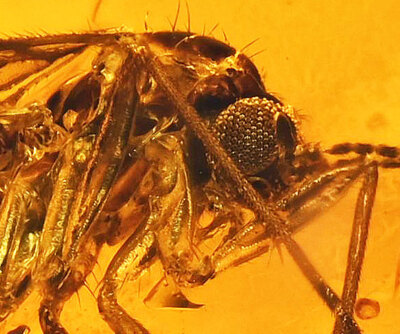
A remarkable 151-million-year-old midge fossil discovered in Australia is reshaping our understanding of insect evolution. Named Telmatomyia talbragarica, this Jurassic-era specimen reveals freshwater adaptations previously believed to exist only in marine species. The discovery suggests that Chironomidae may have originated in the Southern Hemisphere's Gondwana supercontinent, challenging long-held biogeographical theories about insect dispersal patterns and evolutionary history.
The discovery of a 151-million-year-old midge fossil in Australia's Talbragar fish beds is revolutionizing our understanding of insect evolution and ancient biogeographical patterns. This remarkable find, led by researchers from the Doñana Biological Station (EBD-CSIC), represents the oldest known member of the Chironomidae family in the Southern Hemisphere and challenges fundamental assumptions about where and how freshwater insects evolved.

Groundbreaking Fossil Discovery
The newly identified species, named Telmatomyia talbragarica meaning "fly from the stagnant waters," was uncovered in New South Wales and dates back approximately 151 million years to the Jurassic period. An international research team examined six fossilized specimens, including both pupae and emerging adults, revealing extraordinary preservation that provides unprecedented insights into ancient insect biology.
What makes this discovery particularly significant is the presence of a terminal disc structure—an anchoring mechanism that researchers previously believed was exclusive to marine species. The sediment and fossil evidence from Talbragar clearly indicates this was a freshwater environment, demonstrating remarkable phenotypic plasticity in these ancient insects.
Rethinking Insect Origins
This discovery fundamentally challenges previous theories about the origins of the Podonominae subfamily. Earlier hypotheses suggested these insects originated in northern Gondwana before spreading northward into Laurasia, while later discoveries of older Eurasian fossils prompted some scientists to propose a Laurasian origin instead.
The Telmatomyia talbragarica fossil provides compelling evidence that Podonominae most likely began in the Southern Hemisphere and later expanded worldwide. As researcher Viktor Baranov explains, "This fossil, which is the oldest registered find in the Southern Hemisphere, indicates that this group of freshwater animals might have originated on the southern supercontinent of Gondwana."
Biogeographical Implications
The distribution of modern Podonominae species across South America, Australia, South Africa, and New Zealand represents a classic case of vicariance—the evolutionary separation caused by natural barriers. This pattern aligns with Swedish entomologist Lars Brundin's 1966 proposal that the breakup of Gondwana triggered this evolutionary divergence.
Matthew McCurry, a palaeontologist from the Australian Museum and University of New South Wales, highlights the significance of this finding: "There is a strong bias towards finding and studying fossils in the Northern Hemisphere. Because of this we end up making incorrect assumptions about where groups originated."

Research Limitations and Future Directions
Despite this groundbreaking discovery, researchers acknowledge that our understanding remains limited by the scarcity of Southern Hemisphere fossils. Before this finding, only two other Podonominae fossils had been documented from the Southern Hemisphere—an Eocene specimen from Australia and a Paleocene record from India.
The research team plans to combine fossil analysis with genomics to determine whether the dispersal of these insects after Gondwana's breakup was primarily passive or active. As Professor Steve Trewick from Massey University notes, "Fossil species of tiny, delicate freshwater insects like the Talbragar fly are rare and help us interpret the history of life on our planet."
This research, published in Gondwana Research, represents a significant step forward in understanding evolutionary biology and will contribute valuable insights for conserving modern biodiversity.