France's Political Crisis Deepens as Prime Minister Resigns Hours After Forming Government
France faces a deepening political crisis as Prime Minister Sébastien Lecornu resigned just hours after naming his new government, creating unprecedented instability in the French political landscape. The resignation comes after less than a month in office and follows intense criticism of his cabinet selections, which closely mirrored his predecessor's government. This development leaves President Emmanuel Macron with limited options amid record-low approval ratings and a fragmented parliament where no party holds a majority, further complicating France's ability to address pressing economic challenges.
France has been plunged into a severe political crisis following the abrupt resignation of Prime Minister Sébastien Lecornu, who stepped down just hours after announcing his new government. This unprecedented move creates extraordinary instability in the French political system and presents President Emmanuel Macron with one of the most challenging moments of his presidency.
Unprecedented Political Instability
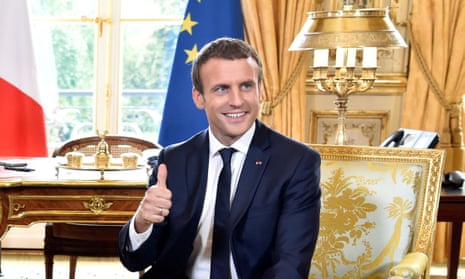
The resignation marks an extraordinary moment in modern French political history, with Lecornu becoming the fourth prime minister to leave office in barely a year. According to reports from The Associated Press, the French presidency confirmed that Macron has accepted the resignation, leaving the country in a state of political limbo. Lecornu had replaced his predecessor, François Bayrou, in September, taking office during a period of prolonged political uncertainty that has gripped the nation.
Roots of the Political Crisis
The current political turmoil traces back to Macron's decision to call snap elections last year, which produced a deeply fragmented legislature and created a political impasse that has proven impossible to resolve. The National Assembly currently features a stark division of power, with far-right and left-wing lawmakers holding over 320 seats, while centrists and allied conservatives control just 210 seats. This distribution leaves no party with an overall majority, making effective governance extremely challenging.

Immediate Fallout and Reactions
The resignation triggered immediate political reactions across the spectrum. Far-right leader Marine Le Pen called for either new snap parliamentary elections or Macron's resignation, stating that "we have reached the end of the road." Meanwhile, the far-left France Unbowed party also demanded Macron's departure, while other left-wing voices advocated for reviving a coalition of leftists, socialists, greens, and communists.
The economic impact was equally immediate, with the CAC-40 index of leading French companies plunging nearly two percent following the announcement. The situation created the bizarre circumstance where ministers appointed just hours earlier found themselves becoming caretaker ministers before some had even been formally installed in their offices.
Cabinet Controversy and Resignation Rationale
Lecornu's cabinet selections faced widespread criticism across the political spectrum, particularly his decision to bring back former Finance Minister Bruno Le Maire to serve as defense minister. Critics argued that under Le Maire's previous financial leadership, France's public deficit had soared to concerning levels. The new government largely maintained key positions from the previous cabinet, drawing accusations that it represented continuity rather than the promised break from past approaches.

In his resignation speech, Lecornu acknowledged that conditions were no longer met to remain in office after failing to build the necessary consensus. He emphasized the need for selflessness and humility in political leadership, stating that "one must always put one's country before one's party." This sentiment reflects the deep challenges facing French politicians as they navigate the country's complex political landscape.
Broader Implications and Future Challenges
The resignation occurs at a critical juncture for France, with less than two years remaining before the next presidential election. The country faces significant economic challenges, including a massive debt crisis that saw public debt reach 3.346 trillion euros ($3.9 trillion) by the end of the first quarter of 2025, representing 114 percent of GDP. Debt servicing remains a major budget item, accounting for approximately seven percent of state spending.
Lecornu's primary task would have been passing a budget under these challenging economic conditions, a responsibility that now falls to his yet-to-be-named successor. The political instability raises serious questions about France's ability to address these pressing economic issues effectively.
As reported by The Associated Press, conservative leader Bruno Retailleau, who remained as interior minister in the short-lived government, expressed frustration with the situation, noting that the government "embodied all the conditions to be censured." This sentiment captures the broader political discontent that has made stable governance increasingly elusive in contemporary France.