The Growing Threat of Space Debris in Low Earth Orbit
Space debris poses a critical threat to modern satellite operations in low Earth orbit, where old rocket parts and decommissioned satellites continue to orbit at high speeds. Recent research identifies 50 particularly hazardous objects that drive collision risks, with 76% of these concerning items deposited before the year 2000. The situation is worsening as new rocket bodies continue to be abandoned in orbit, particularly from recent Chinese constellation launches, creating long-term collision hazards that could trigger cascading space debris scenarios.
The growing accumulation of space debris in low Earth orbit represents one of the most pressing challenges facing modern space operations. As old rocket parts and decommissioned satellites continue to orbit at nearly 5 miles per second, they create collision risks for the ever-expanding constellations of operational satellites that support global communications, Earth observation, and scientific research.

The Most Hazardous Space Debris
Recent research presented at the International Astronautical Congress in Sydney has identified the 50 most concerning pieces of space debris currently orbiting Earth. These objects, primarily consisting of dead rockets left at the end of their missions, pose the highest risk of driving additional debris creation through collisions. The analysis considered factors including proximity to other space traffic, altitude, and mass to determine which objects present the greatest long-term hazard.
What makes this situation particularly alarming is that 76% of these high-risk objects were deposited in orbit before the year 2000, with 88% being rocket bodies. Larger debris at higher altitudes between 700 and 1,000 kilometers above Earth pose the most significant long-term risk because collisions at these altitudes could create debris that remains in orbit for centuries.
Geographic Distribution of Space Junk
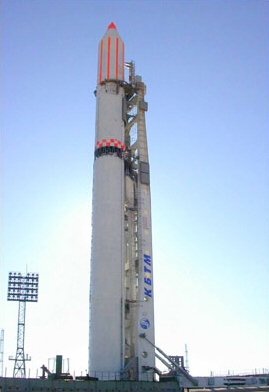
The distribution of these hazardous objects reveals clear patterns in spacefaring nations' debris management practices. Russia and the former Soviet Union account for 34 of the 50 most concerning objects, followed by China with 10, the United States with three, Europe with two, and Japan with one. Russia's SL-16 and SL-8 rockets are particularly problematic, accounting for 30 of the top 50 slots.
The Kessler Syndrome Threat
The primary concern with space debris accumulation is the potential for triggering what scientists call the Kessler Syndrome. This scenario involves a cascading series of collisions where each impact creates more debris, which in turn increases the likelihood of additional collisions. At orbital velocities, even modestly sized objects carry tremendous kinetic energy, meaning collisions can generate thousands of new debris fragments that further congest valuable orbital pathways.
Current Trends and Policy Challenges
Despite growing awareness of the space debris problem, recent trends show concerning developments. Since January 2024, 26 rocket bodies have been abandoned in low Earth orbit with orbital lifetimes exceeding 25 years, directly contradicting international guidelines established by the Inter-Agency Space Debris Coordination Committee. This committee includes representatives from all major space powers and recommends that space junk should reenter Earth's atmosphere within 25 years if left in low enough orbits.
The United States and European governments have implemented policies requiring launch companies to either deorbit their rocket stages or deposit them at altitudes ensuring natural atmospheric reentry within 25 years. SpaceX, for example, routinely deorbits Falcon 9 upper stages over unpopulated ocean areas. However, these policies don't apply to missions delivering satellites to altitudes above low Earth orbit.

Potential Solutions and Future Outlook
Research indicates that targeted removal of the most hazardous space debris could significantly reduce collision risks. Removing just the top 10 most concerning objects would reduce the overall debris-generating potential by 30%, while removing all 50 would cut the risk by half. Several companies, including Japan's Astroscale, are developing active debris removal technologies, though the business case for such services remains challenging.
The international space community faces the dual challenge of addressing existing debris while preventing new accumulation. As satellite constellations continue to expand, particularly with China's deployment of the Guowang and Thousand Sails networks, responsible space operations become increasingly critical for preserving access to valuable orbital regions for future generations.