Read on the Guardian
CDC Allocates $107 Million in Emergency Funding for Ebola Outbreak Response in DRC and Uganda
The U.S. Centers for Disease Control and Prevention (CDC) has announced $107 million in emergency funding to bolster the response to an ongoing Ebola outbreak in the Democratic Republic of the Congo (DRC) and Uganda. With confirmed cases surpassing 1,000, health officials stress the global risk remains low despite the outbreak being the third largest on record. The funding aims to support disease surveillance, field staff, and domestic preparedness as the three North American nations co-host the FIFA World Cup.
The U.S. Centers for Disease Control and Prevention (CDC) is mobilizing $107 million in emergency funds to intensify the fight against the Ebola outbreak in the Democratic Republic of the Congo (DRC) and Uganda, as the number of confirmed infections surpasses 1,000. This significant financial injection underscores the seriousness of the situation, which health officials have described as the third largest Ebola outbreak on record, even as they maintain that the overall global risk remains low.
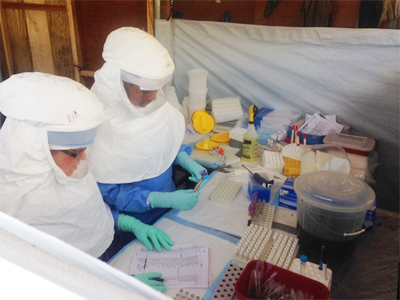
Dr. Satish K. Pillai, the incident manager for the CDC's Ebola response, confirmed in a press briefing that the outbreak has now reached nearly 1,000 confirmed cases spread across 31 health zones within the DRC. Additionally, 31 cases have been identified in Kampala, Uganda. The CDC currently has 23 field staff actively supporting disease investigations and a total of 125 personnel deployed across both affected countries. The emergency funding will be critical for expanding these operations, procuring essential supplies, and enhancing coordination with local health authorities.
The context of this outbreak is particularly complex as it unfolds concurrently with the joint hosting of the FIFA World Cup by the United States, Canada, and Mexico. This global event draws millions of international visitors, adding a layer of logistical concern for public health officials. The CDC is proactively managing this risk by holding twice-weekly coordination calls with health departments in the U.S. World Cup host cities. To date, local health authorities have primarily managed typical large-event health issues, such as heat-related illnesses, rather than any signs of the virus.
The current outbreak involves the Bundibugyo viral disease (BVD), a rare zoonotic species of the Ebola virus. This particular strain is known for its high mortality rate, having killed between 30% and 50% of those infected in recent regional outbreaks. The disease spreads through direct contact with the blood, bodily fluids, or contaminated surfaces of an infected person, a transmission pattern that is far less contagious than airborne diseases like COVID-19 or measles. This factor is a primary reason why global health authorities consider the international threat level to be low.

Despite the contained transmission mechanism, the outbreak presents severe challenges for the affected regions. African health officials have warned that without a drastic escalation in containment efforts, the current outbreak could become the worst on record and potentially take a year to bring under control. The deadliest Ebola epidemic in history, which ravaged West Africa and the eastern DRC between 2014 and 2016, infected over 28,000 people and claimed more than 11,000 lives. As of mid-June, the CDC has reported 837 confirmed cases in the DRC and 19 in Uganda, with a combined death toll of 198 people.
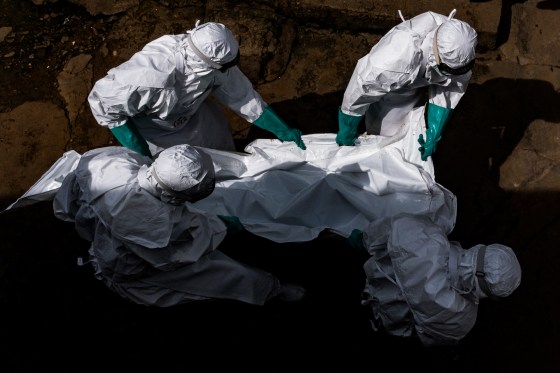
International response efforts are complicated by several factors. The U.S. is among 22 countries that have imposed travel restrictions on individuals arriving from the outbreak zones, a measure that has drawn criticism from some global health experts who argue it can impede the emergency response by creating logistical hurdles and fostering stigma. Furthermore, the local containment of the disease is severely hindered by community mistrust, a critical shortage of personal protective equipment (PPE), and a lack of vehicles needed to safely transport the deceased for dignified burials, which are crucial for preventing further spread.
The new $107 million from the CDC adds to approximately $910 million that had been previously pledged by international donors. However, African health leaders report that less than 10% of that pledged amount has actually been received, creating a significant funding gap. The CDC's primary objectives are to control the outbreak at its source in the DRC and Uganda while ensuring domestic readiness to respond quickly and effectively in the highly unlikely event that cases appear on U.S. soil. This dual strategy of aggressive containment abroad and vigilant preparedness at home forms the core of the current public health response.