Read on the Guardian
Fatal Rope Jumping Accident in Brazil: Instructor Negligence and the Dangers of Extreme Sports
A tragic rope jumping accident in Limeira, Brazil, claimed the life of 21-year-old Maria Eduarda Rodrigues de Freitas after instructors failed to attach her safety harness before throwing her from the 40-meter Ponte do Esqueleto bridge. The incident has led to the arrest of three instructors on potential manslaughter charges, prompting a broader discussion about safety regulations in extreme sports and the consequences of negligence in adventure tourism.
A tragic incident in Brazil's São Paulo state has highlighted the critical importance of safety protocols in extreme sports, following the death of 21-year-old Maria Eduarda Rodrigues de Freitas during a rope jumping activity at the Ponte do Esqueleto (Skeleton Bridge) in Limeira. The young woman, who aspired to become a physical education teacher, died when the two instructors involved threw her from the 40-meter (130-foot) abandoned bridge without first attaching her to any safety equipment. This devastating event has resulted in the arrest of three instructors on potential manslaughter charges and has raised serious questions about negligence and regulation in the adventure tourism industry.

The Incident and its Immediate Aftermath
The accident occurred on a Saturday when De Freitas visited the Ponte do Esqueleto, a well-known location for practicing extreme sports like rope jumping and bungee jumping. According to reports, the young woman had requested to be launched in an airplane-style, where two instructors hoist the participant above their shoulders as they spread out their arms. However, footage shared online shows the two men in white helmets launching De Freitas into the abyss without any safety cord attached to her, while an onlooker is heard screaming at the men to attach a cord.
Police investigator Andrea Levy told journalists on Monday that the three instructors involved in the incident acknowledged that De Freitas was not connected to safety ropes at the time of her jump. Levy stated that the instructors do not remember who forgot to attach the ropes or who failed to check the equipment, but confirmed that the ropes were not attached to her. The instructors themselves were wearing harnesses that appeared to be securely fastened to a safety rope. All three instructors have been arrested and could potentially face manslaughter charges.
Rope Jumping vs. Bungee Jumping: Understanding the Sport
It is important to distinguish rope jumping from the more commonly known bungee jumping. While both involve leaping from a height with a cord attached, they utilize different equipment and produce distinct motions. Bungee jumping uses elastic rubber cords that create a vertical, bouncing effect. In contrast, rope jumping uses low-stretch climbing ropes. This difference in cord elasticity converts the fall into a horizontal, pendulum-like swing. The tragic outcome in this case was not a result of the sport itself, but the complete failure to attach the safety cord.
The Role of Instructor Negligence
The core of this tragedy lies in human error and negligence. The fact that the instructors could not recall who failed to attach the ropes indicates a systemic failure in their pre-jump safety checklist. For any extreme sport, a structured and mandatory pre-jump safety check is the most critical step. This should include a double-check system where one instructor attaches the harness, another verifies the connection, and a third person confirms the attachment before the jump is cleared. The absence of such a system at Ponte do Esqueleto proved fatal. The incident serves as a stark reminder that in adventure tourism, a single lapse in concentration can have irreversible consequences.
Consequences for the Instructors and the Broader Industry
The arrest of the three instructors on potential manslaughter charges signals a serious legal response to this negligence. This case could set a powerful precedent for how such accidents are investigated and prosecuted in Brazil. Beyond the legal consequences for those directly involved, this incident is likely to have a chilling effect on unregulated or poorly managed extreme sports operations, not just in Limeira but across the country. It prompts a necessary review of industry standards, safety training requirements, and licensing for adventure sports operators.
What Went Wrong: A Breakdown of Safety Failures
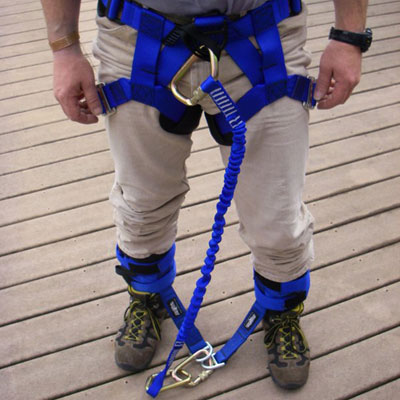
- No Safety Harness Attachment: The most fundamental failure was that the victim was not attached to the safety rope. This is the primary responsibility of the instructors and represents a catastrophic oversight.
- Lack of Pre-Jump Verification: The instructors failed to follow any standard safety checklist before the jump. A proper procedure would involve a step-by-step verification of all equipment.
- Inadequate Supervision: The presence of an onlooker shouting warnings suggests that the instructors may have been distracted or rushed, failing to heed a visual or verbal red flag.
- Absence of a Secondary Check System: There was no backup person or system to verify that all safety measures were in place before the jump was executed.
Conclusion
The death of Maria Eduarda Rodrigues de Freitas is a profound tragedy that exposes the dangerous consequences of negligence in extreme sports operations. The fact that this accident was entirely preventable makes it all the more heartbreaking. As the legal process unfolds against the three instructors, the incident should serve as a catalyst for change within the Brazilian adventure tourism industry. It underscores the absolute necessity of rigorous, fail-safe protocols, mandatory safety training, and unwavering professionalism. For the safety of all participants, extreme sports operators must treat every jump as a potentially life-or-death event, where no shortcut or oversight is acceptable. The memory of De Freitas, a young woman with a dream of becoming a teacher, must not be forgotten; it should be the driving force behind meaningful safety reforms.