Read on PBS News
Rep. Brian Fitzpatrick on War Powers, the Anti-Weaponization Fund, and the Growing Republican Divide with Trump
In a recent interview, Rep. Brian Fitzpatrick (R-PA) explained his vote to limit President Trump's military action in Iran, citing strict adherence to the War Powers Act of 1973. He discusses the need for congressional approval for military engagements, his opposition to the anti-weaponization fund, and his concerns over presidential appointments. Fitzpatrick's stance highlights a growing wedge between some Republicans and the Trump administration, emphasizing his commitment to following the law and representing his constituents over party loyalty.
The U.S. House of Representatives recently voted to limit President Trump from further military action in Iran, a move that saw a rare split within the Republican Party. One of the four House Republicans who crossed party lines to support the resolution was Rep. Brian Fitzpatrick of Pennsylvania. In an interview with PBS NewsHour, Fitzpatrick detailed his reasoning behind the vote, his opposition to a proposed anti-weaponization fund, and his broader concerns about presidential authority and appointments. His perspective sheds light on the growing divide between some Republicans and the Trump administration, driven by a commitment to constitutional checks and balances.
Adherence to the War Powers Act
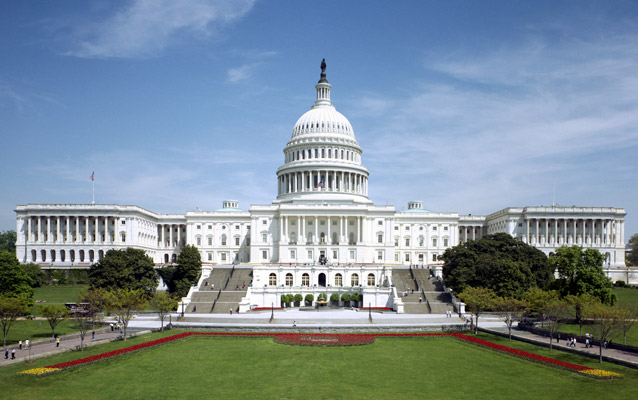
Fitzpatrick emphasized that his vote was not a political statement but a matter of legal obligation. He explained that the War Powers Act of 1973 requires the president to notify Congress within 48 hours of commencing hostilities and to obtain congressional approval within 60 days. "As soon as we hit that 60-day mark, every resolution that's been brought to the floor, I have supported," Fitzpatrick stated. He argued that while some may disagree with the law, the only options are to follow it or change it, not to violate it.
Violations by Previous Administrations
Fitzpatrick noted that the issue of executive overreach is not new. He pointed out that multiple presidents, including Democrats and Republicans, have violated the War Powers Act in the past, citing examples such as Libya under President Obama, Bosnia and Kosovo under President Clinton, and Panama under President George H.W. Bush. "Unfortunately, many presidents that have preceded this one have violated it as well," he said. Fitzpatrick stressed that his role in Congress is to enforce the law now, regardless of past precedents.
The Anti-Weaponization Fund Controversy
Fitzpatrick also addressed his opposition to the so-called "anti-weaponization fund," a nearly $2 billion proposal that he believes represents a serious abuse of authority. He has been a leading voice against this initiative, introducing a bipartisan bill with Rep. Tom Suozzi to address the issue. Fitzpatrick argued that the fund gives too much discretion to the attorney general, allowing for potential misuse. He traced the root of the problem to the 1956 Federal Judgment Act, which he says has been significantly watered down over the years, migrating authority away from Congress and toward the executive branch.
Concerns Over Presidential Appointments
Fitzpatrick expressed skepticism about the qualifications of several Trump administration appointees. He stated that Bill Pulte, the president's pick for Director of National Intelligence, lacks the necessary background for the role, citing his own 15 years in the intelligence community as an FBI agent and his current position as chairman of the CIA Subcommittee. Fitzpatrick also voiced opposition to Todd Blanche's nomination for Attorney General, citing the acting attorney general's role in the anti-weaponization fund as a reason for his lack of confidence.
A Growing Wedge Between Republicans and Trump
Fitzpatrick's votes and comments illustrate a broader trend of some Republicans breaking with the president on key issues. When asked about Trump's criticism, Fitzpatrick responded that he reports to no person or party, but only to his constituents in Pennsylvania's First Congressional District. He emphasized the importance of a separate and independent legislative branch that serves as a constitutional check on the executive. His stance reflects a commitment to principle over party loyalty, a position that has increasingly placed him at odds with the Trump administration.
Conclusion
Rep. Brian Fitzpatrick's recent actions highlight the ongoing tension within the Republican Party between loyalty to the president and adherence to constitutional norms. His vote to limit military action in Iran and his opposition to the anti-weaponization fund are rooted in a strict interpretation of the law and a belief in the separation of powers. As Fitzpatrick continues to champion these principles, he represents a faction of Republicans who prioritize institutional checks and balances over executive deference, a stance that may continue to drive a wedge between some members of the party and President Trump.