Read on the Guardian
Julius Malema Sentenced to Five Years in Prison for 2018 Rally Gun Incident
Julius Malema, the leader of South Africa's left-wing Economic Freedom Fighters party, has been sentenced to five years in prison for firing a rifle in the air at a 2018 political rally. The conviction, which includes charges of unlawful firearm possession and discharging a weapon in public, stems from an incident at the party's anniversary celebrations. While his lawyers have immediately appealed the sentence, allowing Malema to remain free, the case highlights significant legal and political tensions. The magistrate emphasized the heightened accountability expected of public officials, and the sentence could ultimately bar Malema from parliament if upheld. This development occurs amidst the EFF's declining electoral support and ongoing controversies surrounding Malema's rhetoric.
In a significant legal development with profound political implications, Julius Malema, the firebrand leader of South Africa's Economic Freedom Fighters (EFF), has been handed a five-year prison sentence. The conviction relates to a 2018 incident where Malema fired a rifle into the air during a political rally. This article examines the details of the case, the judicial reasoning behind the sentence, its potential impact on Malema's political career, and the broader context within South African politics.
The Conviction and Sentencing Details
Julius Malema was convicted last year on five charges, including the unlawful possession of a firearm and discharging a weapon in a public place. The incident occurred at the EFF's fifth-anniversary celebrations in KuGompo City (formerly East London). Magistrate Twanet Olivier, presiding over the case, delivered the five-year sentence, stating the act was not impulsive but a planned part of the event. She rejected the defense's argument that the shots were merely celebratory, emphasizing the serious public safety risks posed by such actions.
In her sentencing remarks, Magistrate Olivier drew a direct line to South Africa's ongoing struggle with gun violence, noting the tragic frequency of children being caught in crossfire. She underscored that the accountability for a public office bearer "weighs heavy" compared to that of an ordinary citizen. The sentence exceeds 12 months, which means, if ultimately upheld after all appeals, it would bar Malema from serving as a member of parliament. State prosecutors had initially argued for a 15-year term, citing Malema's influence as a political leader whose behavior is emulated by young people.

Legal Appeals and Immediate Political Fallout
Malema's legal team immediately filed an appeal against the sentence. Magistrate Olivier granted leave to appeal the sentence but not the conviction itself; his lawyers have indicated they will petition a higher court for leave to appeal the conviction as well. This legal process ensures Malema will remain free while the appeals are underway, preventing any immediate removal from his parliamentary seat. The case was notably brought by AfriForum, a conservative lobby group representing Afrikaner interests, which has also pursued separate hate speech charges against Malema related to the "Kill The Boer" chant.
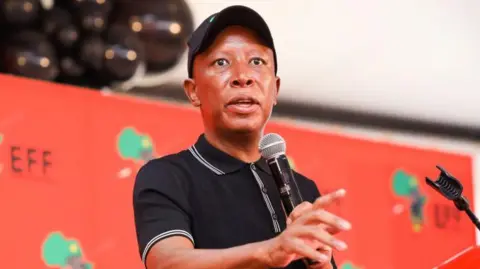
Following the sentencing, Malema addressed supporters outside the court, delivering a defiant speech. He personally attacked Magistrate Olivier, accusing her of racism, emotional decision-making, and failing to properly review written arguments. "We were tried by a magistrate who doesn't read, who uses emotions, who speaks politics," he declared, later framing the legal battle as a fight against "white supremacy." This rhetoric aligns with the EFF's established narrative of confronting historical and systemic oppression.
Broader Political Context and the EFF's Trajectory
Julius Malema, a former leader of the African National Congress (ANC) youth league, founded the EFF in 2013 after his expulsion from the ruling party. The EFF positions itself as a radical, anti-imperialist movement inspired by Marxist principles, advocating for policies like land expropriation without compensation and the nationalization of key industries. Known for its disruptive tactics in parliament, the party has attracted a base among young South Africans frustrated by persistent unemployment and inequality.

However, the party's electoral momentum has recently waned. In the 2024 national elections, the EFF secured 9.5% of the vote, a decrease from the 10.8% it achieved in 2019. This legal setback for its charismatic leader poses a further challenge. The case has also drawn international attention; in 2025, then-U.S. President Donald Trump played a edited video clip of Malema's speeches, including the "Kill The Boer" chant, to South African President Cyril Ramaphosa. It is worth noting that South Africa's Constitutional Court ruled in 2025 that the chant, originating as an anti-apartheid song, does not constitute hate speech.
Conclusion: A Pivotal Moment for South African Politics
The sentencing of Julius Malema represents a pivotal moment at the intersection of law, political accountability, and South Africa's complex social landscape. While the appeals process will determine the final outcome, the court's firm stance sends a clear message about the responsibilities of public figures regarding firearm safety and the rule of law. For the EFF, navigating this period without its incarcerated leader—should the sentence be upheld—would be an unprecedented test. For the nation, the case underscores the enduring tensions and debates that shape its post-apartheid democracy, where the actions of political leaders continue to resonate far beyond the rally stage or parliamentary chamber.