The Bizarre Superionic State of Matter Inside Uranus and Neptune
Deep within the ice giants Uranus and Neptune, scientists using advanced quantum simulations have predicted the existence of a strange new state of matter. This 'quasi-one-dimensional superionic' phase, formed from carbon hydride under extreme pressure and temperature, features hydrogen atoms spiraling through a rigid carbon lattice. This discovery could fundamentally reshape our understanding of planetary interiors, explaining the unusual heat flow and enigmatic magnetic fields of these distant worlds.
The deep interiors of planets have long been a frontier of scientific mystery, particularly for the ice giants Uranus and Neptune. Recent groundbreaking research, published in Nature Communications in 2026, suggests these distant worlds may harbor a form of matter unlike anything found on Earth. Using sophisticated quantum simulations, scientists from the Carnegie Institution for Science have predicted that carbon and hydrogen can combine under extreme conditions to create a bizarre hybrid state—part solid, part fluid. This discovery not only challenges our fundamental understanding of materials but also provides crucial insights into the hidden dynamics shaping planetary evolution.

Unlocking the Secrets of Planetary Interiors
Understanding what lies beneath a planet's surface is key to deciphering its history, composition, and behavior. With over 6,000 exoplanets discovered, scientists from astronomy, planetary science, and Earth science are increasingly collaborating to model the physical processes that govern planetary formation and evolution. A primary focus is the generation of magnetic fields, which serve as a window into a planet's internal dynamics. For Uranus and Neptune, their magnetic fields are peculiarly offset and irregular, hinting at unusual processes occurring within their deep "hot ice" layers—regions of immense pressure and temperature where familiar compounds like water, methane, and ammonia are forced into exotic forms.
The Discovery of a Quasi-One-Dimensional Superionic State
The research, led by Cong Liu and Ronald Cohen, employed high-performance computing and machine-learning tools to simulate the behavior of carbon hydride (CH) under conditions mimicking the interiors of ice giants. The simulations modeled pressures from 500 to 3,000 gigapascals (millions of times Earth's atmospheric pressure) and temperatures between 4,000 and 6,000 Kelvin. The results were startling: the carbon atoms formed an ordered, hexagonal framework, while the hydrogen atoms moved freely through it along specific, spiral-like pathways.
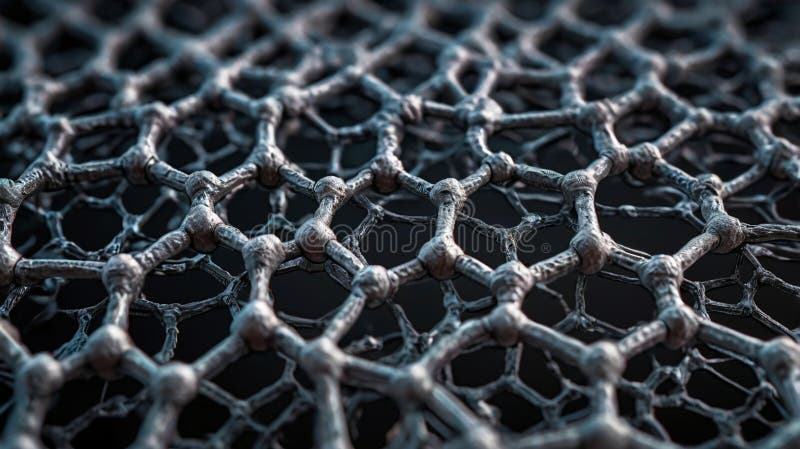
This creates what the researchers term a "quasi-one-dimensional superionic" state. Superionic materials are a unique class where one atomic component remains fixed in a crystal lattice while another flows like a liquid. The "quasi-one-dimensional" aspect is the breakthrough; the hydrogen motion is not random in three dimensions but is channeled along well-defined, helical paths within the carbon structure. As Ronald Cohen explained, "This newly predicted carbon-hydrogen phase is particularly striking because the atomic motion is not fully three-dimensional. Instead, hydrogen moves preferentially along well-defined helical pathways embedded within an ordered carbon structure."
Implications for Planetary Dynamics and Magnetic Fields
The directional flow of hydrogen atoms in this superionic state has profound implications for how energy is transported inside Uranus and Neptune. Heat and electrical conductivity are not isotropic; they are directional, guided by the spiral pathways. This could dramatically alter models of internal convection and heat transfer. Most significantly, it provides a compelling new mechanism to explain the planets' mysterious and complex magnetic fields. The generation of a magnetic field typically requires the motion of electrically conductive fluid. The channeled, superionic flow of hydrogen could create unique dynamo processes, potentially accounting for the off-center, multipolar magnetic fields observed at these ice giants.
Broader Scientific Impact
This discovery extends beyond planetary science. It underscores a fundamental principle of materials science: under extreme conditions, even the most abundant and simple elements—carbon and hydrogen—can organize into highly complex and unexpected structures. As Cong Liu noted, "Carbon and hydrogen are among the most abundant elements in planetary materials, yet their combined behavior at giant-planet conditions remains far from fully understood." The research opens new avenues for exploring directional behavior in matter, which could inspire advances in materials engineering and the design of novel substances with tailored conductive properties.
In conclusion, the prediction of a quasi-one-dimensional superionic state within Uranus and Neptune represents a major leap in planetary physics. It transforms our view of these ice giants from static, frozen worlds to dynamic planets with incredibly active and structured interiors. By continuing to bridge observational data with advanced simulations, scientists are not only solving long-standing mysteries in our own solar system but also building the foundational knowledge needed to interpret the growing catalog of distant exoplanets. The bizarre matter hiding within these blue worlds reminds us that the universe still holds profound surprises in the most unexpected places.