Earth's Cosmic Lottery: The Chemical Goldilocks Zone That Made Life Possible
New research from ETH Zurich reveals Earth's habitability may be the result of an extraordinary cosmic coincidence. During the planet's formation 4.6 billion years ago, oxygen levels had to fall within an extremely narrow range—a chemical 'Goldilocks zone'—for life-essential elements phosphorus and nitrogen to remain accessible. Too much or too little oxygen would have trapped these elements deep within the planet or lost them to space, making life impossible. This discovery suggests that water alone isn't sufficient for habitability and could fundamentally reshape how scientists search for life beyond Earth, emphasizing the need to examine planetary chemistry from the very beginning.
The search for life beyond Earth has long focused on finding planets with liquid water, but groundbreaking new research suggests we may have been looking for the wrong sign. According to a study led by ETH Zurich scientists, Earth's ability to support life may stem from an astonishingly precise chemical balance established during the planet's earliest formation—a cosmic lottery win that placed our planet in a narrow chemical "Goldilocks zone." This discovery fundamentally challenges our understanding of planetary habitability and suggests that water alone is insufficient for life to emerge.

The Critical Role of Phosphorus and Nitrogen
Life as we know it depends on specific chemical elements being available in sufficient quantities. Two of the most crucial are phosphorus and nitrogen. Phosphorus forms the backbone of DNA and RNA molecules that store and transmit genetic information, while also playing an essential role in cellular energy management through ATP (adenosine triphosphate). Nitrogen constitutes a major component of proteins, the building blocks of cells that enable virtually all biological functions. Without adequate supplies of these elements in accessible forms, life cannot emerge from non-living matter.
The research, published in Nature Astronomy and led by Craig Walton of ETH Zurich's Centre for Origin and Prevalence of Life, demonstrates that these elements must be present in the right amounts during a planet's core formation phase. "During the formation of a planet's core, there needs to be exactly the right amount of oxygen present so that phosphorus and nitrogen can remain on the surface of the planet," explains Walton. For Earth, this critical chemical balancing act occurred approximately 4.6 billion years ago, providing our planet with what appears to be an exceptionally fortunate chemical starting point.
How Core Formation Determines Planetary Chemistry
Planets begin their existence as bodies of molten rock, undergoing a process of differentiation where materials separate according to density. Heavy metals like iron sink inward to form the core, while lighter materials remain above to eventually become the mantle and crust. The oxygen levels present during this crucial phase determine the ultimate distribution of life-essential elements throughout the planet.
If oxygen levels are too low during core formation, phosphorus bonds with heavy metals like iron and gets pulled down into the core, becoming permanently inaccessible to potential surface life. Conversely, if oxygen levels are too high, phosphorus remains in the mantle, but nitrogen becomes more volatile and likely escapes into the atmosphere, where it can be lost to space. Only within a very specific range of moderate oxygen conditions—what researchers term the chemical Goldilocks zone—do both phosphorus and nitrogen remain available in the mantle in quantities sufficient to support the emergence of life.
Earth's Exceptional Chemical Fortune
Through extensive modeling, Walton and his colleagues, including ETH Zurich professor Maria Schönbächler, determined that Earth formed precisely within this narrow chemical window. "Our models clearly show that the Earth is precisely within this range. If we had had just a little more or a little less oxygen during core formation, there would not have been enough phosphorus or nitrogen for the development of life," says Walton. This finding positions Earth as exceptionally fortunate in cosmic terms, having won what amounts to a chemical lottery during its formation.
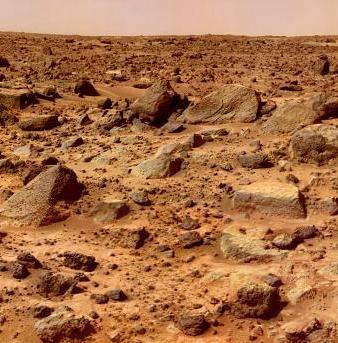
The research also examined other rocky planets, including Mars, and found they formed under oxygen conditions outside this Goldilocks zone. On Mars, this resulted in more phosphorus in the mantle than Earth but significantly less nitrogen, creating challenging conditions for life as we understand it. This comparative analysis highlights how subtle differences in early planetary chemistry can have profound implications for long-term habitability.
Implications for the Search for Extraterrestrial Life
These findings represent a paradigm shift in astrobiology and the search for life beyond Earth. The traditional focus on locating planets within the "habitable zone" of their stars—where liquid water could exist—now appears insufficient. A planet may possess water yet remain chemically unsuitable for life from its very inception if oxygen levels during core formation placed it outside the chemical Goldilocks zone. This means planetary systems could be water-rich but life-poor due to fundamental chemical constraints established billions of years earlier.
The research suggests astronomers may need to refine their search parameters significantly. Since the oxygen available during planet formation depends largely on the chemical composition of the host star—and planets form from the same material as their star—scientists can potentially estimate these early chemical conditions by studying stellar compositions. "This makes searching for life on other planets a lot more specific. We should look for solar systems with stars that resemble our own Sun," Walton advises. This approach would prioritize systems with chemical profiles similar to our own, increasing the likelihood of finding planets that formed within the necessary chemical parameters.
Conclusion: Rethinking Planetary Habitability
The discovery of Earth's chemical Goldilocks zone represents a fundamental advancement in our understanding of planetary science and astrobiology. It suggests that Earth's ability to support life resulted from an extraordinary combination of precise chemical conditions during its formation—conditions that may be far rarer in the universe than previously assumed. As scientists continue to search for life beyond our solar system, this research provides a crucial new framework for evaluating planetary candidates, emphasizing that habitability depends not just on present conditions but on chemical history stretching back to a planet's very origins.
This work, detailed in the study "The chemical habitability of Earth and rocky planets prescribed by core formation" published in Nature Astronomy, underscores the interconnected nature of planetary formation, chemistry, and biology. It reminds us that Earth's capacity to support life represents not just favorable environmental conditions but a remarkable cosmic alignment of chemical factors—a reminder of both our planet's uniqueness and the sophisticated criteria needed to identify other potentially life-bearing worlds in the vast expanse of space.