Read on the Guardian
Internal Labor Concerns Emerge Over Australia's Support for US-Israel Strikes on Iran
Exclusive reporting reveals significant private alarm within the Australian Labor Party over the Albanese government's immediate and unreserved endorsement of US-Israel strikes on Iran in February. Several MPs questioned the rush to support military action likely in breach of international law, with concerns aired during a 'robust' left faction meeting. The government's statement, issued within hours of the attack, omitted any reference to international law or the rules-based order, contrasting sharply with its more measured response to previous US actions. This internal dissent highlights tensions within the party as Australia commits military assets to the region while publicly maintaining support for the controversial strikes.
The Australian Labor Party, traditionally cautious about endorsing foreign military interventions, found itself embroiled in significant internal controversy following its government's immediate support for US-Israel strikes on Iran in February. According to exclusive reporting by Guardian Australia, several Labor MPs were privately alarmed by what they perceived as a rushed endorsement of legally questionable military action that sparked a widening regional conflict. This article examines the nature of these internal concerns, the government's subsequent military commitments, and the broader implications for Australian foreign policy.

The Controversial Government Statement
On the evening of Saturday, 28 February, mere hours after the United States and Israel initiated bombing campaigns against Iranian targets, Prime Minister Anthony Albanese, Foreign Affairs Minister Penny Wong, and Defence Minister Richard Marles issued a joint statement offering Australia's unreserved support. The statement declared, "We support the United States acting to prevent Iran from obtaining a nuclear weapon and to prevent Iran continuing to threaten international peace and security." Notably absent was any reference to international law, the rules-based order, or explicit acknowledgment that sovereign Iranian territory was being bombed. This omission, as confirmed to Guardian Australia by multiple Labor sources, became a primary source of consternation among concerned MPs.
Internal Labor Party Dissent
The government's swift alignment with the US-Israel position triggered immediate private backlash within the party. Guardian Australia's investigation, based on conversations with six anonymous Labor sources, reveals that several MPs questioned why the government rushed to endorse strikes that numerous international law experts, including UN Special Rapporteur Ben Saul, have argued were likely in breach of the UN Charter. The concerns were not confined to the party's left wing; members of the right faction also expressed unease, though they declined to speak on record for fear of being labeled troublemakers.
The Left Faction Meeting
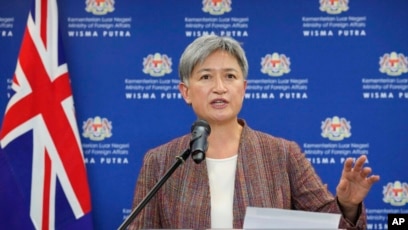
The tension culminated in what sources described as a "robust" debate during a regular sitting week meeting of Labor's left faction on 2 March. While Minister Wong was not present, Defence Industry Minister Pat Conroy fielded questions on her behalf. MPs reportedly challenged the government's position, highlighting the contrast with its more measured response to US strikes on Iranian nuclear sites in June the previous year, when Australia waited nearly 24 hours before offering public backing. The immediate endorsement in February, seen by critics as aligning Australia too closely with the administrations of Donald Trump and Benjamin Netanyahu, sparked fears that Australia was being "fully dragged into another US forever war," as later voiced by the Greens.
Government Actions and Legal Posture
Despite the internal dissent, the federal government proceeded with tangible military support. Ten days into the conflict, it announced the deployment of a specialist surveillance aircraft and stocks of air-to-air missiles to help defend the United Arab Emirates from Iranian retaliatory attacks. Prime Minister Albanese sought to draw a line, stating Australia would not participate in offensive action against Iran nor deploy troops to the Middle East. However, senior ministers continued to publicly endorse the initial strikes while maintaining it was the responsibility of the US and Israel to justify the attacks' consistency with international law—a legal posture that did little to assuage critics within their own party.
Broader Party and Grassroots Reaction
The internal disagreement reflects deeper ideological fractures within Labor regarding Australia's alliance with the United States and its approach to international conflicts. The party's grassroots anti-war group, Labor Against War, is mobilizing in response. The group, which also opposes the AUKUS security pact, plans to circulate a motion to branches in New South Wales and Victoria condemning the war on Iran as an "illegal act of aggression." The draft motion, seen by Guardian Australia, argues the government's support "breaches the fundamental principles and policies of the Australian Labor Party" and contrasts it with the party's principled opposition to the 2003 Iraq War. While such motions are not binding on MPs, they represent a key mechanism for rank-and-file members to influence party policy, as seen previously with motions on Palestinian recognition.
Conclusion: A Government Balancing Act
The revelation of significant private alarm among Labor MPs over the government's response to the Iran strikes underscores the delicate balancing act facing the Albanese administration. It must navigate the imperatives of the ANZUS alliance and regional security concerns while adhering to its stated commitment to a rules-based international order and managing its own party's diverse foreign policy perspectives. As the conflict continues and the Labor National Conference approaches in July, the internal debate over Australia's role in supporting allied military actions—and the legal and moral questions they raise—is unlikely to subside. The episode serves as a potent reminder that even with a disciplined public front, complex international crises can expose and exacerbate fundamental tensions within a governing party.