2026 Women's College Basketball Awards: Strong, Blakes Lead Elite Performers
The 2025-26 women's college basketball season featured compelling award races, with UConn's Sarah Strong securing Player of the Year honors despite a formidable challenge from Vanderbilt's Mikayla Blakes. Oklahoma's Aaliyah Chavez emerged as Freshman of the Year in a tight competition, while Notre Dame's Hannah Hidalgo dominated defensively. Transfer Olivia Miles and coach Shea Ralph completed the major award winners, highlighting a season of exceptional individual performances across the nation's top programs as teams prepare for NCAA tournament selection.
The 2025-26 women's college basketball season unfolded with anticipated dominance and surprising challenges, reshaping award conversations as the NCAA tournament approaches. While UConn forward Sarah Strong entered as the presumptive favorite for national player of the year, Vanderbilt guard Mikayla Blakes engineered a remarkable sophomore campaign to transform the race into a genuine debate. Similarly, the freshman of the year discussion expanded beyond a single standout, with Oklahoma's Aaliyah Chavez facing stiff competition. This analysis examines the season's premier individual honors, highlighting the performances that defined one of the most competitive award cycles in recent memory.

Player of the Year: A Race Transformed
Pre-season projections heavily favored UConn's Sarah Strong for the Player of the Year award, especially with USC's reigning winner JuJu Watkins sidelined by injury. However, Vanderbilt's Mikayla Blakes dramatically altered that narrative with a historic sophomore season. According to ESPN's analysis, Strong ultimately secured the honor due to her unparalleled all-around impact. The UConn star averaged 18.5 points, 7.6 rebounds, 4.1 assists, 3.4 steals, and 1.6 blocks per game while shooting 60.1% from the field and 42.7% from three-point range. Remarkably, she posted these numbers in just 26.4 minutes per game, as UConn's average margin of victory reached 38.4 points.
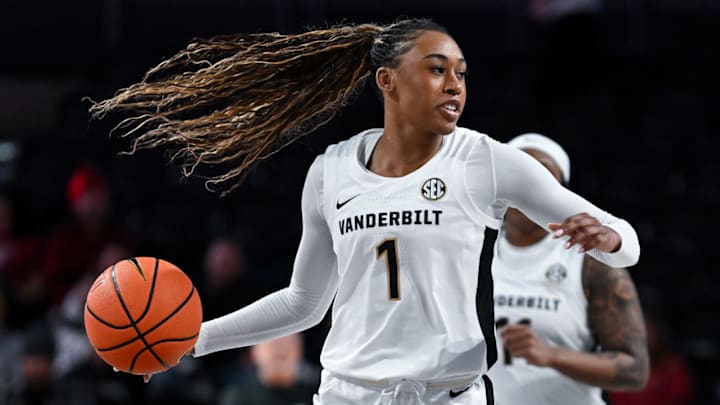
Blakes mounted an extraordinary challenge, averaging 30.5 points per game in SEC regular-season play and earning conference Player of the Year honors. She led a Vanderbilt team picked to finish eighth in the SEC preseason poll to a tie for second place. The debate centered on volume versus efficiency and two-way impact. Strong's defensive prowess was a key separator; she anchored the nation's top-rated defense while maintaining elite offensive efficiency. Her performance in UConn's toughest non-conference games—averaging 21.0 points, 11.0 rebounds, 4.6 assists, and 3.7 steals against top-30 NET teams—demonstrated her ability to elevate against premier competition.
Freshman of the Year: A Crowded Field
The national Freshman of the Year award presented one of the season's closest decisions, with Oklahoma guard Aaliyah Chavez emerging victorious after a peculiar conference award scenario. Chavez won the SEC Freshman of the Week award a record-tying eight times and was the only freshman named to the All-SEC teams (second team), yet the conference's Freshman of the Year honor went to Vanderbilt's Aubrey Galvan. Chavez averaged 18.0 points, 3.8 rebounds, and 4.1 assists in SEC play, including a standout 26-point, 8-assist performance in a victory over regular-season champion South Carolina.
The tie-breaking factor, as noted by ESPN's Michael Voepel, was Chavez's role as the leading scorer for a projected NCAA tournament top-16 seed—the only freshman in that position. USC guard Jazzy Davidson, the Big Ten Freshman of the Year, also presented a strong case with averages of 17.6 points, 5.7 rebounds, and 4.2 assists. This three-way competition highlighted the exceptional depth of freshman talent entering women's college basketball, setting the stage for future award battles as these players develop.
Specialty Awards and Coaching Honors
Notre Dame's Hannah Hidalgo earned Defensive Player of the Year recognition as perhaps the nation's most disruptive force. Hidalgo led the country with 5.4 steals per game—a full steal more than the next player—and recorded four games with 10 or more steals this season. Her defensive impact was particularly notable given Notre Dame's otherwise average defensive metrics in shot blocking and rebounding. TCU's Olivia Miles captured Transfer of the Year honors after moving from Notre Dame and leading the Horned Frogs to the Big 12 regular-season title while averaging 19.6 points, 6.9 rebounds, 6.4 assists, and 1.8 steals.
Vanderbilt's Shea Ralph secured Coach of the Year recognition for returning the Commodores to elite status. In her fifth season, Ralph guided Vanderbilt to a 27-4 overall record and 13-3 SEC mark—both program bests—after being picked eighth in the preseason poll. This marks Vanderbilt's third consecutive NCAA tournament appearance following an eight-year drought, with the Commodores projected as a No. 2 seed with legitimate Sweet 16 aspirations.

All-American Selections and Future Outlook
The season's All-American teams reflected both established stars and emerging talent. The first team featured Sarah Strong (UConn), Lauren Betts (UCLA), Mikayla Blakes (Vanderbilt), Azzi Fudd (UConn), and Hannah Hidalgo (Notre Dame). The second team included Madison Booker (Texas), Joyce Edwards (South Carolina), Olivia Miles (TCU), Jaloni Cambridge (Ohio State), and Olivia Olson (Michigan). Notably, seven of the ten selections are underclassmen, indicating sustained excellence in coming seasons.
The exclusion of Texas's Madison Booker from the first team represented the most difficult decision, particularly following her SEC tournament MVP performance. Iowa State's Audi Crooks, who averaged 25.5 points per game (second only to Blakes nationally), also presented a compelling case for inclusion. With the anticipated healthy return of JuJu Watkins next season, competition for these honors will only intensify, promising continued elevation of individual excellence across women's college basketball.
As teams await NCAA tournament selection, these award winners have established themselves as the standard-bearers for a season marked by individual brilliance and team success. Their performances not only defined the 2025-26 campaign but also set compelling narratives for future seasons as women's college basketball continues to showcase unprecedented depth of talent across all conferences and classifications.