NFL Free Agency 2026: Market Explosions, Strategic Reunions, and Contract Curiosities
The 2026 NFL free agency period has delivered a whirlwind of activity, characterized by a staggering explosion in the edge rusher market, strategic team-building through familiar connections, and several notable contract peculiarities. Key moves include Jaelan Phillips resetting the defensive market with the Panthers, the Tennessee Titans leveraging their new coaching staff's connections for a roster overhaul, and Mike Evans' surprising departure from Tampa Bay to join the San Francisco 49ers. This analysis breaks down the major trends and awards-worthy moves from the early signing frenzy, highlighting how teams are navigating a rapidly inflating salary cap.
The legal tampering period for the 2026 NFL offseason has effectively served as the opening bell for free agency, with a flurry of major deals reshaping team rosters before the official league year even begins. This period has been defined by a few dominant narratives: a shocking inflation of the pass-rush market, teams leaning heavily on pre-existing relationships to build their squads, and veteran players finding new homes in surprising locales. The financial landscape, buoyed by a continuously rising salary cap, has enabled record-breaking contracts at non-quarterback positions, forcing a reevaluation of positional value across the league.

The Domino Effect on the Edge Rusher Market
The most seismic shift occurred along the defensive line, where the market for edge rushers experienced unprecedented growth. The catalyst was the Carolina Panthers' aggressive move to sign former Eagle Jaelan Phillips to a four-year, $120 million contract with $80 million guaranteed, as reported by ESPN's Ben Solak. This deal, averaging $30 million annually, instantly made Phillips one of the league's highest-paid defensive players and established a new benchmark. Phillips' contract, coming off seasons impacted by significant injuries but showcasing consistent pressure generation, signaled a desperate league-wide demand for pass-rush help.
This signing created a ripple effect. Odafe Oweh quickly followed, leaving the Chargers for the Washington Commanders on a four-year, $100 million pact. Former Seahawk Boye Mafe then joined the Cincinnati Bengals on a three-year, $60 million deal. These contracts far exceeded pre-agency projections, indicating that teams are willing to pay a premium for perceived upside and disruption, even for players who served in rotational roles. The collective bargaining of these deals suggests a market correction for the "second tier" of edge rushers, pushing their value closer to established stars.
Strategic Team-Building: The Power of Familiarity
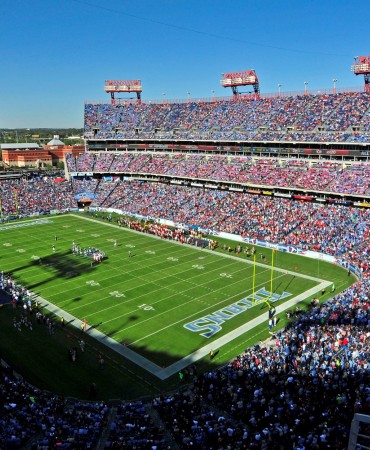
While some teams chased the market, others built through connections. The Tennessee Titans emerged as the poster child for strategic, relationship-driven acquisitions. Under new head coach Robert Saleh and offensive coordinator Brian Daboll, the Titans aggressively targeted players from their former teams. This resulted in significant signings like defensive tackle John Franklin-Myers (Jets), wide receiver Wan'Dale Robinson (Giants), and cornerback Cor'Dale Flott (Giants).
This approach, often criticized for limiting a team's scope, can provide immediate schematic and cultural benefits for a rebuilding franchise. Players familiar with a coach's system and expectations can accelerate installation and establish a foundational standard. For the Titans, importing a cohort from Daboll's New York tenure represents a calculated shortcut to competency, betting that shared history will translate to on-field cohesion and faster development for the rest of the roster.
Notable Player Movements and Contract Intricacies
Beyond the broad trends, several individual moves captured attention. The most shocking was center Tyler Linderbaum's deal with the Las Vegas Raiders: a three-year, $81 million contract that resets the center market by a staggering 50%. At $27 million per year, Linderbaum became the sixth-highest-paid offensive lineman in football, a valuation previously reserved for elite tackles.
In a sentimental shocker, longtime Tampa Bay Buccaneer Mike Evans departed for the San Francisco 49ers on a team-friendly, incentive-laden deal. Evans brings a coveted contested-catch and red-zone skillset to Kyle Shanahan's offense, filling a specific role while the 49ers manage financial risk with minimal guarantees. Meanwhile, the Arizona Cardinals' signing of quarterbacks Jacoby Brissett and Gardner Minshew clearly signals a bridge year, with the franchise likely setting its sights on top prospects in the 2027 NFL Draft.
The offseason also featured its share of curious contract comparisons. After safety Coby Bryant signed with the Chicago Bears for $40 million over three years, the Cincinnati Bengals gave Bryan Cook a nearly identical deal worth $40.25 million. Similarly, tight end Isaiah Likely joined the New York Giants on a three-year, $40 million contract—$700,000 more than the extension his former Baltimore teammate Mark Andrews received. These subtle financial one-upmanships highlight the nuanced negotiations and personal benchmarks that define free agency beyond the headline numbers.
The 2026 free agency period has reinforced key NFL realities: premium pass rushers command ever-increasing sums, coaching connections are a viable roster-building currency, and the rising salary cap continues to create surprising valuations across all positions. As teams finalize their rosters, the impacts of these early moves—the Panthers' gamble on Phillips, the Titans' reunion tour, and the Raiders' record investment in a center—will define the competitive landscape for the upcoming season and beyond.