
Apple Studio Display XDR Review: Unmatched HDR at a Premium Price
Apple's Studio Display XDR arrives in a market saturated with HDR-capable monitors, yet it manages to carve out a unique niche. This review examines how Apple's latest professional display delivers best-in-class HDR performance through advanced local dimming and exceptional brightness, while commanding a premium price that may limit its appeal to a specialized audience. We explore the technical specifications, design choices, and practical considerations for potential buyers.
Apple's Studio Display XDR enters a competitive landscape where high dynamic range (HDR) technology has become increasingly common across monitor offerings. Positioned as a successor to the groundbreaking Pro Display XDR, this new model arrives with tempered expectations but maintains Apple's reputation for pushing display technology boundaries. While the market has evolved significantly since 2019, Apple continues to demonstrate its mastery of display engineering, albeit at a cost that positions this monitor as a specialized tool rather than a mainstream product.

Design and Physical Characteristics
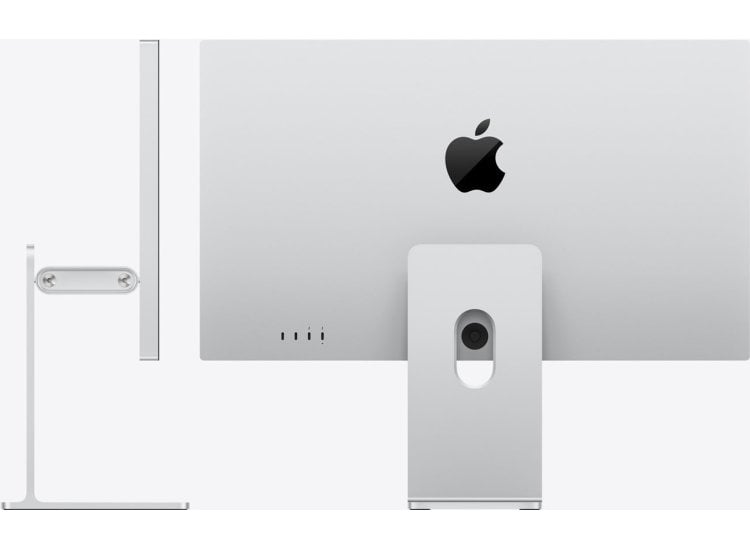
The Studio Display XDR maintains the familiar aesthetic language of Apple's professional displays, featuring a clean, minimalist design with premium materials. Measuring 27 inches diagonally, it represents a departure from the 32-inch Pro Display XDR, a choice that has generated mixed reactions among professional users. The display maintains a substantial thickness of 1.3 inches, housing an impressive array of components including active cooling fans, the A19 Pro chip, and a sophisticated audio system.
One significant improvement over previous models is the inclusion of the height-adjustable stand as standard equipment. Previously available as a $1,000 add-on, this essential ergonomic feature now comes included, offering extensive vertical adjustment and smooth tilt functionality. The stand's quality and adjustability set a standard that other premium monitors should follow, particularly at this price point where basic ergonomic features should be expected rather than optional extras.
Technical Specifications and Performance
HDR Capabilities
The Studio Display XDR's primary raison d'être is its exceptional HDR performance. Apple achieves this through an advanced LED backlighting system featuring 2,304 local dimming zones, a dramatic increase from the 576 zones in the original Pro Display XDR. This substantial improvement in dimming zone density results in superior light control, minimizing common artifacts like blooming and haloing that plague many HDR displays.
Brightness performance represents another area where the Studio Display XDR excels. Apple claims peak brightness of 2,000 nits, and independent testing has confirmed measurements approaching 1,905 nits in a 25% window. This brightness capability significantly exceeds what most competing monitors offer, providing creators working with HDR content with the dynamic range necessary for accurate color grading and content evaluation.
Standard Dynamic Range Performance
While HDR represents the display's headline feature, most usage will occur in standard dynamic range (SDR) mode. Here, the Studio Display XDR delivers solid performance with maximum brightness reaching 463 nits in controlled testing, though the ambient light sensor can boost this to 1,000 nits in bright environments. Color accuracy measures exceptionally well with an average Delta-E of 0.76, indicating minimal deviation from color standards.

Connectivity and Compatibility Considerations
The Studio Display XDR presents some important compatibility limitations that potential buyers must consider. Most notably, the display does not support Intel-based Macs, which may affect users with recent Mac Pro purchases since Apple only discontinued Intel versions in 2023. Additionally, refresh rate support varies by Mac model, with M1 Pro, Max, and Ultra chips limited to 60Hz operation despite the display's 120Hz capability.
Connectivity includes two Thunderbolt 5 ports and two USB-C ports, with one USB-C port providing 96 watts of power delivery. This power delivery specification may prove insufficient for demanding workloads on higher-end MacBook Pro models, particularly the 16-inch version that ships with a 140-watt power supply. Users engaging in intensive tasks may experience slower charging or, in extreme cases, inability to maintain charge during peak loads.
Market Position and Value Proposition
The Studio Display XDR enters a transformed market landscape where HDR-capable monitors have become increasingly accessible. Since the Pro Display XDR's 2019 debut, OLED and Mini-LED technologies have proliferated, offering consumers legitimate HDR performance at more approachable price points. This evolution makes the Studio Display XDR's value proposition more nuanced than its predecessor's.
At $3,299, the Studio Display XDR commands a premium that positions it as a specialized tool for professionals whose work specifically benefits from its exceptional HDR capabilities. For general productivity, content consumption, or even many creative workflows, more affordable alternatives may provide sufficient performance. The display's excellence in HDR reproduction must be weighed against its limitations in size, compatibility, and price relative to the broader market.
Conclusion
Apple's Studio Display XDR represents both a technical achievement and a strategic product positioning. Its HDR performance stands unmatched in the monitor market, offering professionals working with high dynamic range content an exceptional tool for accurate color evaluation and content creation. The integration of premium features like the height-adjustable stand and sophisticated audio system further enhances its appeal for dedicated workspace setups.
However, the display's niche positioning, compatibility limitations, and premium pricing mean it will primarily serve a specialized audience rather than the broader market. For those whose work demands the absolute best HDR performance available in a computer monitor, the Studio Display XDR delivers unparalleled capability. For most users, however, the growing selection of capable HDR monitors at lower price points may represent more practical choices. As with many of Apple's premium products, the Studio Display XDR excels in its specific domain while reminding us that cutting-edge technology often comes at a cutting-edge price.


