Read on the Guardian
Landmark Sentencing in Kenya Offers Hope for LGBTQ+ Community Amid Rising Violence
A recent court ruling in Kenya sentencing two men to 15 years in prison for a violent robbery targeting gay men has been hailed as a rare and significant victory for LGBTQ+ rights. This case emerges against a backdrop of increasing homophobic attacks, blackmail, and extortion in a country where homosexuality remains criminalized. Human rights advocates see the verdict as a potential deterrent and a sign that justice is possible, even within a challenging legal and social climate marked by discriminatory laws and rising anti-rights sentiment.
In a nation where legal and social frameworks often marginalize sexual and gender minorities, a recent court verdict in Nairobi has ignited a flicker of hope. The sentencing of two individuals to 15 years imprisonment for the violent robbery of two gay men represents a rare instance of legal accountability for crimes targeting Kenya's LGBTQ+ community. This landmark ruling, delivered at the Milimani law courts, is being celebrated by activists as a crucial breakthrough in a landscape increasingly hostile to queer individuals.

A Rare Victory in a Hostile Environment
Kenya is one of 31 African nations that criminalize homosexuality, with gay sex punishable by up to 14 years in prison. This legal reality, combined with pervasive societal stigma, forces many queer Kenyans to live in secrecy and fear. As noted by human rights groups, there has been a documented rise in incidents of blackmail and extortion, frequently accompanied by violence, targeting LGBTQ+ individuals. Organizations like Ishtar, which advocates for men who have sex with men, recorded 226 such cases in 2025 alone, with 61 more in just the first two months of 2026.
The significance of the recent sentencing cannot be overstated. Njeri Gateru, Executive Director of the National Gay and Lesbian Human Rights Commission (NGLHRC), described the ruling as an encouragement, stating it reinforces a fragile trust in the justice system despite the "existence of the criminal laws and prevailing homophobic attitudes." For a community routinely failed by institutions, this case demonstrates that perpetrators can be held accountable.

The Case and Its Broader Implications
The convicted individuals, referred to in court documents as "Abel Meli & Another," were part of a violent robbery in April 2023. The victims, Eric Anyango and Joe Ochieng (pseudonyms), were lured to a location, where they were assaulted, threatened with a knife, and robbed over four hours. The attackers also forced them to call relatives to transfer money, threatening to out them to their families. The case was reported with the assistance of paralegals from Ishtar, leading to the arrest and subsequent conviction of two of the assailants.
Gateru indicated that the perpetrators were believed to be part of a larger criminal gang that specifically targets queer men, sometimes with alleged collusion from law enforcement. The successful prosecution and stiff 15-year sentence, therefore, serve a dual purpose: delivering justice for the specific victims and acting as a potential deterrent to similar organized groups who have operated with relative impunity.
Navigating a Worsening Climate
The path to justice remains fraught with obstacles. Lucas Wafula, an Ishtar paralegal, highlighted the discrimination often faced at police stations, where victims are harassed and their cases dismissed. Furthermore, the fear of self-incrimination—where reporting a crime could expose one's own illegal sexual orientation under Kenyan law—silences many victims, a fact blackmailers ruthlessly exploit.
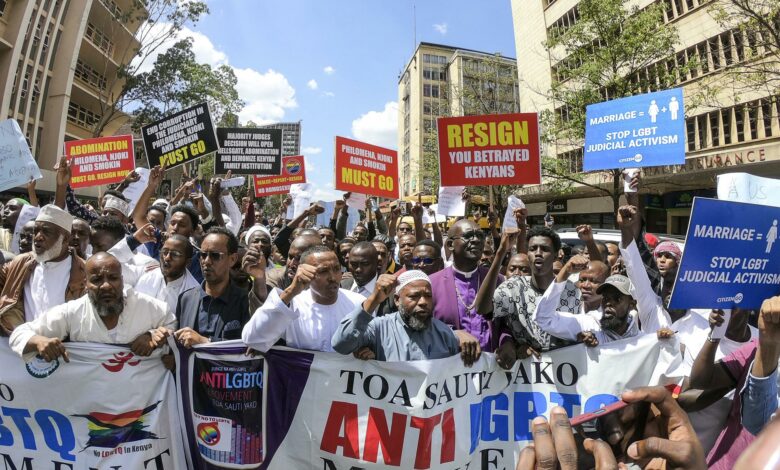
This hostile environment is worsening. A global anti-rights backlash, reduced funding for LGBTQ+ advocacy, and inflammatory political rhetoric have fueled increased hostility. The proposed "Family Protection Bill 2023," which seeks to further criminalize same-sex relations and restrict LGBTQ-inclusive education, has created an atmosphere of animosity and fear, even as its legislative progress remains uncertain.
A Message of Resilience and a Call for Action
Despite their trauma, the victims in this case have become symbols of resilience. Their message to others is clear: "If you have been blackmailed, don’t be afraid. There is justice, go to the police station." While this single verdict does not dismantle systemic oppression, it provides a tangible precedent. It proves that with dedicated legal support from organizations like NGLHRC and Ishtar, the courts can deliver outcomes that protect vulnerable citizens.
The sentencing is a landmark, but it is only one step. True safety for Kenya's LGBTQ+ community requires the repeal of discriminatory laws, comprehensive police training, and a societal shift towards tolerance. Until then, this case stands as a critical reminder that the pursuit of justice, though arduous, is not futile.