Read on Global News
LNG Canada Ramps Up Exports Amid Global Energy Supply Concerns
The LNG Canada facility in Kitimat, British Columbia, has significantly increased its export activity in early March, shipping five cargoes to Asia in just 11 days. This surge in production, which already exceeds half of February's total volume, comes as global markets react to supply disruptions caused by the Iran war, particularly affecting Asian natural gas imports. The Shell-led venture appears to be operating near its full capacity, marking a pivotal moment for Canada's role in the global LNG market and its strategic Pacific export route.
The global liquefied natural gas (LNG) market is experiencing significant volatility, and Canada's nascent export industry is responding with accelerated activity. The LNG Canada terminal in Kitimat, British Columbia, has dramatically increased its shipments in early March, data from LSEG reveals. This operational ramp-up coincides with heightened concerns over Asian energy security, as conflict in the Middle East threatens key supply routes. The facility's performance signals a crucial step toward fulfilling its potential as a major North American supplier to Asia.

March Export Surge and Production Data
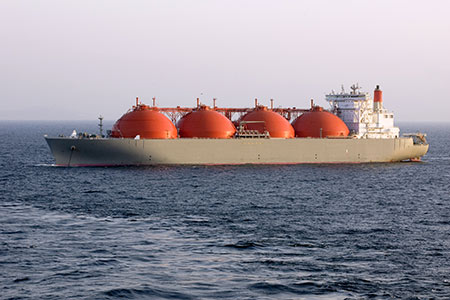
According to LSEG shipping data, the LNG Canada project exported five cargoes in the first 11 days of March 2026. This volume already surpasses half of the facility's total export volume for the entire month of February. A sixth shipment was scheduled to depart shortly after the reporting period. All early-March cargoes were destined for Asian markets, with two shipments bound for Japan, two for South Korea, and one for the Philippines. This targeted export pattern underscores the project's strategic focus on Pacific Rim consumers.
The data suggests the plant is operating close to its designed full capacity of 14 million metric tons per year. In the first third of March alone, the facility loaded more than 400,000 metric tons of LNG. Given the venture's maximum export capacity of just under 1.2 million metric tons per month, this early-month performance indicates a strong operational tempo. An LNG Canada spokesperson confirmed the company is advancing early operations safely and responsibly, with a 58th cargo scheduled for departure, but did not comment on specific production volumes.
Global Market Context: The Iran War and Supply Disruption
The production increase occurs against a backdrop of global energy supply anxiety. The ongoing Iran war has specifically threatened the Strait of Hormuz, a critical maritime chokepoint for global energy shipments. This disruption has forced Qatar, a supplier of approximately 20% of globally traded LNG, to halt production and declare force majeure, as tankers cannot transit the strait. Asian natural gas supplies are particularly vulnerable to such global disruptions, creating urgent demand for alternative sources.
Analysts, including Martin King of RBN Energy, suggest LNG Canada is ramping up activity to push toward full capacity and capitalize on higher regional prices in Asia. The facility's ability to quickly surge output and get more LNG on the water positions it to fill supply gaps and benefit from favorable market conditions. This responsiveness is a key test for the new export terminal's operational flexibility and market integration.
Strategic Importance of Canada's Pacific Route
LNG Canada holds a unique strategic position as the first large-scale Canadian LNG facility to begin production and the first major North American plant with direct access to the Pacific Ocean. This geographical advantage significantly shortens sailing times to Asian buyers compared to exporters located on the U.S. Gulf Coast. The shorter transit reduces shipping costs and increases supply chain reliability, making Canadian LNG competitively attractive in the Asian market.
The project's startup in June 2025 was preceded by significant preparatory increases in production by Canadian natural gas producers. However, these companies faced a domestic price slump when LNG Canada did not draw down supplies as quickly as initially anticipated after its operational launch. The recent ramp-up is a positive signal for the integrated health of Canada's natural gas sector, linking upstream production to final export markets.

Operational Progress and Market Impact
Since its startup, the LNG Canada project has faced operational challenges, as is common with complex megaprojects. LSEG data indicates output has been gradually increasing since January 2026. Industry observers note the facility appears to have been operating close to its nameplate capacity for the two weeks preceding the report. Mike Belenkie, CEO of Advantage Energy—a company that temporarily curtailed production last fall—commented on the apparent proximity to capacity, highlighting the project's evolving operational stability.
The increased export activity is beginning to influence the broader North American gas market. Daily spot prices at Alberta's AECO storage hub were reported at close to $2 per million British thermal units, representing a discount to the U.S. Henry Hub benchmark. As LNG Canada stabilizes and increases its offtake of Western Canadian natural gas, it is expected to provide stronger price support for domestic producers by creating a substantial new demand outlet.
Conclusion: A Pivotal Moment for Canadian Energy
The accelerated export performance of LNG Canada in early March 2026 marks a pivotal development for Canada's energy sector. It demonstrates the facility's growing operational capability and its readiness to respond to dynamic global market conditions. As geopolitical tensions disrupt traditional energy supply chains, Canada's strategic Pacific export route and substantial natural gas resources become increasingly valuable. The successful ramp-up of LNG Canada not only enhances energy security for Asian allies but also solidifies Canada's emerging role as a reliable global LNG supplier, with significant implications for trade, domestic industry, and economic growth.