Read on bbc.com
Iranian Football Team's Asylum Saga: A Diplomatic and Humanitarian Drama
The Iranian women's football team's departure from Australia after the Asian Cup has unfolded into a complex humanitarian and diplomatic situation. While most of the delegation left on Tuesday night following their tournament elimination, a small group initially accepted offers of asylum in Australia over safety concerns. The situation involved last-minute decisions, intervention from Australian authorities, and international attention, highlighting the precarious position of athletes from nations with restrictive regimes. This article details the events, the Australian government's response, and the broader implications for international sports and human rights.
The conclusion of the Iranian women's football team's Asian Cup campaign in Australia has transitioned from a sporting event into a significant international humanitarian incident. While the team was eliminated from the tournament on Sunday, their departure from the country became a focal point of diplomatic efforts and asylum proceedings, revealing the intense pressures faced by athletes from certain nations. The Australian government's intervention to offer protection visas to team members concerned for their safety underscores the complex intersection of international sport, politics, and human rights.
The Core Asylum Offer and Initial Acceptances
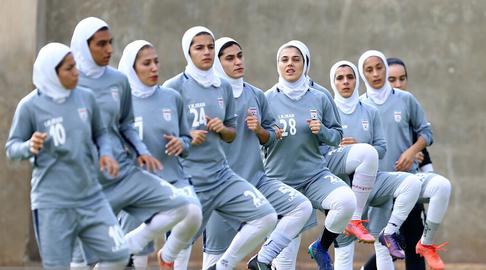
The situation escalated when several members of the Iranian delegation indicated they did not wish to return to Iran, citing fears for their safety. This concern was reportedly linked to their initial refusal to sing the national anthem before a match against South Korea earlier in the tournament, an act that can be viewed as political protest in Iran. In response, Australian Immigration Minister Tony Burke initiated a humanitarian visa process. Initially, five individuals—players Fatemeh Pasandideh, Zahra Ghanbari, Zahra Sarbali, Atefeh Ramazanzadeh, and Mona Hamoudi—were granted visas and were moved to a secure location by police for their protection. Minister Burke emphasized that these individuals "want to be clear they are not political activists. They are athletes who want to be safe."
The Dramatic Airport Scenes and a Reversed Decision
As the majority of the team prepared to depart from Sydney Airport on Tuesday night, Australian Border Force officials made a final, concerted effort. A "very significant" police presence ensured players could speak privately with officials through translators, away from team minders, and were given the chance to call family. The offer of fast-tracked permanent residency was reiterated. At this stage, two more individuals—one player and one support staff member—accepted the offer to stay. However, in a dramatic twist, one of these two later changed her mind after consulting with teammates who had already left and contacting the Iranian embassy. Minister Burke stated, "In Australia people are able to change their mind. We respect the context in which she had made that decision." This reversal necessitated the immediate relocation of the others who had stayed, as their location was potentially compromised.

Political and International Reactions
The incident attracted high-level political attention. Australian Prime Minister Anthony Albanese expressed national solidarity, stating, "Australians have been moved by the plight of these brave women. They're safe here, and they should feel at home here." The case also drew commentary from former US President Donald Trump, who posted on his Truth Social platform urging Australia to grant asylum and offering that the US would accept them if Australia did not. He later claimed to have spoken with Prime Minister Albanese. In Iran, state media commentators levied severe criticism, with one conservative voice labeling the players who sought asylum as "wartime traitors" and calling for harsh punishment, illustrating the potential repercussions awaiting the returning delegation.
Context and Broader Implications
This event is not isolated. It highlights the vulnerable position of athletes, particularly women, from countries with governments that monitor political expression closely. The Australian humanitarian visa program, which grants permanent protection, became a mechanism for addressing these immediate safety concerns. The presence of government-appointed minders within the delegation, and the reports of players being pressured to sing the anthem in later games, point to the level of state control exerted over the team. Furthermore, the activism of the Australian-Iranian community, which protested at the airport and temporarily blocked the team's bus on the Gold Coast, shows the diaspora's role in such international incidents.
Conclusion
The departure of the Iranian women's football team from Australia marks the end of a tournament but the beginning of an uncertain chapter for the athletes. For the few who remain under Australia's protection, a new life awaits. For the majority who returned, the consequences of their perceived defiance are unknown. This saga underscores how international sporting events can become stages for profound human rights discussions and diplomatic maneuvers. It reaffirms the responsibility of host nations to consider the safety of all participants beyond the final whistle, setting a precedent for how similar situations might be handled in the future. The courage of the athletes involved brings global attention to the ongoing struggles for basic freedoms in their homeland.