The Iran War Fallout: A Potential Catalyst for Gulf Cooperation and Sudanese Diplomacy
As the devastating civil war in Sudan approaches its fourth year, regional rivalries have deepened the conflict, with external powers like Saudi Arabia and the UAE backing opposing sides. However, the escalating war between the US/Israel and Iran presents an unexpected opportunity. The shared security threat posed by Iran's retaliatory strikes across the Gulf could compel rivals Riyadh and Abu Dhabi to set aside their differences over Sudan. This potential detente might open crucial diplomatic space to revive stalled international efforts aimed at brokering a truce and initiating a political process to end Sudan's humanitarian catastrophe, preventing further regional spillover.
The devastating civil war in Sudan, poised to enter its fourth year, has become a proxy battleground for regional powers, with the Sudanese Armed Forces (SAF) and the paramilitary Rapid Support Forces (RSF) receiving sustained support from external patrons. This external involvement has prolonged the conflict and complicated diplomatic solutions. However, an unexpected geopolitical shift—the escalating war launched by the United States and Israel against Iran—may alter this calculus. The fallout from this broader Middle Eastern conflict could paradoxically create an opening for cooperation between Gulf rivals, specifically Saudi Arabia and the United Arab Emirates (UAE), potentially unlocking stalled diplomatic efforts to end the war in Sudan.
The Regionalization of Sudan's Conflict
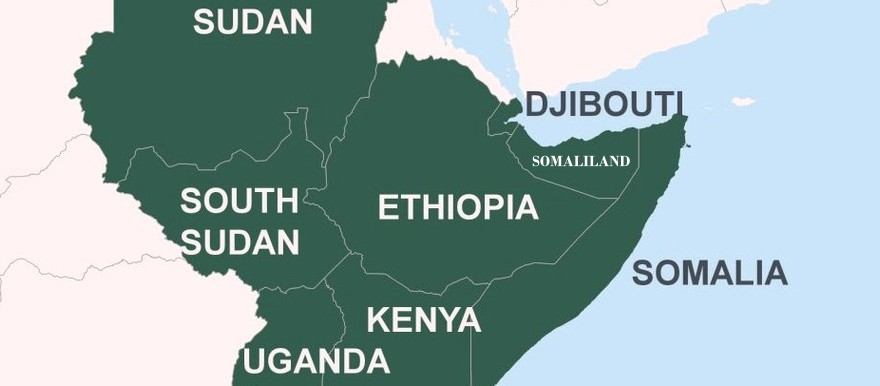
Sudan's strategic position at the crossroads of the Red Sea, the Horn of Africa, the Sahel, and North Africa has made its internal war a matter of external interest. The conflict has steadily regionalized, drawing in neighboring states and distant powers who view it through the lens of their own national security and influence. On one side, the Sudanese army, led by Abdel Fattah al-Burhan, is backed by a coalition including Egypt, Eritrea, Turkiye, Qatar, Iran, and increasingly, Saudi Arabia. These actors frame their support as backing a legitimate government against a rebellion.
Conversely, the UAE has emerged as the primary patron of the RSF, providing crucial financial, military, and logistical support that has sustained the paramilitary group's operations, including the prolonged and brutal siege of el-Fasher. This external patronage has turned Sudan into an indirect theatre of confrontation, where the money and weapons supplied by outside powers shape battlefield dynamics, reduce incentives for compromise, and risk merging multiple regional conflicts.

Stalled Diplomacy and the Saudi-UAE Rift
International diplomatic efforts, notably the US-led "Quad" initiative involving the United States, Saudi Arabia, the UAE, and Egypt, have struggled to gain traction. While a roadmap was proposed in late 2025, progress has been overshadowed by mounting tensions between two key Quad members: Saudi Arabia and the UAE. This rift became public in December 2025 following a surprise offensive in Yemen by UAE-backed forces against Saudi-aligned groups, leading to a rare public rebuke from Riyadh.
This feud has directly impacted the Sudan negotiations. Saudi-aligned media now regularly accuse the UAE of destabilizing the region, including in Sudan. This discord risks deepening the war's intractability, as it could prompt even more overt support for the Sudanese army from Saudi Arabia and its allies, while the UAE is unlikely to scale back its backing for the RSF. The diplomatic impasse reflects how external rivalries have been imported into the Sudanese conflict, blocking a path to peace.
The Iran War: A Shared Threat as a Potential Unifier
The recent escalation into open warfare between the US/Israel and Iran introduces a volatile new variable. Iran's retaliatory strikes across the Gulf region represent an unprecedented and direct security threat to all Gulf Cooperation Council states, including both Saudi Arabia and the UAE. While this crisis initially diverts attention from Sudan, it also creates a powerful, shared imperative for Gulf unity.
Faced with a common external threat to their security and economic stability—evidenced by oil prices staying above $100 per barrel as the Strait of Hormuz is effectively closed—Riyadh and Abu Dhabi may find compelling reasons to de-escalate their bilateral tensions. Managing the fallout from the Iran war and ensuring collective Gulf security could temporarily take precedence over their competition for influence in Sudan. This necessity for cooperation could provide the diplomatic space needed to revisit the stalled Quad roadmap.
Reviving the Path to Peace in Sudan
A Saudi-Emirati detente, however tentative, would be a critical prerequisite for reviving meaningful diplomacy on Sudan. The United States and European powers, alongside other regional actors like Turkiye and Egypt, should actively seek to broker such a cooling of tensions. A unified stance from Sudan's main external patrons could generate the coordinated pressure required to push the SAF and RSF toward a negotiated truce.
Any successful ceasefire must then quickly transition to an inclusive, intra-Sudanese political process, likely facilitated by the African Union and the United Nations. Concurrently, there is an urgent need to de-escalate tensions in the Horn of Africa, where rivalries over Sudan's conflict threaten to trigger a wider regional war. African leadership is essential to ward off this dangerous escalation.
Conclusion
The war in Sudan remains a profound humanitarian catastrophe with severe regional implications. While the conflict between the US/Israel and Iran poses grave risks globally, it also inadvertently creates a potential diplomatic opening. The shared security challenge presented by Iran may force Gulf rivals to cooperate, offering a narrow window to align their approaches to Sudan. The international community must seize this moment to push for a Saudi-Emirati understanding and reactivate a concerted peace process. Ending the war in Sudan is not only a moral imperative but a critical step in preventing further destabilization of an already volatile region. As global attention is consumed by the Iran war, the world must not forget that Sudan's conflict remains primed to spread unless decisive diplomatic action is taken.