
 Read on Nature
Maximizing Carrier Extraction in Hybrid Back-Contact Silicon Solar Cells
Hybrid back-contact silicon solar cells represent a significant advancement in photovoltaic technology, combining the best features of TOPCon and SHJ contacts within an interdigitated back-contact structure. This article explores the fundamental advantages of this architecture, including the elimination of front-surface metallization shading and the use of a multifunctional front layer for enhanced light trapping and passivation. We examine how optimizing the rear carrier-selective contacts and increasing the c-Si absorber thickness to 160 μm has led to certified efficiencies exceeding 27.6%, paving the way for more efficient and industrially compatible solar energy solutions.
The relentless pursuit of higher efficiency in solar energy conversion has led to the development of sophisticated cell architectures. Among the most promising recent innovations is the hybrid back-contact (BC) silicon solar cell. This design ingeniously merges proven technologies to overcome traditional limitations, pushing certified efficiencies beyond 27.6% for industrially compatible cells. This article delves into the core principles of this architecture, explaining how it maximizes the extraction of electrical carriers—the fundamental charge carriers generated by sunlight—to achieve record-breaking performance.
The Hybrid Back-Contact Architecture: A Synergistic Design
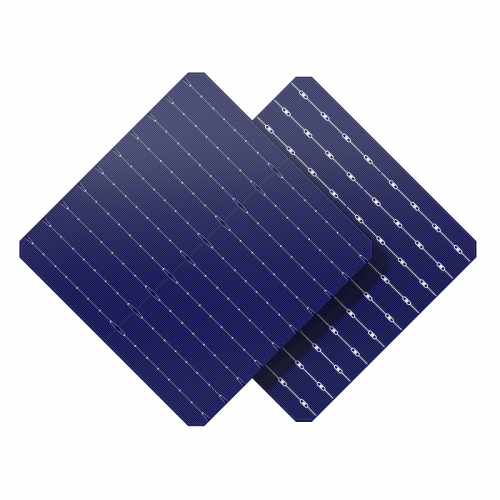
At its heart, the hybrid BC cell is a fusion of three key photovoltaic concepts. First, it incorporates n-type contacts derived from Tunnel Oxide Passivated Contact (TOPCon) technology, known for excellent surface passivation and low recombination losses. Second, it utilizes p-type contacts inspired by Silicon Heterojunction (SHJ) cells, which offer superior interface properties. Finally, these contacts are arranged in an interdigitated back-contact (IBC) structure, where all electrical contacts are moved to the rear of the cell. This eliminates the need for front-side metal fingers, which block sunlight and reduce the active area in conventional designs—a significant advantage highlighted by research published in Nature.
Key Innovations for Maximizing Performance
The design flexibility of the hybrid architecture allows for strategic optimizations that directly enhance carrier extraction. A major breakthrough involves the use of a multifunctional front layer. This single layer serves a dual purpose: it acts as an effective light-trapping scheme to capture more photons within the silicon absorber, and it provides outstanding surface passivation to minimize the loss of carriers before they can be collected. On the rear side, engineers have focused on improving the carrier-selective contacts. Enhancements here ensure that electrons and holes are collected more efficiently at their respective n-type and p-type contacts, improving the overall current output of the cell.

The Role of Silicon Thickness and Industrial Viability
An interesting finding from recent studies is the optimal thickness for the crystalline silicon (c-Si) absorber in this configuration. While there is a trend toward ultra-thin wafers to save material costs, the hybrid BC design performs best with an increased thickness of around 160 micrometers. This thicker absorber allows for better light absorption and more stable carrier transport, contributing to the high voltage and efficiency metrics. Crucially, the reported efficiency of 27.62% is certified for cells made with industrially compatible processes. This bridges the gap between laboratory record cells and mass manufacturing, indicating a clear path for this technology to impact commercial solar panel production.
Conclusion: The Path Forward for Solar Technology
The hybrid back-contact silicon solar cell stands as a testament to the power of convergent innovation in photovoltaics. By maximizing carrier extraction through a clever architectural synthesis, it addresses key loss mechanisms that have limited conventional cells. The move to a back-contact design eliminates shading losses, while the hybrid contact scheme optimizes carrier collection. As this technology matures and scales, it holds the potential to significantly lower the cost per watt of solar electricity, accelerating the global transition to renewable energy. The continued exploration of its fundamental advantages, as noted in the Nature article, will be key to unlocking its full potential.


.jpg)

