Oxygen's Ancient Secret: How Early Life May Have Delayed Earth's Atmosphere Transformation
New research from MIT suggests life on Earth may have been using oxygen hundreds of millions of years before it permanently filled our atmosphere. By tracing a key oxygen-processing enzyme back to the Mesoarchean era, scientists discovered that early microbes likely consumed oxygen as soon as cyanobacteria began producing it, potentially slowing the Great Oxidation Event. This finding challenges traditional timelines of aerobic evolution and reveals life's remarkable adaptability during Earth's most transformative periods.
The story of oxygen on Earth has long been told as a dramatic, planet-altering event that occurred around 2.3 billion years ago. Known as the Great Oxidation Event (GOE), this period marked when oxygen became a stable part of our atmosphere, paving the way for complex, oxygen-breathing life to evolve. However, groundbreaking research from MIT is rewriting this narrative, suggesting that life may have been interacting with oxygen far earlier—and in far more sophisticated ways—than previously imagined.

According to a study published in Palaeogeography, Palaeoclimatology, Palaeoecology, MIT geobiologists have traced the origins of a crucial oxygen-processing enzyme back hundreds of millions of years before the GOE. Their findings suggest that early microbes living near oxygen-producing cyanobacteria may have quickly consumed the gas as it formed, potentially slowing its accumulation in the atmosphere. This discovery not only fills a significant gap in our understanding of Earth's oxygenation but also highlights the incredible adaptability of life throughout planetary history.
The Great Oxygenation Mystery
For decades, scientists have puzzled over a significant timeline discrepancy in Earth's history. Cyanobacteria—the first known oxygen producers—evolved around 2.9 billion years ago, yet oxygen didn't permanently accumulate in the atmosphere until approximately 2.33 billion years ago during the Great Oxidation Event. This gap of nearly 600 million years has remained one of the enduring mysteries in geobiology.
Traditional explanations have focused on chemical reactions with rocks removing oxygen from the environment. However, the MIT research introduces a compelling biological component to this equation. As study co-author Fatima Husain explains, "We know that the microorganisms that produce oxygen were around well before the Great Oxidation Event. So it was natural to ask, was there any life around at that time that could have been capable of using that oxygen for aerobic respiration?"

Tracing the Enzyme Through Time
The MIT team focused their investigation on heme copper oxygen reductases, enzymes essential for aerobic respiration that convert oxygen into water. These enzymes are present in most oxygen-breathing organisms today, from bacteria to humans. "We targeted the core of this enzyme for our analyses because that's where the reaction with oxygen is actually taking place," Husain notes, highlighting the strategic approach to their research.
To determine when this enzyme first appeared, researchers employed sophisticated genetic analysis techniques. They identified the enzyme's genetic sequence and searched massive genome databases containing millions of species to find matching sequences. The sheer volume of data presented significant challenges, as co-author Gregory Fournier explains: "This enzyme is just everywhere and is present in most modern living organisms. So we had to sample and filter the data down to a dataset that was representative of the diversity of modern life and also small enough to do computation with, which is not trivial."
Evolutionary Timeline Reconstruction
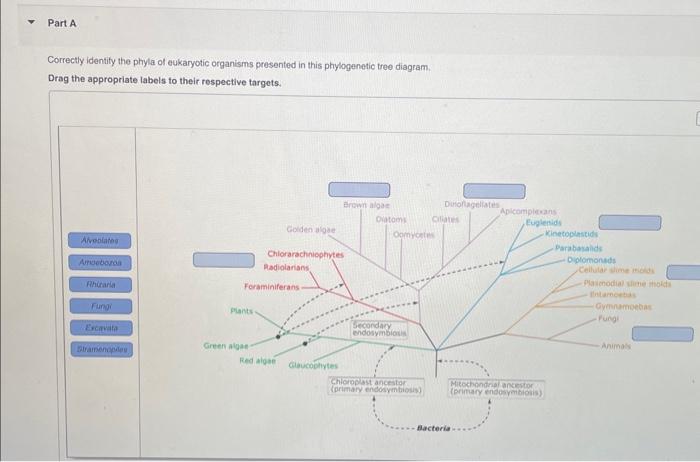
After narrowing their data to several thousand species, the researchers placed enzyme sequences onto an evolutionary tree of life. By using fossil evidence to anchor specific branches and applying multiple fossil-based time points, they refined their estimates for when the enzyme evolved. Their analysis traced the enzyme's origins back to the Mesoarchean era, which spanned from 3.2 to 2.8 billion years ago.
This timeframe predates the Great Oxidation Event by several hundred million years, suggesting that soon after cyanobacteria began producing oxygen, other organisms evolved the biological machinery to consume it. The implications are profound: microbes living near cyanobacteria could have rapidly absorbed the oxygen being released, potentially preventing its accumulation in the atmosphere for hundreds of millions of years.
Redefining Life's Relationship with Oxygen
The MIT findings dramatically alter our understanding of aerobic respiration's origins. "This does dramatically change the story of aerobic respiration," Husain states. "Our study adds to this very recently emerging story that life may have used oxygen much earlier than previously thought. It shows us how incredibly innovative life is at all periods in Earth's history."
This research builds on years of investigation at MIT aimed at reconstructing oxygen's history on Earth. Previous studies helped establish the timeline of cyanobacteria evolution and the Great Oxidation Event. The current work fills crucial gaps, suggesting that biological consumption may have played a significant role in delaying atmospheric oxygen accumulation.
Broader Implications for Earth Science
The discovery has significant implications beyond simply adjusting evolutionary timelines. It provides a more nuanced understanding of how Earth's systems interact, particularly the relationship between biological evolution and atmospheric chemistry. The research suggests that early life wasn't merely a passive recipient of environmental changes but an active participant in shaping planetary conditions.
As Husain summarizes, "Considered all together, MIT research has filled in the gaps in our knowledge of how Earth's oxygenation proceeded. The puzzle pieces are fitting together and really underscore how life was able to diversify and live in this new, oxygenated world." This perspective emphasizes the dynamic interplay between life and its environment throughout geological history.
Future Research Directions
The MIT study opens numerous avenues for further investigation. Researchers can now explore how widespread early oxygen use was among different microbial communities and what specific environmental conditions facilitated this early adaptation. Additionally, understanding the precise mechanisms by which early microbes consumed oxygen could provide insights into modern microbial ecology and biotechnology applications.
The research also raises questions about similar processes on other planets. If life on Earth developed sophisticated oxygen-processing capabilities so early in its history, similar adaptations might occur elsewhere in the universe under comparable conditions. This expands the potential signatures scientists might look for when searching for life beyond Earth.
Conclusion: A New Chapter in Earth's Story
The MIT research represents a significant advancement in our understanding of Earth's oxygenation history. By demonstrating that life may have been using oxygen hundreds of millions of years before it filled our atmosphere, scientists have revealed a more complex and interactive relationship between biological evolution and planetary change. This discovery not only solves a long-standing mystery about the timing of Earth's oxygenation but also highlights life's remarkable capacity for innovation and adaptation.
As we continue to unravel Earth's ancient history, studies like this remind us that our planet's story is far more intricate than previously imagined. The early microbes that learned to breathe oxygen before it was abundant weren't just surviving—they were actively participating in shaping the world that would eventually support complex life, including our own species. This research, supported by the Research Corporation for Science Advancement Scialog program, adds another crucial chapter to humanity's understanding of our planetary home and the life it sustains.