Read on foxsports.com
MLB Offseason 2026: Winners and Losers Analysis
As spring training begins, we evaluate the most impactful moves and missteps of the MLB offseason. The Los Angeles Dodgers continued their championship-caliber spending, while teams like the Houston Astros and San Diego Padres face questions after quiet winters. Key players like Tarik Skubal and Pete Alonso secured major victories, while others like Munetaka Murakami saw disappointing market outcomes. This analysis breaks down which teams positioned themselves for success and which face challenges heading into the 2026 season.
With spring training games on the horizon, the 2026 MLB offseason has officially concluded, leaving teams and players to prepare with their finalized rosters. This winter featured the usual mix of blockbuster signings, surprising trades, and puzzling inactivity that will shape the upcoming championship chase. Based on comprehensive analysis of team moves, player contracts, and roster projections, several clear winners and losers have emerged from the cold months.
Clear-Cut Winners
Several organizations and individuals executed nearly flawless offseasons that significantly improved their competitive standing.
Los Angeles Dodgers
The two-time defending champions once again demonstrated why they dominate both October and the offseason. Their most impactful move was signing shutdown closer Edwin Díaz to a three-year, $69 million contract, addressing their only perceived weakness by bolstering the bullpen with one of baseball's best relievers. This acquisition continues their pattern of landing top free agents, following previous splashes for Shohei Ohtani, Yoshinobu Yamamoto, and Blake Snell. With a payroll exceeding $400 million, the Dodgers enter 2026 as overwhelming World Series favorites, having successfully maintained their championship core while adding elite talent.
Tarik Skubal
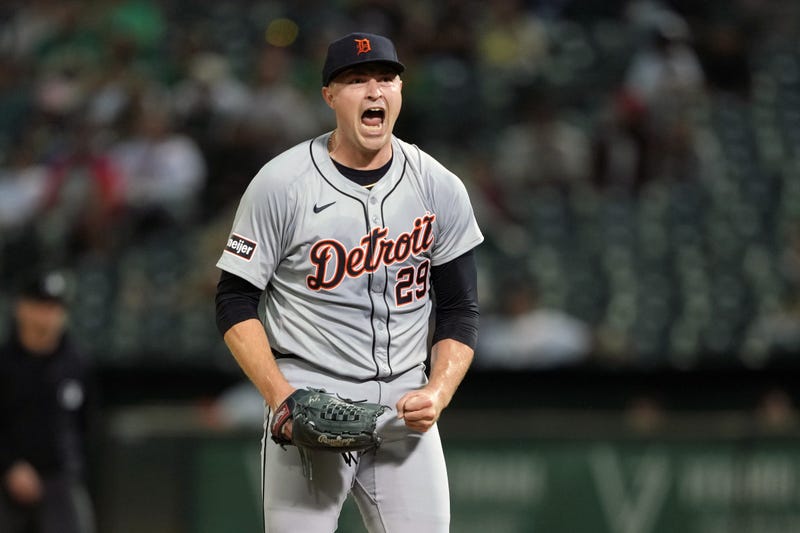
The Detroit Tigers ace achieved a landmark victory in arbitration that will resonate throughout baseball. After winning back-to-back Cy Young Awards, Skubal and agent Scott Boras successfully argued his case should be compared to any prime major-league pitcher rather than being limited to arbitration-eligible players. The result was a record-breaking $32 million salary for 2026, shattering the previous arbitration record. This precedent-setting decision dramatically raises Skubal's earning potential as he approaches free agency and represents a significant win for elite players navigating the arbitration system.
Chicago Cubs
The Cubs responded aggressively to competitive pressures by making one of the offseason's most significant signings. Their five-year, $175 million acquisition of third baseman Alex Bregman represents the third-largest contract in franchise history and signals a renewed commitment to leveraging their financial resources. This move has transformed Chicago's outlook, with projection systems like PECOTA ranking them alongside the Braves and Mets for the National League's second-best record behind the Dodgers. While questions remain about their pitching staff, the Cubs' lineup upgrade positions them as serious contenders.
Notable Losers
Several teams failed to address clear needs or lost ground to their competitors during the offseason.
Houston Astros
The Astros face significant challenges after missing the postseason for the first time since 2016 and failing to make substantial improvements. Despite finishing with 87 wins last season, FanGraphs projects them to regress to 81 wins in 2026. Their awkward position-player configuration has created a logjam, potentially forcing a trade of either Isaac Paredes or Christian Walker. While the signing of Japanese pitcher Tatsuya Imai provides rotation reinforcement, it likely isn't sufficient to replace the production lost with Framber Valdez's departure. For a franchise accustomed to October baseball, this offseason represented a missed opportunity to reclaim contender status.
San Diego Padres
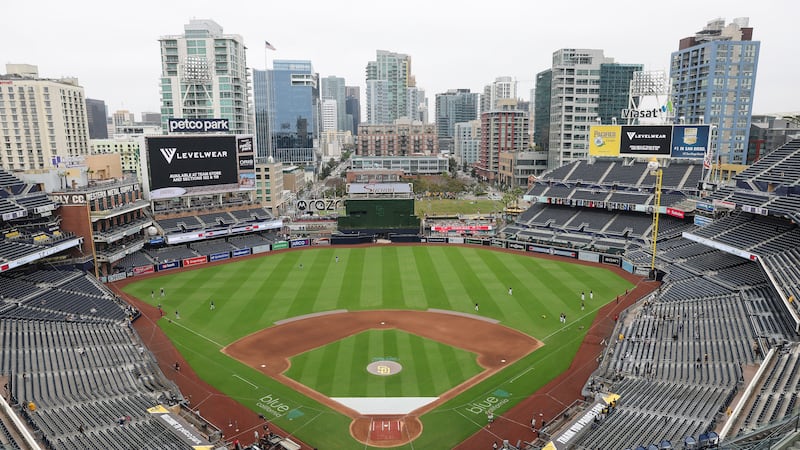
Financial constraints and organizational uncertainty have hampered the Padres' ability to compete in the offseason market. The team failed to adequately replace the losses of All-Stars Dylan Cease, Robert Suarez, Luis Arraez, and Ryan O'Hearn, creating significant roster holes. Most concerning is their pitching staff, which FanGraphs projects to rank near the league's bottom following Cease's departure and Yu Darvish's absence. With an aging core and no meaningful offensive upgrades to a lineup that ranked 28th in home runs last season, the Padres face the prospect of a disappointing campaign.
Milwaukee Brewers
The Brewers' complete absence from free agency represents one of the offseason's most puzzling approaches. Milwaukee stands alone as the only MLB team that didn't distribute a single major-league contract this winter, with Brandon Woodruff's qualifying offer representing their only free-agent expenditure. While trades for prospects like Brandon Sproat and Jett Williams provide future value, the failure to supplement a competitive roster with established talent raises questions about the organization's commitment to immediate contention, especially when other small-market teams participated more actively in the market.
Mixed Results
Several teams and players experienced offseasons with both positive developments and concerning limitations.
Toronto Blue Jays
The Blue Jays' offseason represents a classic case of addition and subtraction. Their seven-year, $210 million signing of ace Dylan Cease gives them one of baseball's best rotations, featuring Cease, Kevin Gausman, Trey Yesavage, Cody Ponce, and eventually Shane Bieber. However, their lineup has objectively weakened, particularly after failing to re-sign homegrown star Bo Bichette without securing an adequate replacement. This offensive downgrade dampens the excitement generated by their pitching improvements and leaves questions about their run-scoring capabilities.
New York Mets
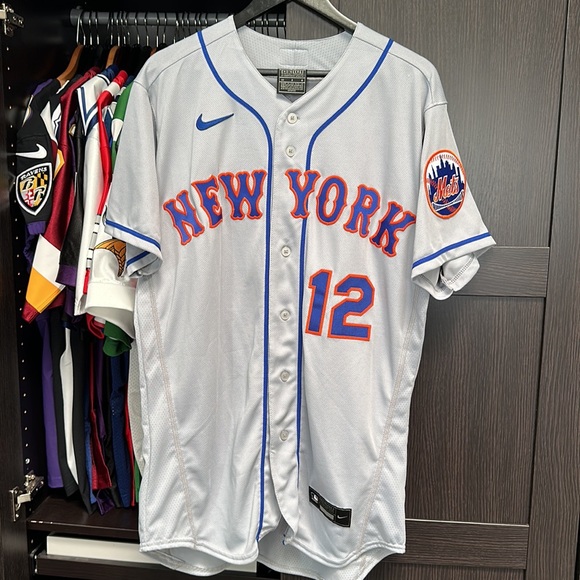
Under president of baseball operations David Stearns, the Mets executed a dramatic roster overhaul that has projection systems optimistic. Despite losing franchise cornerstones like Pete Alonso, Brandon Nimmo, Edwin Díaz, and Jeff McNeil, the Mets are projected to challenge for the NL's second-best record. Additions of Bo Bichette, Jorge Polanco, and ace Freddy Peralta provide significant upgrades, though concerns remain about replacing Díaz with Devin Williams and the aging infield defense. The Mets' aggressive retooling could pay dividends, but their success depends on several variables aligning.
Munetaka Murakami
The Japanese power hitter experienced one of the offseason's most disappointing market outcomes. Once projected to command a contract exceeding $150 million, Murakami instead settled for a two-year, $34 million deal with the Chicago White Sox. This dramatic underselling reflects concerns about his swing-and-miss tendencies despite his record-breaking 56-home-run season in Japan's NPB in 2022. The lack of interest from contending teams at this affordable price point suggests significant reservations about his immediate transition to Major League pitching.
Conclusion
The 2026 MLB offseason has reshaped the competitive landscape, with the Los Angeles Dodgers further solidifying their superteam status while several traditional powers face uncertainty. Teams that addressed specific weaknesses through targeted acquisitions, like the Cubs with Alex Bregman, positioned themselves for success. Meanwhile, organizations that remained passive or faced financial constraints, including the Astros and Padres, may struggle to keep pace. As spring training progresses, these offseason moves will be tested, but the initial analysis suggests a season where aggressive winter strategies could determine October outcomes.