Read on the Guardian
China's Dancing Robots: A Showcase of Technological Ambition and Strategic Messaging
China's recent Spring Festival Gala featured a stunning performance by humanoid robots executing complex martial arts and dance routines, captivating a national audience. This display, far more advanced than previous years, serves as a powerful symbol of China's progress in robotics and AI. While experts acknowledge the impressive technical feat of synchronized movement and stable gaits, they also caution that stage performance does not equate to industrial readiness. The spectacle is viewed as a strategic tool for domestic and international messaging, highlighting China's ambitions in high-tech manufacturing and its competitive stance in the global race for advanced robotics.
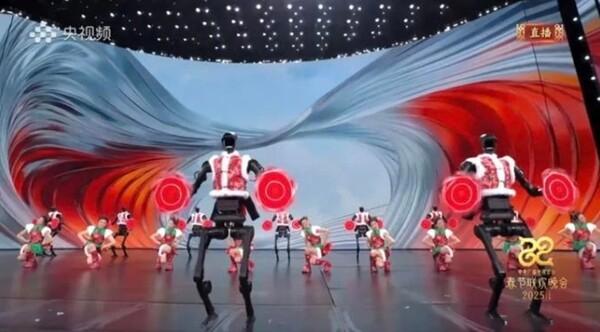
The annual China Media Group Spring Festival Gala, a television event watched by hundreds of millions, recently presented a spectacle that blurred the lines between entertainment and technological statement. A troupe of humanoid robots took to the stage, performing a meticulously choreographed routine of martial arts, backflips, and spins with a precision that left no room for error. This performance, a significant leap from simpler robotic displays in previous years, has ignited discussions far beyond entertainment, prompting analysis of China's technological capabilities, strategic messaging, and the future trajectory of robotics.
The Performance: A Leap in Robotic Agility
The core of the spectacle was the robots' demonstrated agility and coordination. Developed by several Chinese robotics firms, the humanoids executed intricate kung fu stunts, comedy sketches, and dance moves in perfect synchronization with human performers. A key technical achievement, as noted by robotics expert Georg Stieler, was "the ability to run large numbers of near-identical humanoids in synchronised motion with stable gaits and consistent joint behaviour." This marked a clear evolution from the 2025 gala, where movements were fundamentally simpler. The flawless execution—with not a single robot falling—showcased significant advancements in balance control and motion planning algorithms.
Beyond the Stage: Strategic Messaging and Propaganda
Experts widely interpret the gala performance as a calculated piece of statecraft. Kyle Chan of the Brookings Institution suggests Beijing uses such public displays to "dazzle domestic and international audiences with China’s technological prowess." Humanoid robots serve as a highly visible, tangible symbol of progress that is easily understood by the general public, unlike more abstract AI models or industrial equipment. In the context of intensifying US-China tech competition, the performance allows China to claim leadership in a specific, photogenic domain. As Chan points out, while AI development may be neck-and-neck, "humanoid robots are an area where China can claim to be ahead of the US, particularly in terms of scaling up production."

Expert Analysis: Impressive Feat vs. Practical Application
The expert reaction to the display is nuanced, blending admiration with pragmatic caution. While the choreography was undeniably impressive, Stieler emphasizes a critical distinction: "Stage performance does not equate to industrial robustness, yet." The robots' actions were the result of intensive, repetitive training for a single, fixed routine. They operated with "very little environmental perception," relying on imitation learning and balance controllers. This has "little bearing on reliability in unstructured environments," which is a fundamental prerequisite for practical deployment in factories, warehouses, or homes. The progress in dexterity and adaptive problem-solving, experts note, is not advancing as rapidly as locomotion.
Context: China's Broader Robotics Ambitions
The gala performance is not an isolated event but a highlight within a massive, state-driven push into robotics and AI. Major government initiatives like "Made in China 2025" and the "14th Five-Year Plan" have explicitly prioritized these sectors. The scale of the industry is vast: by the end of 2024, China had registered over 451,700 smart robotics companies. This industrial policy pipeline, as Stieler describes it, flows directly "from industrial policy to prime-time spectacle." The performance hints at a strategic shift in China's economic vision. Marina Zhang of the University of Technology Sydney suggests it signals a new phase where "robotics becomes a linchpin in the shift from low-cost assembly to high-end, smart manufacturing."
The Global Competitive Landscape
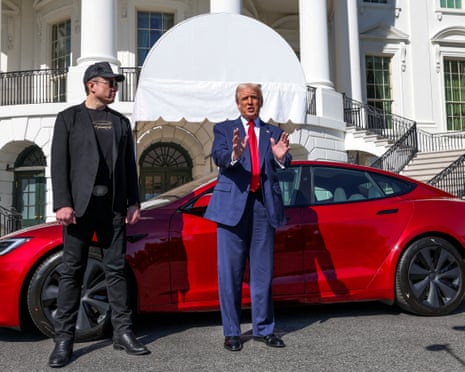
The display firmly places China in the center of the global humanoid robotics race. Market projections reflect this momentum; Morgan Stanley forecasts China's humanoid sales will more than double to 28,000 units in 2026. The competition has drawn attention from industry leaders like Elon Musk, who has identified Chinese companies as Tesla's biggest future competitors in the field of "embodied AI" and humanoids like Optimus. Musk himself acknowledged China's formidable position, stating, "People outside China underestimate China, but China is an ass-kicker next level."
Conclusion: A Symbol of Progress, A Question of Capability
China's dancing robot gala serves as a multifaceted symbol. It is a genuine showcase of advanced engineering in locomotion and synchronized control, a powerful tool of national soft power and propaganda, and a statement of intent in the global technology rivalry. For the domestic audience, it fosters national pride and aligns with the narrative of China's peaceful technological rise. For the international community, it is a reminder of China's determined and well-funded push into frontier technologies. However, the expert consensus provides a crucial reality check: the graceful dancers on stage are highly specialized performers, not yet the adaptable, dexterous workers needed to revolutionize industries. The true test of China's robotic ambition will not be on the television stage, but in the unstructured complexity of the real world.