Read on PBS News
Mixed Signals: Analyzing the U.S. Labor Market's Uncertain Start to 2026
The U.S. economy began 2026 with a complex jobs report showing 130,000 positions added in January, yet revised data revealed a much weaker 2025 than previously thought. This analysis explores the underlying trends, including sector-specific gains and losses, the impact of reduced immigration, and rising corporate layoffs from firms like Amazon and UPS. We examine expert insights on whether this represents a cyclical cooling or deeper structural shifts in the labor market.
The U.S. labor market entered 2026 presenting a puzzle for economists, policymakers, and the public. The latest employment data, as reported by PBS NewsHour, delivered a mixed message: a modestly positive headline figure for January was immediately undercut by significant downward revisions to the previous year's performance. This juxtaposition of a better-than-expected monthly gain against a backdrop of weakening annual trends and high-profile corporate layoffs has injected a fresh dose of uncertainty into the economic outlook. Understanding the nuances behind these numbers is crucial for grasping the health of the American economy.
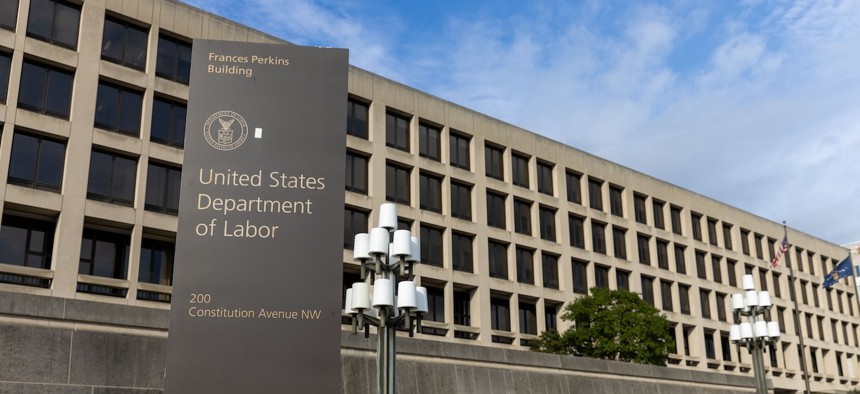
Decoding the January 2026 Jobs Report
According to the Bureau of Labor Statistics report discussed by PBS, the U.S. economy added 130,000 jobs in January 2026, and the unemployment rate ticked down slightly to 4.3%. On the surface, this appears to be a stabilizing signal. However, as former Department of Labor chief economist Harry Holzer noted in his analysis, context is everything. Compared to the robust job growth seen in earlier years, 130,000 is a relatively modest number. Its perceived strength is largely relative to the pronounced weakness that characterized much of 2025. The report's true significance lies not in the single month's data but in the patterns and revisions it reveals.
The Revealing Revisions: A Weaker 2025
The more alarming aspect of the report was the substantial revision to 2025's employment figures. Initial estimates were slashed, revealing that the economy added a net total of only 181,000 jobs for the entire year. This figure represents a dramatic slowdown, amounting to roughly 14% of the 1.4 million jobs added in 2024. Such a significant downward revision suggests that economic momentum was faltering well before 2026 began. Experts like Holzer point to a "chaotic" policy environment marked by tariffs, immigration cuts, and general uncertainty as key factors that dampened consumer demand and made employers hesitant to hire throughout 2025.

Sectoral Divergence and the Rise of Layoffs
A deeper look at the January data reveals that job growth was highly concentrated. Gains were largely limited to sectors like healthcare, social assistance, construction, and professional services. Meanwhile, other critical sectors experienced declines, including information technology and financial services. This uneven recovery is compounded by a noticeable uptick in corporate layoffs. Firms like Amazon and UPS have announced tens of thousands of job cuts. While some of this, particularly in tech, may represent a normalization after pandemic-era over-hiring, Holzer suggests another driver: heavy investment in artificial intelligence. Companies are beginning to seek returns on these investments, partly through labor cost savings, leading to workforce reductions.
Structural Shifts and the Immigration Factor
The conversation around the jobs data extends beyond cyclical trends to potential structural changes. A critical, often overlooked factor is the sharp reduction in immigration. Fewer new workers entering the labor market has a dual effect: it can keep the unemployment rate from rising more sharply (as there are fewer people actively seeking jobs), but it also constrains economic growth and can contribute to inflationary pressures by tightening the labor supply. As Holzer highlighted, this trend poses a long-term risk to the nation's pool of talent and innovative capacity if skilled immigrants are deterred from coming to the United States.
Conclusion: Navigating an Uncertain Labor Landscape
The start of 2026 has left the U.S. labor market at a crossroads. The positive January headline is a fragile foundation, overshadowed by substantial revisions to a weak 2025, sectoral imbalances, and rising layoffs. The situation defies simple categorization—it is not a classic recession, yet for many workers and sectors, it feels like an economic downturn. The path forward depends on multiple variables: the resolution of policy uncertainties, the trajectory of corporate investment in automation, and the nation's approach to immigration. For now, as experts caution, the data demands close watch from month to month, as the underlying strength of the American job engine remains in question.