Read on nature.com
The Future of Wearable Health: Self-Powered Vibration Sensors for Monitoring and Voice Control
A groundbreaking wearable vibration sensor, developed by researchers and reported in Nature Sensors, is poised to transform personalized healthcare and human-computer interaction. This self-powered device, constructed from a densely packed array of capacitors, captures the subtle physiological vibrations produced by breathing, speaking, and chest movements without needing an external battery. It overcomes key limitations of previous sensors by offering stable performance on skin and detecting a wide frequency range. This innovation opens new avenues for continuous, non-invasive health monitoring and advanced voice-operated devices.
The human body is a constant source of subtle, informative vibrations. Every breath, spoken word, and heartbeat generates minute mechanical signals that carry a wealth of data about our physiological state and health. Capturing these signals accurately and comfortably has been a significant challenge for wearable technology. However, a recent scientific breakthrough, detailed in a Nature Sensors publication, presents a novel self-powered vibration sensor that promises to revolutionize both personalized healthcare monitoring and voice-based device control.
How the Self-Powered Vibration Sensor Works
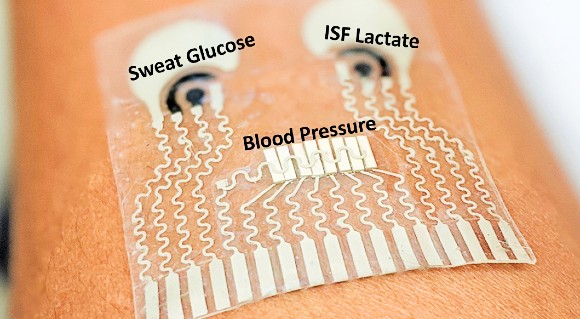
At the core of this innovation is an array of densely packed electrical components known as capacitors. Unlike previous capacitor-based sensors that required an external power source to function, this device generates its own electrical signal directly in response to mechanical vibration. This self-powering capability is a critical advancement, eliminating the need for bulky batteries and enabling more discreet, long-term wearability. The sensor array is designed to be placed on the skin, where it can detect the tiny oscillations caused by air flow through the lungs, the movement of vocal folds, and the expansion of the chest cavity.
Key Technological Advancements
The research team, led by Cho et al., addressed several persistent limitations in wearable vibration sensing. First, the device achieves stable electrical performance even when in direct contact with the variable environment of human skin, a hurdle that has hampered previous attempts. Second, it can detect vibrations across a wide range of frequencies, from the low-frequency rumble of a cough to the higher-frequency components of speech. This broad sensitivity is essential for capturing the full spectrum of physiological signals. Finally, by removing the dependency on an applied voltage, the sensor simplifies its design and integration into wearable systems, paving the way for more practical and user-friendly health devices.

Applications in Personalized Healthcare
The primary application of this technology lies in continuous, non-invasive health monitoring. By adhering to the chest or neck, the sensor can provide real-time data on respiratory patterns, potentially flagging irregularities associated with conditions like sleep apnea or chronic obstructive pulmonary disease (COPD). It could monitor heart rate variability and coughing frequency, offering valuable longitudinal data for managing chronic illnesses. This form of passive, always-on monitoring represents a significant step toward proactive and personalized medicine, where care is informed by constant streams of physiological data rather than sporadic check-ups.
Enhancing Voice Detection and Human-Computer Interaction
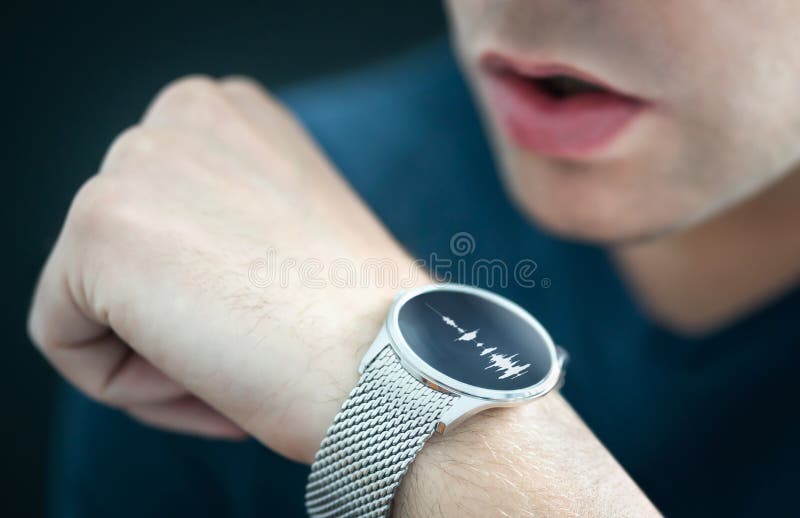
Beyond healthcare, the sensor's high-fidelity vibration detection has profound implications for voice-operated technology. Traditional microphones capture sound waves traveling through the air, which can be distorted by background noise. A sensor that detects vocal fold vibrations directly at the source—the throat—can capture voice commands with much greater clarity and security. This could lead to more reliable voice assistants, enhanced communication tools in noisy environments, and new interfaces for individuals with speech impairments. The ability to distinguish between different types of throat vibrations, such as speaking versus swallowing, adds another layer of contextual understanding for devices.
The Path Forward
While the research published in Nature Sensors establishes a robust proof of concept, the journey from lab to market involves further development. Integration into comfortable, aesthetically pleasing wearable forms like patches or necklaces is the next challenge. Researchers must also ensure data security and user privacy, as the sensor captures highly personal biological information. Furthermore, developing sophisticated algorithms to interpret the complex vibration data and translate it into actionable health insights will be crucial. Collaboration between material scientists, electrical engineers, data analysts, and medical professionals will drive this technology toward practical, life-improving applications.
The development of this self-powered vibration sensor marks a pivotal moment in wearable technology. By harnessing the body's own mechanical energy to power sensitive monitoring, it opens a new paradigm for how we track health and interact with machines. As the technology matures, it holds the potential to make continuous, unobtrusive health monitoring a seamless part of daily life and to create more intuitive and reliable voice-controlled systems, ultimately bridging the gap between human physiology and digital innovation.