Read on the Guardian
Regulatory Tensions Rise as NSW Berry Industry Expands
The rapid expansion of intensive blueberry and berry farming on the New South Wales mid-north coast is creating significant tensions between agricultural development, environmental protection, and community concerns. The NSW Greens are moving a private member's bill to grant local councils greater regulatory powers over these farms, citing environmental hazards and land devaluation. Meanwhile, the state government warns that excessive regulation could hinder modern farming practices, highlighting a fundamental conflict in regional planning policy.
The picturesque valleys of New South Wales' mid-north coast are at the center of a growing conflict between agricultural expansion and community welfare. As intensive blueberry and berry farming operations proliferate, residents and local authorities are raising alarms about environmental degradation, land devaluation, and regulatory gaps. This tension has culminated in a political push for stronger oversight, setting the stage for a significant debate over the future of rural land use and farming regulation in Australia.
The Regulatory Gap in NSW Berry Farming
At the heart of the controversy lies what Greens MP Cate Faehrmann describes as a "deliberate massive carve-out" for the berry industry from standard planning laws. Under current New South Wales regulations, intensive horticulture operations, including large-scale blueberry farms, can establish themselves in RU1 primary production and RU4 primary production small lots zones without requiring development approval from local councils. This exemption means farms can erect hectares of infrastructure, including poles and protective netting, without notifying neighbors or seeking council permission—a privilege not afforded to residents wishing to build simple structures like carports.
The regulatory framework stems from the state government's standard Local Environmental Plan (LEP), which designates intensive agriculture as a permitted use without development consent in specific rural zones. While councils can regulate the RU2 rural landscape zone, they have limited power over the primary production zones where most berry farming occurs. This structure has created what many locals perceive as an uneven playing field, where industrial-scale agricultural operations face fewer regulatory hurdles than residential developments.
Environmental and Community Concerns
Local residents and environmental advocates point to multiple concerns arising from the unregulated expansion of berry farms. Zahn Pithers, a photographer and concerned local, highlights how the arrival of blueberry farms "devalues the land because no one wants to live next to a blueberry farm—except another blueberry farm." This dynamic creates economic pressure on long-standing farming families, who may face limited buyer options when neighboring properties convert to intensive horticulture.

Environmental worries focus on pesticide runoff, spray drift, and waterway contamination. Particular concern surrounds farms located near sensitive ecosystems like Warrell Creek and the South Beach national park, where local communities fish and harvest crabs. While Environmental Protection Authority monitoring in the Nambucca Valley has detected only low levels of pesticides in three creeks, residents remain apprehensive about cumulative impacts and potential contamination of aquatic ecosystems.
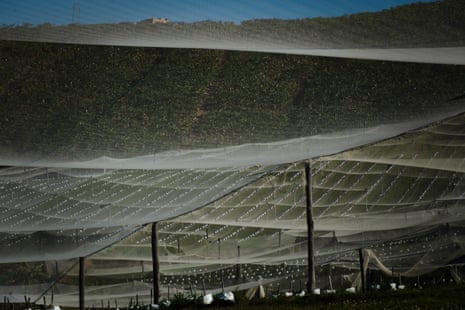
The physical transformation of landscapes also troubles communities. The construction of extensive polytunnels—metal-framed structures covered in plastic sheeting that can stretch 60 meters in length—fundamentally alters the visual character of rural valleys. These industrial-scale installations contrast sharply with the natural landscapes that initially attracted residents to these areas, creating what Faehrmann describes as situations where "people move into these beautiful valleys for the lifestyle and the environment but then wake up one day and within months they are looking at an industrial-scale blueberry farm."
Political and Legal Responses
The NSW Greens are responding to these concerns with proposed legislation that would mandate development applications for intensive horticulture operations. Cate Faehrmann's private member's bill, scheduled for introduction next week, seeks to provide councils with greater regulatory powers over berry farms. The proposed measures include mandated buffer zones between intensive farms and both residential properties and waterways, stricter controls on chemical spraying and irrigation runoff, and enhanced monitoring of produce for pesticide residues.
This legislative push follows a recent legal setback for local councils seeking to regulate the industry. The Coffs Harbour council recently lost a case in the NSW Land and Environment Court against raspberry farmers who had challenged a stop-work order on their polytunnel construction. The court determined that the tunnels, which covered 4 hectares, constituted part of "intensive horticulture" rather than "farm buildings" under the local environment plan, and therefore did not require development approval. The ruling highlighted the limitations of existing regulatory frameworks and the need for legislative change if councils are to gain meaningful oversight.
Simultaneously, the state Labor government is considering an inquiry into alleged worker abuse in the region's berry industry. Unlike most Australian states, New South Wales does not regulate labor hire companies that serve as intermediaries between farmers and seasonal workers. This regulatory gap has been linked to reports of underpayment, poor living conditions, and exploitation, particularly affecting workers who arrived through the Pacific Australia Labour Mobility (Palm) scheme but left their employers due to alleged mistreatment.
Industry and Government Perspectives
The berry industry and state government offer contrasting perspectives on the regulatory debate. Rachel Mackenzie, chief executive of Berries Australia, has stated that proposals requiring development applications "are not supported by the planning department or the state government," viewing this as validation of the industry's position. The industry argues that current regulations appropriately balance agricultural productivity with environmental considerations.

State Planning Minister Paul Scully has articulated the government's cautious approach to increased regulation, warning that "overly restrictive local planning controls may delay or prevent necessary farm upgrades, deter investment, and create uncertainty for landholders looking to modernise their operations." He emphasizes that there's "no one-size-fits-all approach" and that mandatory development applications across all rural zones "would hinder efforts to reduce regulatory burdens and support modern farming practices across NSW."
Minister Scully has noted that councils can seek changes to their Local Environmental Plans to require development approval for horticulture operations, but such requests must be supported by sufficient evidence. The Nambucca Valley council discovered this requirement when their November 2024 request to include blueberry farms in development approval requirements was rejected by the planning department due to insufficient supporting evidence. The council is now developing a second proposal but faces internal disagreements about whether issues like buffer zones should be mandated or left to industry self-regulation.
Broader Implications for Regional Planning
The NSW berry farming controversy reflects broader tensions in Australian regional development between agricultural productivity, environmental protection, and community wellbeing. The conflict highlights how specialized exemptions in planning laws can create unintended consequences, particularly when industries expand rapidly into new regions. It also demonstrates the challenges local councils face when trying to respond to community concerns within state-determined regulatory frameworks.
The situation raises important questions about the appropriate balance between supporting agricultural innovation and protecting community interests. As berry farming expands beyond its traditional base in Coffs Harbour into the Nambucca Valley, Kempsey area, and westward toward Grafton and Bellingen, these conflicts are likely to intensify unless regulatory frameworks evolve to address emerging concerns.
The coming legislative debate over the Greens' bill will test the political will to recalibrate this balance. The outcome will signal whether New South Wales prioritizes deregulation to support agricultural modernization or moves toward greater local oversight to address environmental and community concerns. This decision will have lasting implications not only for the berry industry but for the broader approach to intensive agriculture across the state's rural landscapes.