China's Strategic Bet on Optical Computer Chips to Power the Next Generation of AI
As the energy demands of generative artificial intelligence soar, researchers are exploring optical computer chips that use light instead of electricity as a potential solution. China has emerged as a global leader in this field, publishing more papers on photonic chips than any other nation. This strategic focus is partly driven by US restrictions on advanced electronic chips, pushing China to seek alternative pathways for high-performance computing. While promising for their speed and energy efficiency, optical chips face significant challenges in scaling and performing complex AI tasks, with recent breakthroughs like the LightGen chip offering a glimpse of a potential future beyond electronic limitations.
The relentless growth of generative artificial intelligence, with its insatiable appetite for computational power and energy, is pushing the fundamental technology behind it—the electronic semiconductor chip—toward its physical limits. In response, a significant technological race is underway to develop a successor. At the forefront of this race is China, which is making a substantial strategic bet on optical computer chips, semiconductors that process information using photons of light rather than electrons. This pivot toward photonics represents not just a search for more efficient computing but a calculated move to secure technological sovereignty in an era of geopolitical competition over advanced chips.

The Rise of Photonic Computing
Optical, or photonic, chips operate on a fundamentally different principle than their electronic counterparts. By transmitting data with light, they offer the potential for vastly higher speeds and significantly lower energy loss, as photons travel fast and do not generate the debilitating heat that plagues dense electronic circuits. While photonic systems are already established in data communications and sensors, adapting them for general computation, and specifically for the complex matrix multiplications required by AI, presents a formidable engineering challenge.
China's embrace of this challenge has been rapid and substantial. According to a Nature analysis, Chinese researchers published 476 papers on optical chips in a recent year, the highest output of any country. This represents a tenfold increase in Chinese-authored publications in this field between 2017 and 2025, far outpacing growth in other nations like the United States. This surge is no accident; it is the result of deliberate state investment. As noted by Ben Eggleton, a physicist at the University of Sydney, China has invested strategically "in infrastructure, capability and talent" in photonics over the past decade.
Geopolitics and Technological Sovereignty
China's accelerated push into optical computing is deeply intertwined with broader geopolitical tensions, particularly US policies that restrict China's access to the most advanced electronic chips and the equipment needed to manufacture them. These chips are the lifeblood of training and deploying large AI models. The restrictions have, as materials scientist Zengguang Cheng of Fudan University notes, "sharpened China’s incentive to find alternative pathways to high-performance computing." Photonics, mentioned alongside quantum computing in China's national development plans, is viewed as one such critical alternative pathway to bypass electronic chip limitations and achieve a degree of technological self-reliance.
Overcoming the Computational Hurdle
The core challenge for optical AI chips lies in their architecture. Electronic chips use transistors to manipulate voltages in a highly reconfigurable way. Photonic chips, however, depend on controlling the properties of light—its amplitude, phase, and interference patterns. This makes them inherently energy-efficient for specific linear operations but historically difficult to scale, reconfigure, and train for the diverse, non-linear tasks required by generative AI. For years, most photonic chips were limited to narrow functions like basic image classification.
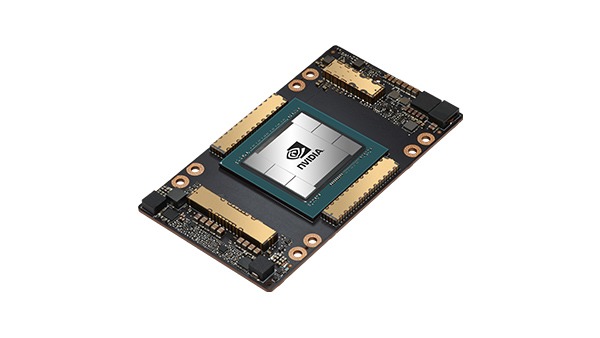
A significant breakthrough was announced recently by a team led by Yitong Chen at Shanghai Jiao Tong University. They unveiled LightGen, described as the first all-optical chip capable of running advanced generative AI models to produce images and videos. The team used nanoscale-engineered metasurfaces to integrate millions of photonic neurons and developed a specialized training algorithm for optical systems. Their results claimed that LightGen could generate content at speeds and energy efficiencies surpassing those of high-end electronic processors like the NVIDIA A100. Experts like Eggleton see this as an impressive proof of concept, demonstrating the tangible potential of photonics for specific, demanding AI tasks.
The Road Ahead for Optical AI
Despite promising advances, optical chips remain years away from integration into consumer devices and are unlikely to wholly replace electronic chips in the foreseeable future. The path forward involves overcoming significant hurdles in manufacturing scalability, system integration, and developing robust design tools and software ecosystems tailored for photonic hardware. The hybrid approach, where optical chips handle specific, energy-intensive linear algebra operations while electronic chips manage control logic and memory, may be the most viable near-term architecture.
China's substantial investment and research output position it as a key player in defining this future. The global competition in optical computing is not just about building a faster chip; it is about shaping the foundational technology of the next AI era. As the demand for AI continues to explode, the success or failure of the optical computing bet will have profound implications for the balance of technological power, global energy consumption, and the very capabilities of artificial intelligence itself.