Bills Coach McDermott Criticizes Officials After Controversial Overtime Interception in Playoff Loss
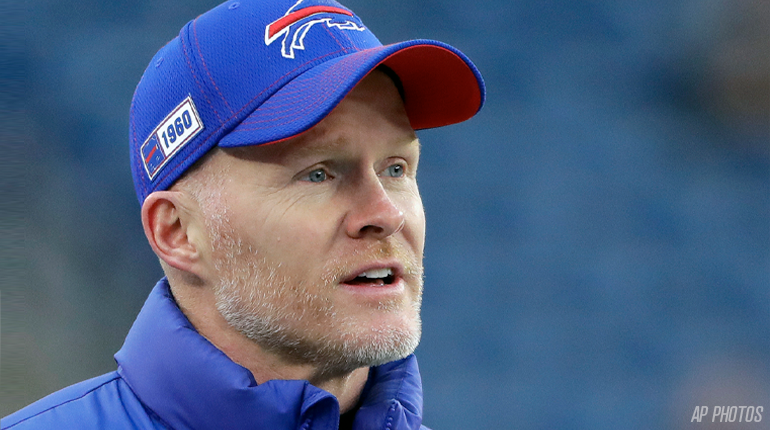
Buffalo Bills head coach Sean McDermott expressed significant frustration with NFL officiating following a critical overtime interception in the AFC divisional round loss to the Denver Broncos. McDermott argued that officials failed to properly review a pivotal play where receiver Brandin Cooks appeared to make a catch, which was instead ruled an interception. The coach called the handling of the situation unacceptable for a game-deciding moment, highlighting ongoing tensions between teams and league officiating in high-stakes playoff environments.
In the high-pressure crucible of the NFL playoffs, where seasons and legacies are decided by inches and seconds, the margin for officiating error shrinks to zero. The Buffalo Bills' 2025 AFC divisional round exit, a 33-30 overtime loss to the Denver Broncos, became a flashpoint for this reality. The controversy centered not on a missed field goal or a fumble, but on a procedural decision by the officiating crew that left head coach Sean McDermott visibly and vocally frustrated, questioning the league's standard for handling game-altering plays.
The Pivotal Overtime Play
The sequence in question occurred on the Bills' first and only offensive possession of overtime. Facing a third-and-11 from their own 36-yard line, quarterback Josh Allen targeted veteran wide receiver Brandin Cooks deep downfield. The result was a chaotic, contested play that would define the game's outcome. Cooks initially secured the ball and appeared to get a knee down, but Broncos cornerback Ja'Quan McMillian managed to get his hand on the football as both players hit the ground, ultimately wresting possession away.
On the field, the officials ruled it an interception, a turnover that handed the ball—and effectively the game—to the Broncos at their 20-yard line. Replay footage showed a complex, borderline sequence. Cooks maintained he caught the pass, telling reporters afterward he needed to do more to "leave things out of the officials' hands." McMillian described it as a competitive finish: "He actually had the ball coming down, and once I had my hand on the ball, I was able to take it from him."
McDermott's Critique of the Review Process
Coach McDermott's primary grievance was not solely with the ruling on the field, but with the league's review process—or lack thereof—in overtime. NFL rules prohibit coaches from challenging calls in overtime, placing the onus on the replay official in New York to initiate a review of potentially incorrect calls. McDermott, believing a clear mistake had been made, was forced to burn a timeout to try to spur a formal review.
"Too big of a play in a play that decided the game, potentially, as well, to not even slow it down," McDermott told a pool reporter after the game, as covered by ESPN. "That's why I had to call the timeout. It's not what I wanted to do, but I had to do it in order to make sure that I understood what was going on and that they did take a look at it." He expressed bewilderment that the on-field referee was not given a chance to review the play on a monitor, a common practice for other reviewable calls during regulation.
The Officiating Explanation
Referee Carl Cheffers provided the league's rationale in a separate pool report interview. He explained that the ruling hinged on the "process of the catch" rule. "The receiver has to complete the process of a catch," Cheffers stated. "He was going to the ground as part of the process of the catch and he lost possession of the ball when he hit the ground. The defender gained possession of it at that point. The defender is the one that completed the process of the catch, so the defender was awarded the ball." Cheffers confirmed that replay officials in New York upheld the call, noting the ball did not hit the ground.
This explanation did little to placate McDermott or his players. The coach watched the replay approximately 20 times post-game, arriving at a steadfast conclusion: "That play is not even close. That's a catch all the way ... and nobody can convince me that that ball is not caught and in possession of Buffalo."
Broader Implications and Team Reaction
The fallout extended beyond the one play. On the ensuing Broncos game-winning drive, the Bills' defense was flagged for two defensive pass interference penalties in overtime—a rare feat that made them only the second team in 25 years to incur multiple such penalties on a single OT drive. Cornerback Tre'Davious White, penalized on the second call, was blunt in his assessment: "And referees, they just don't know ball, man."
McDermott framed his public criticism as an act of advocacy for his team and city. "I'm saying it because I'm standing up for Buffalo, damn it. I'm standing up for us," he said. "What went on, that is not how it should go down in my estimation. These guys spend three hours out there playing football, pouring their guts out to not even say, 'Hey, let's just slow this thing down.' That's why I'm bothered."
Conclusion: A Recurring Playoff Narrative
The incident underscores a perennial tension in professional sports: the intersection of human judgment, technology, and irrevocable consequences. While the NFL's replay system aims to correct clear errors, its application—especially in the no-challenge environment of overtime—can leave teams feeling powerless at the most critical juncture. For the Buffalo Bills and Sean McDermott, a season ended in a whirlwind of controversy, adding another chapter to the ongoing debate about consistency, transparency, and the finality of officiating decisions when seasons are on the line. The call may stand in the record books, but the questions it raised about process and protocol will linger into the next season and beyond.