NASA's Mars Sample Return Dilemma and the Genetics of Canine Ears
Two distinct scientific stories captured headlines in early 2026. NASA made the difficult decision to cancel its ambitious Mars Sample Return mission, leaving precious rock and soil samples on the Red Planet and prompting scientists to assess the lost research opportunities. Simultaneously, geneticists published findings unraveling the mystery behind one of dogs' most endearing features: their long, floppy ears. This article explores the implications of NASA's strategic shift and the fascinating science of canine domestication traits.
In January 2026, the scientific community received news with both disappointment and fascination. NASA announced it would not proceed with plans to return rock and soil samples collected by the Perseverance rover from Mars to Earth, a decision detailed in Nature. This strategic shift, driven by budgetary and technical complexities, means invaluable geological records will remain on the Martian surface. Concurrently, genetic research published in the same journal provided answers to a long-standing question about our closest animal companions: what genetic mechanisms give dogs their characteristic long, floppy ears? These two stories, while seemingly unrelated, highlight the constant negotiation between scientific ambition and practical constraints, and the ongoing quest to understand our world and the creatures in it.
The Mars Sample Return Mission: Ambition Meets Reality
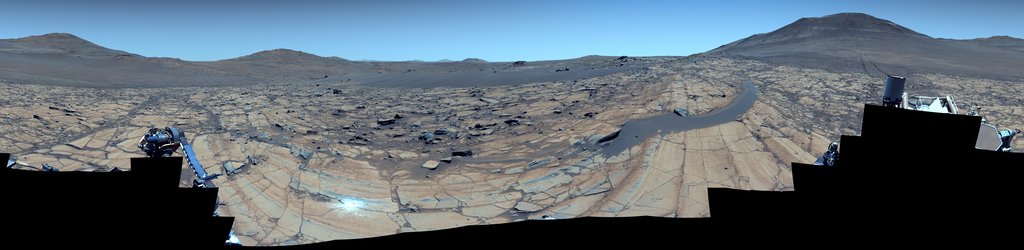
The Mars Sample Return (MSR) mission represented one of NASA's most ambitious interplanetary endeavors. The Perseverance rover, which landed in Jezero Crater in 2021, has been meticulously collecting and caching core samples from rocks and soil that hold clues to Mars's ancient past, including potential signs of past microbial life. The original plan involved a complex series of future missions to retrieve these tubes, launch them from the Martian surface, and return them to Earth for analysis in sophisticated laboratories far beyond the capabilities of any rover.
However, as reported by Nature, NASA has decided to cancel this return leg. The challenges were multifaceted: skyrocketing projected costs, immense technical risk associated with the first-ever launch from another planet, and the sheer complexity of the multi-mission architecture. This leaves approximately 30 sealed sample tubes on Mars. Scientists must now reconcile with conducting the majority of analysis remotely through the rover's onboard instruments, which, while advanced, cannot match the depth of investigation possible in terrestrial labs.

The Science That Will Be Lost
The decision forecloses specific lines of high-precision inquiry. On Earth, samples could be subjected to exhaustive, destructive testing to hunt for organic molecules or isotopic signatures indicative of past biological activity. Labs could perform delicate age-dating techniques and examine mineral structures at nanometer scales to reconstruct the planet's climatic and geological history with unprecedented detail. The remote analysis will provide valuable data, but it represents a compromise. The episode underscores a recurring theme in big science: the need to balance grand ambitions with fiscal and engineering realities, often requiring difficult triage of scientific objectives.
Why Do Dogs Have Floppy Ears? A Genetic Explanation
Shifting from the red plains of Mars to our homes, another study addressed a charming evolutionary puzzle. Researchers investigating the genetics of domestication have identified key factors behind the floppy ears seen in many dog breeds, as highlighted in the Nature Briefing. This trait, known scientifically as pendulous ears, is a hallmark of the "domestication syndrome"—a suite of physical and behavioral changes that appear in many domesticated animals compared to their wild ancestors.
The research suggests that floppy ears are linked to genetic changes affecting neural crest cells during embryonic development. These cells are multipotent and contribute to forming a variety of tissues, including cartilage, bone, and connective tissue. During domestication, selective breeding for tameness and sociability appears to have inadvertently affected the migration or development of these cells, leading to underdeveloped ear cartilage that cannot support upright ears. This same genetic pathway is thought to be connected to other domestication traits like shorter snouts, curly tails, and reduced pigmentation.

Connecting the Dots: Science, Resources, and Curiosity
These two narratives, though disparate in subject, are connected by the fundamental drivers of science: curiosity and constraint. The Mars story illustrates how the pursuit of profound knowledge—searching for life's origins on another world—can be reshaped by practical limitations. The canine genetics story shows how answering simple, observable questions (why do dogs look so cute?) can lead to deep insights into evolutionary biology and developmental genetics. Both remind us that scientific progress is not always a linear path of discovery but a complex interplay of asking questions, deploying resources, and adapting to new information and realities.
NASA's decision redirects the focus to in-situ analysis on Mars, pushing remote science capabilities to their limits. Meanwhile, understanding the genetics of traits like floppy ears not only satisfies curiosity but also informs broader studies on domestication, evolution, and even human-animal bonds. Together, they represent the full spectrum of scientific inquiry, from the interplanetary to the intimately familiar.