Read on PBS News
Thailand-Cambodia Border Conflict: Fighting Continues Amid Diplomatic Talks
Despite ongoing diplomatic negotiations, Thailand and Cambodia engaged in renewed combat along their shared border in late December 2025, breaking a ceasefire established just five months earlier. The conflict centers on long-standing territorial disputes in the Banteay Meanchey and Sa Kaeo provinces, with Thailand deploying F-16 fighter jets and both sides reporting civilian and military casualties. This article examines the current military situation, diplomatic efforts through the General Border Committee, and the complex geopolitical factors complicating resolution of this persistent regional conflict.
In a troubling development for Southeast Asian stability, Thailand and Cambodia found themselves simultaneously engaged in military combat and diplomatic negotiations in late December 2025. This paradoxical situation highlights the complex and persistent nature of border disputes between the two nations, where armed clashes erupted despite a ceasefire agreement reached just five months earlier. The conflict underscores how historical territorial claims can quickly escalate into modern military confrontations, even as diplomatic channels remain open.

Current Military Situation and Escalation
The most recent escalation occurred on December 26, 2025, when Thailand deployed F-16 fighter jets to conduct bombing operations against Cambodian territory. According to Cambodia's Defense Ministry, approximately 40 bombs were dropped on a village in the northwestern province of Banteay Meanchey. While immediate casualty reports were not available, the ministry confirmed that houses and critical infrastructure sustained significant damage during the attack.
Thailand's military justified this aggressive action as necessary for protecting its Sa Kaeo province, which borders Banteay Meanchey. Military officials stated that a joint army-air force operation was essential to defend Thailand's sovereignty in an area where both nations maintain overlapping territorial claims. This military action represents a significant escalation from previous border skirmishes and marks a concerning development in regional security dynamics.
Diplomatic Efforts Amid Conflict
Remarkably, even as combat operations continued, military officials from both nations conducted a third day of working-level talks through their established General Border Committee. These negotiations took place at a checkpoint between Cambodia's Pailin province and Thailand's Chanthaburi province, demonstrating the complex dual-track approach to conflict resolution. The committee meeting was expected to conclude on December 27, with both Thai and Cambodian defense ministers anticipated to join and potentially formalize a new agreement.
Thai Prime Minister Anutin Charnvirakul outlined specific expectations for the diplomatic process, stating that Thailand anticipated Cambodia would agree to a 72-hour ceasefire. If successfully implemented, Thailand indicated it would consider repatriating Cambodian prisoners of war—a significant concession that addresses one of Cambodia's major demands. This conditional approach reflects the delicate balance between military pressure and diplomatic negotiation characterizing the current situation.

Historical Context and Root Causes
The current conflict has its origins in long-standing competing territorial claims along the Thailand-Cambodia border. These disputes first broke into open combat in late July 2025, leading to five days of intense fighting before mediation efforts produced a ceasefire. Malaysian Prime Minister Anwar Ibrahim played a crucial mediating role, with additional pressure applied by U.S. President Donald Trump. Despite these high-level interventions, the ceasefire proved unstable, collapsing in early December when renewed clashes erupted.
Both nations frame their military actions as defensive measures while accusing the other of breaching the ceasefire agreement. Air Marshal Jackkrit Thammavichai, spokesperson for Thailand's air force, articulated this position clearly: "If Cambodia is not sincere about a ceasefire, peace will not be possible, and Thailand will have no choice but to proceed with full-scale military operations to defend its sovereignty." This mutual attribution of responsibility complicates diplomatic resolution and perpetuates the cycle of violence.
Humanitarian Impact and Casualties
The human cost of this conflict has been substantial on both sides of the border. Thailand has reported losing 26 soldiers and one civilian as direct combat casualties since December 7, with an additional 44 civilian deaths attributed to collateral effects of the fighting. Cambodia has not released official military casualty figures but acknowledges that 30 civilians have been killed and 90 injured in the conflict. These numbers, while significant, likely represent only part of the full humanitarian impact.
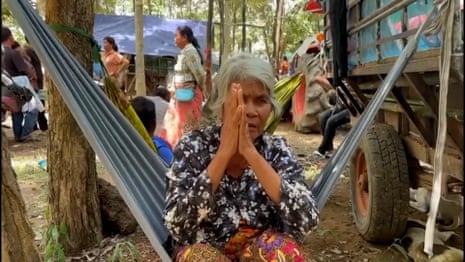
Perhaps most dramatically, hundreds of thousands of people have been evacuated from affected areas on both sides of the border. This mass displacement creates not only immediate humanitarian challenges but also long-term social and economic consequences for border communities. The evacuation efforts strain local resources and infrastructure while creating uncertainty about when—or if—displaced populations can safely return to their homes and livelihoods.
International Involvement and Geopolitical Dimensions
The Thailand-Cambodia conflict has attracted attention and involvement from international actors, particularly the United States. President Donald Trump engaged directly with the situation, speaking by phone with both the Thai and Cambodian prime ministers on December 12. Following these conversations, Trump claimed on social media that the leaders had agreed to revive their ceasefire, though Thai Prime Minister Anutin subsequently denied such an agreement existed.
More recently, U.S. Secretary of State Marco Rubio affirmed in a call to Cambodian Prime Minister Hun Manet that Washington remains prepared "to facilitate discussions to ensure peace and stability" between the two nations. This continued U.S. engagement reflects broader geopolitical interests in Southeast Asian stability and demonstrates how regional conflicts can draw in global powers seeking to influence outcomes and maintain strategic balance in important regions.
Unusual Developments and Symbolic Actions
Amid the serious military and diplomatic developments, an unusual humanitarian story emerged that captured public attention. Thai media highlighted the rescue of five malnourished wild animals—a male lion, a lioness, a sun bear, and two Asiatic black bears—from a casino that allegedly served as a Cambodian military stronghold. Thai marines captured the facility on December 21, discovering the animals in poor condition.
The rescued animals were sedated and transported to wildlife breeding centers in Thailand, arriving just before Christmas. In a symbolic gesture celebrating their rescue, the lioness was named "Merry" and the lion "Christmas." While this animal rescue represents a minor aspect of the broader conflict, it demonstrates how military operations can have unexpected humanitarian dimensions and how symbolic actions can capture public imagination even during serious geopolitical conflicts.
Conclusion: Prospects for Resolution
The simultaneous occurrence of military combat and diplomatic negotiations between Thailand and Cambodia presents a complex challenge for conflict resolution. The situation demonstrates how deeply entrenched territorial disputes can resist even high-level diplomatic interventions and how quickly ceasefires can collapse when underlying issues remain unresolved. The involvement of international actors like the United States adds additional layers of complexity to an already difficult situation.
Moving forward, the success of diplomatic efforts will likely depend on several factors: the ability to address core territorial claims rather than just symptoms of conflict, the establishment of verification mechanisms for any new ceasefire agreement, and the creation of confidence-building measures that address security concerns on both sides. The humanitarian situation along the border adds urgency to these diplomatic efforts, as continued conflict exacts an increasing toll on civilian populations. Ultimately, sustainable resolution will require addressing not just immediate military concerns but also the historical grievances and competing sovereignty claims that fuel this persistent border conflict.