Read on bbc.com
Sydney Bondi Beach Shooting: Naveed Akram Faces 59 Charges Including 15 Counts of Murder
Naveed Akram, 24, has been charged with 59 offences following the mass shooting at Sydney's Bondi Beach on Sunday, which targeted a Jewish community Hanukkah celebration. The charges include 15 counts of murder and one of committing a terrorist act, with police designating the incident as terrorism motivated by Islamic State ideology. The attack, Australia's deadliest shooting since 1996, resulted in 15 fatalities and dozens of injuries, with 17 victims still hospitalized. This article details the charges, the ongoing investigation, and the community's response to the tragedy.
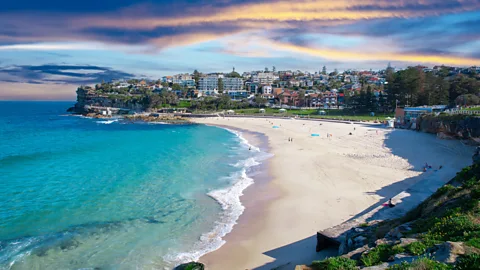
The mass shooting at Sydney's Bondi Beach on Sunday has resulted in one of Australia's most significant criminal cases in recent history, with the surviving suspect now facing a comprehensive list of charges. Naveed Akram, 24, has been formally charged with 59 offences, including 15 counts of murder and one count of committing a terrorist act, according to New South Wales police authorities. The attack, which targeted Australia's Jewish community during a Hanukkah celebration, represents the country's deadliest shooting incident since 1996 and has been officially designated as a terrorist incident by law enforcement.
Comprehensive Charges and Legal Proceedings
The New South Wales police have filed an extensive list of charges against Naveed Akram following the Bondi Beach attack. In addition to the 15 murder charges and one terrorism charge, Akram faces 40 counts of causing grievous bodily harm with intent to murder. Authorities have also included one charge of causing a public display of a prohibited terrorist organisation symbol, indicating the ideological motivation behind the attack. According to police statements, the incident appears to have been "motivated by Islamic State" group ideology, as confirmed by Australian Prime Minister Anthony Albanese.
Akram's initial court hearing took place from his hospital bedside, where he remains in critical condition following injuries sustained during the incident. The New South Wales court has adjourned the case until April 2026, allowing time for both the suspect's medical recovery and the comprehensive gathering of evidence. Police Commissioner Mal Lanyon explained that authorities are waiting for medication to wear off before formally questioning Akram, stating, "For his fairness, we need him to understand what is exactly happening." This approach reflects standard legal procedures for dealing with critically injured suspects while ensuring their rights are protected.
Attack Details and Victim Impact
The Bondi Beach shooting occurred during an event celebrating the first night of Hanukkah, specifically targeting Australia's Jewish community. The attack resulted in 15 fatalities and dozens of injuries, with 27 people initially transported to hospitals across Sydney. As of Wednesday evening local time, 17 victims remain hospitalized, with one in critical condition and four others described as critical but stable. Among the deceased were two rabbis, a Holocaust survivor, and 10-year-old Matilda, whose family has publicly identified her. Boris and Sofia Gurman, a couple filmed wrestling with one of the gunmen during the early stages of the attack, were also among the victims.
The attack also injured two police officers, including 22-year-old Jack Hibbert, who has lost vision in one eye and faces what his family describes as a "long and challenging recovery." The scale and targeting of the violence have shocked both the local community and the nation, prompting widespread mourning and calls for increased security measures for religious and cultural events. The incident represents Australia's most significant mass shooting since the Port Arthur massacre in 1996, which led to major reforms in the country's gun control laws.
International Connections and Investigation
Investigators have uncovered international dimensions to the case, revealing that Naveed Akram and his father Sajid Akram traveled to the Philippines in November, just weeks before the attack. According to the Philippine immigration bureau, the pair were in the country from November 1 to November 28, with their final destination being the southern city of Davao. Naveed Akram traveled using an Australian passport, while his father Sajid used an Indian passport. Sajid Akram, who was killed in an exchange of fire with police at the scene, was originally from Hyderabad in southern India but had "limited contact" with his family there, according to police officials from the Indian state of Telangana.
These international movements are now part of the broader counter-terrorism investigation, as authorities seek to determine whether the Philippines trip involved contact with extremist networks or was related to attack planning. The inclusion of a terrorism charge against Naveed Akram suggests investigators have evidence pointing to ideological motivation and possible connections to international extremist groups. The Australian Federal Police and international partners are likely coordinating to trace the suspects' movements and communications during their time abroad.
Community Response and Political Fallout
The Jewish community in Australia has been profoundly affected by the attack, with thousands gathering for the first funeral of a victim, British-born Rabbi Eli Schlanger. Speaking at the funeral, Rabbi Levi Wolff described Schlanger's death as an "unspeakable loss," stating, "Eli was ripped away from us, doing what he loved best. Spreading love and joy and caring for his people with endless self-sacrifice in his life and in his death, he towered above as one of the highest and holiest souls." Rabbi Schlanger had helped organize Sunday's Hanukkah event, making his death particularly poignant for the community he served.

Prime Minister Anthony Albanese has faced criticism from the Jewish community for not taking enough action on antisemitism, though he defended his government's response in media interviews. Albanese pointed to measures including appointing Australia's first antisemitism envoy, toughening hate speech laws, and increasing funding for social cohesion projects and Jewish institutions. When asked about his absence from Rabbi Schlanger's funeral, Albanese stated, "I would attend anything that I'm invited to. These are funerals that are taking place to farewell people's loved ones." The political response to the attack is likely to influence Australia's counter-terrorism policies and community safety measures in the coming months.
Ongoing Impact and Future Proceedings
The Bondi Beach shooting has left deep scars on Australian society, particularly within the Jewish community and the broader multicultural fabric of Sydney. Funerals for the other victims are expected to continue over the coming days, including for the youngest victim, Matilda, scheduled for Thursday. A floral tribute has been established at the attack site, with community members gathering to pay respects and demonstrate solidarity against violence and extremism. The legal proceedings against Naveed Akram will be closely watched as they progress toward the April 2026 court date, with the extensive list of charges reflecting the severity of the attack and its impact on multiple victims and their families.
As Australia grapples with this tragedy, questions about security at public events, counter-terrorism preparedness, and community cohesion are likely to dominate public discourse. The designation of the attack as terrorism underscores the ongoing threat of extremist violence, even in countries with relatively low rates of such incidents. The comprehensive investigation and forthcoming legal proceedings will provide more details about the motivations, planning, and execution of the attack, potentially informing future prevention strategies and policy responses to similar threats.