A Simple Turn: How Re-examining Roman Glass Reveals a Lost History of Artisans
A recent discovery at the Metropolitan Museum of Art has overturned long-held assumptions about Roman glassmaking. By simply turning a 1,500-year-old glass cage cup, a researcher identified overlooked symbols as workshop makers' marks. This finding reveals that these intricate luxury items were produced by organized teams of skilled artisans, not solitary geniuses. The research, led by a professor who is also a practicing glassblower, uses practical experience to restore identity and agency to the anonymous craftworkers of late antiquity, challenging centuries of scholarly focus on technique over the people behind the objects.
In the hushed atmosphere of a museum gallery, a moment of simple curiosity has rewritten a chapter of ancient history. While studying a collection of Roman glass cage cups at the Metropolitan Museum of Art in 2023, art historian and glassblower Hallie Meredith performed a fundamental act: she turned one of the vessels around. This simple rotation brought into focus a set of symbols on the back that had been overlooked for generations, dismissed as mere decoration. Her subsequent research, detailed in recent academic papers, proposes that these markings are workshop identifiers—ancient makers' marks that reveal a coordinated network of skilled artisans. This discovery not only challenges entrenched theories about Roman glass production but also powerfully restores a sense of identity to the anonymous craftworkers whose labor created some of antiquity's most stunning objects.
Overlooked Symbols: From Ornament to Identifier
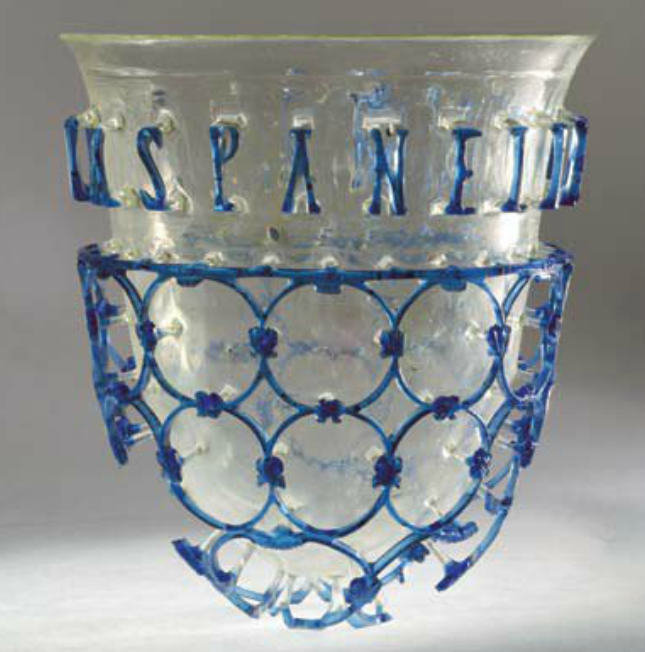
For decades, scholars cataloging late Roman luxury glass focused on the intricate latticework and dedicatory inscriptions wishing owners long life. The abstract shapes—often diamonds, leaves, or crosses—carved alongside these inscriptions were typically classified as ornamental flourishes. Meredith's insight, born from her dual perspective as an academic and a maker, suggested a more functional purpose. "Because I am trained as a maker, I kept wanting to flip things over," Meredith explained. "When that happens, patterns appear that everyone else has literally photographed out of the frame." Her analysis, published in the Journal of Glass Studies and World Archaeology, documents the recurrence of these same symbols across multiple carved glass objects from the 4th to 6th centuries CE.
This repetition points to a shared visual system, a kind of symbolic language used within the glassmaking community. Rather than being personal autographs, Meredith argues these marks served as workshop brands, identifying the collective responsible for an object's creation. This interpretation shifts the narrative from individual artistic genius to organized, collaborative production, reflecting a more complex social and economic structure behind these luxury goods.

Rethinking Production: Teams, Not Solo Artisans
The discovery of these workshop marks provides crucial evidence for re-evaluating how Roman diatreta (cage cups) were made. For over two centuries, academic debate has centered almost exclusively on manufacturing techniques—whether they were hand-carved, cast, or blown. Meredith's research introduces the human element, arguing that a fuller understanding requires attention to the people involved. By examining tool marks, inscriptions, and even unfinished pieces, she found compelling evidence for team-based production.
Creating a diatretum was a feat of endurance and skill, involving the careful carving of a thick-walled glass form into two concentric layers connected by delicate bridges. Meredith's analysis suggests this labor-intensive process was likely divided among specialists—engravers, polishers, and apprentices—working in coordinated workshops over extended periods. The symbols, therefore, mark the output of a workshop's collective skill, representing a brand identity that guaranteed quality and origin in a prestige market. This model of collaborative craftsmanship fundamentally alters our perception of ancient industry, moving it away from the myth of the lone artisan.
Restoring Identity to Ancient Craftworkers
The broader implication of this research is a significant shift in historical focus. Meredith's work, which will be expanded in her forthcoming book The Roman Craftworkers of Late Antiquity from Cambridge University Press, aims to restore visibility and agency to the laborers who formed the backbone of ancient material culture. "There's been a static picture of people who do the work," Meredith notes. "We presume we understand them because we focus on elites. But when the evidence is assembled, far more is known about these craftworkers than previously thought."
Her hands-on experience as a glassblower is central to this empathetic approach. At Washington State University, she teaches a course called "Experiencing Ancient Making," where students use 3D printing and traditional techniques to recreate artifacts. The goal is not perfect replication but developing empathy for the physical demands and problem-solving processes of ancient makers. This methodology bridges the gap between artifact and artisan, allowing modern observers to understand the objects as products of human labor, creativity, and collaboration.

A New Lens for Archaeology and Museum Practice
This discovery carries important lessons for both academic research and public engagement in museums. It demonstrates that major historical insights can still come from the careful, physical observation of objects, not just from new imaging technologies. It encourages scholars, curators, and visitors to literally look at artifacts from all angles and to consider the social history embedded in their making.
Meredith is already extending this approach through interdisciplinary collaboration. Her next project involves working with computer science students to build a searchable database tracking unconventional writing—misspellings, mixed alphabets, coded inscriptions—on thousands of portable artifacts. She hypothesizes that these "errors" may reflect multilingual artisans adapting written language for diverse audiences, further revealing the dynamic lives of craftworkers. This data-driven project promises to uncover more hidden narratives about the non-elite populations of the ancient world.
The story of the Roman glass cup is a powerful reminder that history is often hiding in plain sight. A simple turn of an object, a shift in perspective from the finished product to the process of its making, can illuminate the lives of those whom history has rendered anonymous. It restores a community of makers to their rightful place in the narrative, ensuring that when we admire the dazzling lattice of a diatretum, we also remember the skilled hands that carved it.