Read on nature.com
Somphouthone Phimmachak: The Trailblazing National Herpetologist of Laos
Somphouthone Phimmachak is a pioneering conservation researcher in Laos, recognized as the country's first national herpetologist. Her work focuses on studying and protecting the diverse amphibian and reptile species of Laos, challenging a historical trend of foreign-led research. Through her PhD on Tylototriton salamanders, she contributed to the discovery of four new species. Based at the National University of Laos in Vientiane, her multifaceted role includes lecturing, conducting field surveys, training future biologists, and leading vital conservation initiatives for threatened wildlife.
In the realm of global biodiversity conservation, the contributions of local scientists are invaluable, yet often underrepresented. Somphouthone Phimmachak stands as a beacon of this essential work in Laos, where she has carved a unique path as the nation's first national herpetologist. Her pioneering efforts in amphibian and reptile research not only advance scientific knowledge but also empower local capacity in a field historically dominated by international visitors. This article explores her groundbreaking role, daily responsibilities, and the significant impact of her conservation work on Laos's unique ecosystems.

The Role of a National Herpetologist
Somphouthone Phimmachak's designation as Laos's national herpetologist is both a personal achievement and a national milestone. As she notes, this title is accurate because she is unaware of any other Laotians working in the herpetology field within the country before she began her master's degree in 2007. Prior to her entry, conservation studies in Laos were almost exclusively conducted by visiting foreign scientists. Her career represents a crucial shift towards building indigenous scientific expertise and leadership in biodiversity conservation. This local stewardship is critical for developing sustainable, context-aware conservation strategies that respect and incorporate traditional knowledge and long-term ecological relationships.
Research and Discoveries
The core of Phimmachak's scientific contribution lies in her dedicated research. Her PhD research focused on the diversity of Tylototriton salamanders, a group of amphibians found in Southeast Asia. This work was particularly fruitful, leading to the formal discovery and description of four new salamander species. Discoveries like these are vital; they expand the known catalog of life, help scientists understand evolutionary patterns, and are the first step towards ensuring these often-cryptic creatures receive legal protection. Identifying species is fundamental to conservation, as one cannot protect what one does not know exists.

Day-to-Day Responsibilities and Fieldwork
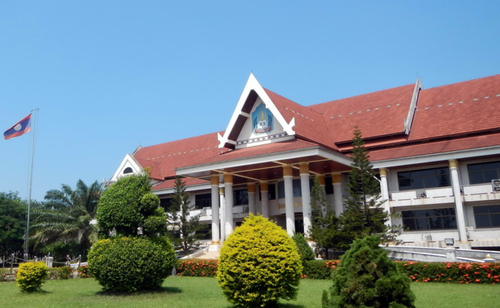
Based at the National University of Laos in Vientiane, Phimmachak's role is multifaceted, blending academia, research, and mentorship. Her responsibilities include giving lectures, conducting original research, leading scientific studies, training the next generation of Laotian biologists, and contributing to national and regional conservation initiatives. A key aspect of her work involves hands-on fieldwork. For instance, she conducts population surveys for species like the Fejervarya limnocharis frog. These surveys involve meticulous data collection: recording counts of adults, tadpoles, and eggs; monitoring frog calls; and tracking various ecological factors such as water quality and habitat conditions. This granular data is essential for assessing population health and trends.
Impact and the Future of Conservation in Laos
Somphouthone Phimmachak's work has a profound impact that extends beyond species discovery. By establishing a strong local presence in herpetology, she is helping to ensure that conservation decisions affecting Laos's rich biodiversity are informed by resident experts who understand the local context intimately. Her role in training future biologists is perhaps her most enduring legacy, creating a pipeline of local talent that will continue to study and protect the nation's wildlife for decades to come. As pressures from habitat loss and climate change intensify, the need for such dedicated, locally-rooted conservation scientists becomes ever more urgent.
In conclusion, Somphouthone Phimmachak exemplifies the critical importance of cultivating and supporting local scientific leadership in conservation. As Laos's national herpetologist, she is not only safeguarding unique amphibian and reptile species but also paving the way for a more self-reliant and sustainable approach to environmental stewardship in her country. Her journey from student to pioneering researcher underscores a powerful message: the future of global biodiversity depends on empowering scientists in the very regions where that biodiversity exists.