Five Potential Anthony Davis Trades That Could Reshape the NBA
As Anthony Davis trade rumors intensify, NBA teams are weighing the risks and rewards of acquiring the 10-time All-Star. With Davis eligible for a massive extension and carrying significant injury concerns, any deal comes with substantial financial and competitive implications. This analysis explores five realistic trade scenarios proposed by ESPN experts, detailing how each could shift the league's balance of power while examining the complex factors Dallas must consider in moving their star forward.
The Anthony Davis trade saga has reached a critical juncture as the NBA's unofficial trade season begins. With players signed in the offseason becoming eligible for trades, multiple Eastern Conference contenders have emerged as potential suitors for the Dallas Mavericks' star forward. According to ESPN's Shams Charania, the Atlanta Hawks, Toronto Raptors, and Detroit Pistons are expected to be among the teams pursuing Davis. However, any interested franchise must carefully weigh the substantial risks against the potential reward of adding a player who can elevate a team to true championship contention.

Davis presents one of the most polarizing trade targets this season due to his unique combination of elite talent, concerning injury history, and massive financial commitments. The 10-time All-Star is owed $120 million over the next two seasons and will be eligible for a four-year, $275 million extension this summer. At age 32, with a pattern of injuries that has limited him to just 24 games since joining Dallas, teams must decide whether his championship pedigree and defensive dominance justify the significant investment and roster-building restrictions of the NBA's new apron era.
The Complex Trade Landscape for Anthony Davis
The Mavericks find themselves in a delicate position with Davis. When healthy, he has demonstrated his ability to transform a team's fortunes, as evidenced by his championship run with the Los Angeles Lakers in 2020 and his strong statistical production when available. However, his injury history has become increasingly concerning, with Davis missing 15 of 25 games this season and playing only nine games after his initial trade to Dallas last year. This inconsistency creates significant challenges for Dallas in maximizing his trade value while balancing their own competitive aspirations.
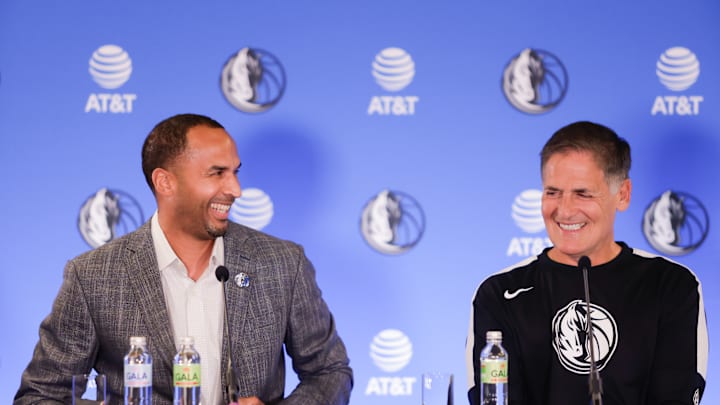
According to ESPN's Tim MacMahon, the Mavericks' decision-making process involves multiple steps. First, the team needed to ensure Davis was fully healthy, which led to a cautious approach that delayed his return from a calf strain by nearly three weeks. Second, Davis must showcase his impact during a critical evaluation period to persuade potential suitors that his on-court contributions outweigh concerns about durability and contract size. The Mavericks' front office, currently led by interim co-general managers Matt Riccardi and Michael Finley, will work in conjunction with Klutch Sports CEO Rich Paul, who represents Davis, to navigate these complex negotiations.
Financial and Competitive Considerations
The financial implications of a Davis trade are substantial for both Dallas and any acquiring team. As Bobby Marks notes, Davis' contract situation creates additional complexity. Without an extension, Davis could decline his $62.8 million player option and become an unrestricted free agent in summer 2027. This uncertainty affects his trade value, as teams must consider whether they're acquiring a long-term cornerstone or a potential rental. The Mavericks must also weigh whether to trade Davis before the February deadline or wait until the offseason when his value could potentially increase—though this approach carries the risk of another injury diminishing his market further.
Five Proposed Trade Scenarios
ESPN's NBA experts have developed five distinct trade proposals that illustrate the range of possibilities for a Davis deal. Each scenario reflects different team priorities, from immediate contention to long-term rebuilding, and demonstrates how Davis could fit within various roster constructions.
Scenario 1: Detroit Pistons Acquisition
The Eastern Conference-leading Pistons present an intriguing destination for Davis. A proposed trade would send Davis to Detroit in exchange for Tobias Harris, Jaden Ivey, and Ronald Holland II. For the Pistons, this move represents a commitment to immediate contention, adding championship experience and defensive excellence to a young roster that has surprisingly risen to the top of the conference standings. Harris' salary makes him a necessary inclusion for matching purposes, while Ivey and Holland represent young talent with considerable potential that hasn't yet translated to consistent production.
From Dallas' perspective, this trade offers two recent top-five picks who align better with their timeline alongside 18-year-old Cooper Flagg. However, as Marks notes, the absence of draft picks in this proposal could be a concern for the Mavericks, especially considering Detroit's extensive collection of future assets. Ivey's injury history and Holland's offensive struggles this season add additional risk to the return package.

Scenario 2: Five-Team Mega Trade
The most complex proposal involves five teams: Atlanta, Dallas, Sacramento, Golden State, and Detroit. In this scenario, Davis would join the Hawks, while Dallas would receive Zach LaVine and two first-round picks. Sacramento would acquire Trae Young, and Golden State would obtain Kristaps Porzingis. This creative arrangement addresses multiple teams' needs simultaneously while navigating the complex salary matching requirements of a Davis trade.
For Atlanta, this deal allows them to add Davis without sacrificing their most valuable assets, including the 2026 unprotected first-round pick from New Orleans and former No. 1 pick Zaccharie Risacher. Dallas benefits by acquiring LaVine, who provides offensive firepower while costing significantly less than Davis, along with additional draft capital that increases their tradeable first-round picks from two to four. However, LaVine's contract situation—with a potential $49 million player option for next season—could push Dallas into luxury tax territory and above the first apron.
Scenario 3: Toronto Raptors Package
Toronto's aggressive history at trade deadlines makes them a logical suitor for Davis. A proposed three-team deal involving the Raptors, Mavericks, and Pacers would send Davis to Toronto in exchange for RJ Barrett, Jakob Poeltl, Jarace Walker, Ochai Agbaji, and two first-round picks. The Pacers would acquire Daniel Gafford to address their need for a center of the future.
This trade offers Dallas a combination of young talent and draft assets. Barrett, at just 25 years old, provides a long-term wing option to pair with Cooper Flagg, while Poeltl offers a reliable center presence. The inclusion of an unprotected 2026 first-round pick from Toronto is particularly valuable, as the Raptors' competitive standing remains uncertain even with Davis on their roster. However, Poeltl's contract—with $27.3 million, $29.5 million, and $27.3 million owed over its final three seasons—represents a significant financial commitment for Dallas.

Scenario 4: Golden State Warriors Move
A four-team proposal would send Davis to the Warriors in exchange for Draymond Green, Jonathan Kuminga, and a 2026 first-round pick. Additional teams would facilitate salary matching, with Buddy Hield going to the Lakers and Charlotte receiving expiring contracts and young talent. This trade represents a bold move for Golden State, breaking up the long-standing Green-Stephen Curry pairing to add Davis' offensive versatility and rim protection.
For Dallas, this deal offers financial flexibility through Kuminga's team option for 2026-27 and a potentially valuable 2026 first-round pick if Golden State struggles. However, as Marks points out, the Warriors' addition of Davis alongside Curry and Jimmy Butler III could significantly improve their standing in the Western Conference, potentially diminishing the value of that draft pick. The Mavericks would need to consider whether chasing a play-in spot with Green and Kuminga justifies trading a player of Davis' caliber.
Scenario 5: San Antonio Spurs Transaction
The simplest proposed deal sends Davis to San Antonio in exchange for Harrison Barnes, Keldon Johnson, Luke Kornet, and multiple second-round picks, while also extinguishing the 2030 first-round swap rights Dallas owes the Spurs from the Grant Williams trade. This arrangement provides Dallas with significant financial relief—saving approximately $30 million in luxury taxes—while San Antonio adds a perfect frontcourt complement to Victor Wembanyama.
For the Spurs, Davis represents an ideal fit alongside Wembanyama, capable of playing center when the French phenom rests and forming devastating two-big lineups when they share the court. The financial structure benefits both teams, with San Antonio's cap space allowing them to absorb Davis' salary without sending back equivalent money. However, Dallas might hesitate to accept a package lacking premium draft assets or elite young talent beyond salary relief and the elimination of future swap obligations.
Strategic Implications and Final Analysis
The varying trade proposals highlight the complex calculus facing the Mavericks. As Brian Windhorst notes, Davis' trade value has changed materially since his acquisition, with injuries and age concerns complicating his market position. The Mavericks will never recoup the value they surrendered in the Luka Doncic trade, but they can still extract meaningful assets if they navigate the market strategically.
According to ESPN's analysis, the five-team mega trade with Atlanta offers the most balanced return for Dallas, providing both competitive continuity through LaVine and valuable draft capital without long-term financial commitments. The unprotected 2026 pick from Toronto also presents an attractive option, particularly if the Raptors struggle to establish themselves as contenders in the Eastern Conference.

Ultimately, the Mavericks' decision will depend on their assessment of Davis' health, their competitive timeline, and the specific offers available. With the trade deadline approaching, Dallas must weigh immediate financial relief against long-term asset accumulation, while potential suitors must determine whether Davis' championship pedigree justifies the substantial risks associated with his acquisition. The outcome of these negotiations could significantly reshape the competitive landscape of both conferences as teams position themselves for playoff runs and future contention.