Read on nature.com
The AI Language Gap: How Cultural Bias Limits Global Technology Access
Despite rapid advancements in artificial intelligence, current AI models remain heavily skewed toward English-speaking populations in high-income countries. This cultural and linguistic bias creates significant barriers for communities across Latin America, Africa, and Southeast Asia, where local languages and cultural contexts are often misunderstood or ignored by mainstream AI systems. Researchers worldwide are now developing region-specific models and datasets to ensure that the AI revolution doesn't leave billions of people behind in the digital future.
As artificial intelligence transforms global technology landscapes, a critical gap has emerged: AI systems remain overwhelmingly tailored to English-speaking populations in high-income nations. This linguistic and cultural bias threatens to exclude billions of people from the benefits of AI technology, particularly in regions where local languages, dialects, and cultural contexts differ significantly from Western norms. The consequences extend beyond mere translation issues to fundamental questions about who gets to participate in and shape our digital future.
The Scale of the Problem
With approximately 7,000 languages spoken worldwide, fewer than 5% are meaningfully represented in online content and AI training data. Languages from Asia, Africa, and the Americas account for about 5,500 of these, yet many face extinction by century's end due to digital exclusion. The dominance of English, Spanish, and French in AI systems reflects colonial legacies rather than global linguistic diversity. As researchers note, this imbalance fundamentally limits AI's global reach and effectiveness.
Beyond Simple Translation
The challenge extends far beyond word-for-word translation. AI systems must understand cultural context, social norms, and the nuanced ways people communicate within their communities. As computational linguist Mpho Primus explains, "How I speak to my mother-in-law is a very different way and use of words than how I speak to my mother." Current AI models, trained primarily on English content from sources like Common Crawl, often miss these subtleties, leading to responses that feel foreign or inappropriate to local users.

Regional Solutions Emerging
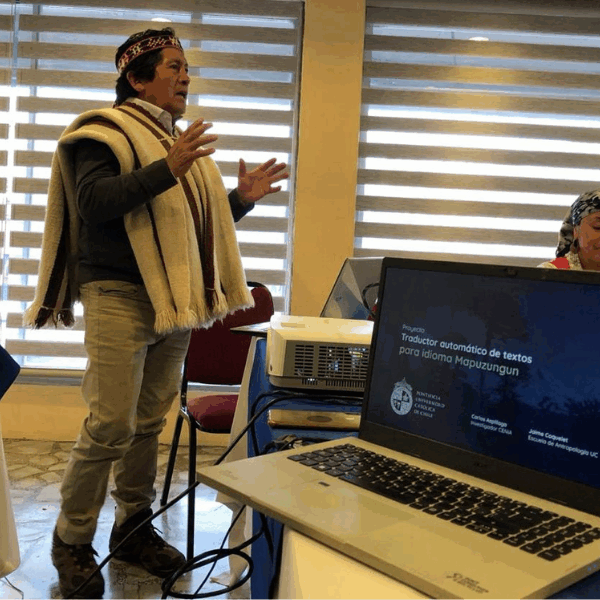
Across the global south, researchers are taking matters into their own hands. In Chile, the National Center for Artificial Intelligence (CENIA) is developing Latam-GPT, a large language model specifically trained on Latin American sources. Rather than relying on web scraping, the team uses high-quality regional data including university theses, digitized local books, and even transcripts from legislative sessions. "Our hypothesis is that culture lives in these documents," says AI specialist Omar Florez, who leads the project.
Southeast Asian Initiatives
In Singapore, researchers have created SEA-LION (Southeast Asian Languages in One Network), which incorporates about 40% Southeast Asian content in its training data compared to the 0.5% found in mainstream models just two years ago. The model specifically addresses regional needs, such as avoiding pork recommendations for Muslim users when asked for food suggestions. This cultural sensitivity represents a significant advancement over globally-trained models.
African Language Preservation
The Masakhane initiative (meaning "we build together" in isiZulu) brings together approximately 1,000 participants from 30 African countries to collect speech, text, and annotation datasets for African languages. Projects like MakerereNLP gather text from East African university archives, newspapers, and radio transcripts, while the African Next Voices project has recorded 9,000 hours of everyday conversations across 18 African languages.

Measuring the Cultural Gap
Researchers at CENIA developed a "cultural benchmark" test to evaluate how well large language models represent Latin American knowledge. The results revealed significant gaps: while models could identify that Buenos Aires is in Argentina, they frequently failed to recognize regional dishes like "porotos con rienda" or important cultural figures like Carlos Caszely. Similar evaluation tools like SEA-HELM (Southeast Asian Holistic Evaluation of Language Models) show that regionally fine-tuned models consistently outperform global giants on local cultural and linguistic tasks.
The Path Forward
Building effective regional AI models requires more than just adding local data to existing architectures. As Vukosi Marivate emphasizes, "We need a belief in building for ourselves." This means developing models in collaboration with local communities, using tools and techniques tailored to regional computational realities and cultural contexts. The goal isn't to compete with global models but to create tools that genuinely serve local populations.
The movement toward culturally-aware AI represents a crucial shift in how we approach technology development. By ensuring that AI systems understand and reflect diverse cultural perspectives, we can create more inclusive digital ecosystems that serve all of humanity rather than just privileged segments. As these regional initiatives demonstrate, the future of AI must be multilingual, culturally sensitive, and developed in partnership with the communities it aims to serve.