Dark Matter Breakthrough: Scientists May Have Finally Detected the Universe's Invisible Mass
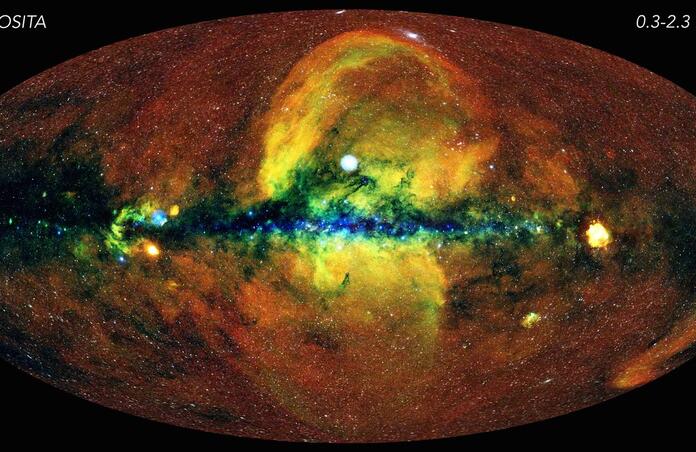
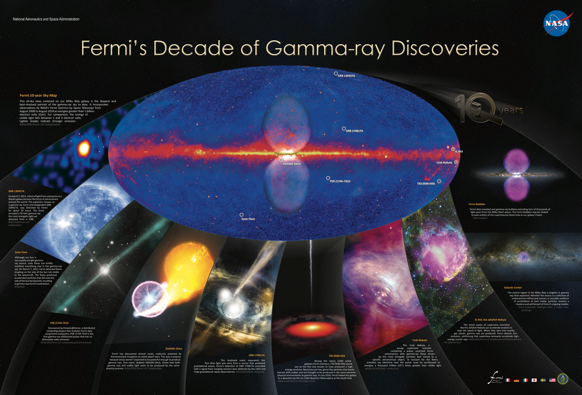
After nearly a century of searching, astronomers may have achieved one of the most significant breakthroughs in modern astrophysics. A University of Tokyo researcher analyzing data from NASA's Fermi Gamma-ray Space Telescope has detected a halo of high-energy gamma rays that closely matches theoretical predictions for dark matter particle annihilation. The discovery, centered around the Milky Way's core, represents potentially the first direct observational evidence of the mysterious substance that makes up approximately 85% of the universe's matter. This finding could revolutionize our understanding of cosmic structure and particle physics.
For nearly a century, dark matter has remained one of astronomy's most profound mysteries—an invisible substance that shapes the cosmos yet eludes direct detection. Now, a groundbreaking discovery from the University of Tokyo may have finally brought scientists face-to-face with this elusive cosmic material. Using data from NASA's Fermi Gamma-ray Space Telescope, researchers have identified a distinctive gamma-ray signal that aligns perfectly with long-standing theoretical predictions for dark matter particle interactions.
The Century-Long Search for Dark Matter
The dark matter mystery began in the 1930s when Swiss astronomer Fritz Zwicky observed that galaxies were moving far faster than their visible mass should permit. This unusual motion led him to propose that some kind of invisible structure—dark matter—was supplying the extra gravitational pull needed to keep galaxies intact. Since then, scientists have only been able to study dark matter indirectly by observing how it affects ordinary matter through gravitational effects.
Dark matter particles do not interact with electromagnetic force, meaning they don't absorb, reflect, or emit light, making direct detection exceptionally challenging. As Professor Tomonori Totani of the University of Tokyo explains in his recent publication, this has made dark matter one of astronomy's biggest unknowns for nearly 100 years.
The Gamma-Ray Discovery
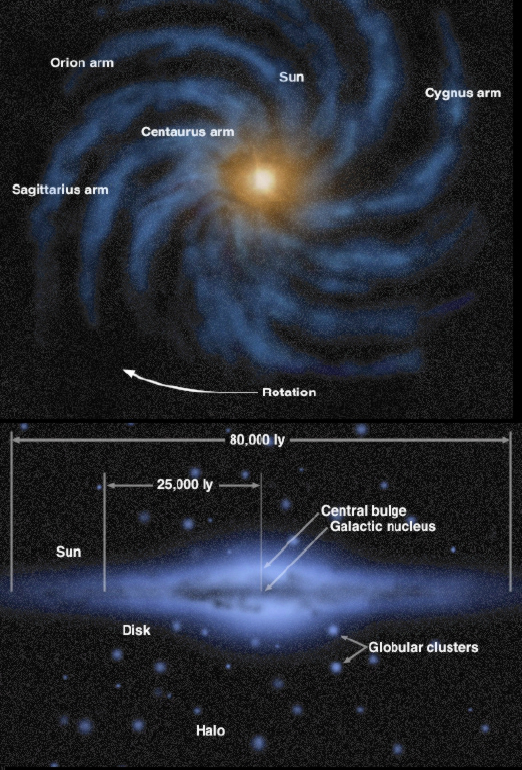
The breakthrough came when Professor Totani analyzed new data from the Fermi Gamma-ray Space Telescope and detected a halo of high-energy gamma rays extending toward the center of the Milky Way galaxy. The gamma rays measured at 20 gigaelectronvolts (20 billion electronvolts) form a structure that closely matches the expected shape of the dark matter halo surrounding our galaxy.
What makes this discovery particularly compelling is how well the measured gamma-ray energy spectrum matches model predictions for the annihilation of hypothetical weakly interacting massive particles (WIMPs). These particles are thought to be heavier than protons and interact so weakly with normal matter that they've remained undetectable until now. The estimated frequency of annihilation events based on the observed gamma-ray intensity also fits within expected theoretical ranges.
Scientific Significance and Next Steps
Professor Totani emphasizes that the gamma-ray pattern cannot be easily matched to other known astrophysical sources, making it a strong candidate for long-sought gamma-ray emission from dark matter. "If this is correct, to the extent of my knowledge, it would mark the first time humanity has 'seen' dark matter," said Totani. This discovery would signify that dark matter consists of new particles not included in the current standard model of particle physics, representing a major development in both astronomy and fundamental physics.
While the findings are promising, independent verification remains crucial. Other researchers will need to review the data to confirm that the halo-like radiation truly results from dark matter annihilation rather than another astrophysical source. Further support could come from finding the same gamma-ray signature in other dark matter-rich regions, particularly dwarf galaxies orbiting within the Milky Way halo.
This potential breakthrough represents a significant step forward in understanding the fundamental nature of our universe. After nearly a century of indirect evidence, scientists may finally be closing in on directly observing the mysterious substance that has shaped cosmic structure since the beginning of time.