From Failed Airport to Flourishing Wetlands: The Remarkable Transformation of Lake Texcoco
The abandoned New Mexico City International Airport project, canceled after $13 billion in investment and only half-completed, has undergone an extraordinary ecological transformation. What was once destined to be a mega-airport on the drained Lake Texcoco bed has been restored into one of the world's largest urban parks and protected wetlands. This remarkable reversal represents a significant environmental victory, creating crucial habitat for migratory birds while addressing water regulation challenges in the Mexico Valley basin.
The story of Lake Texcoco's transformation from abandoned airport construction site to thriving ecological park represents one of the most dramatic environmental restoration projects in recent history. What began as a $13 billion airport project that would have completed the destruction of Mexico City's historic lake system has instead become a testament to nature's resilience and the power of ecological restoration.

The Failed Airport Project
In 2014, then-President Enrique Peña Nieto announced plans for the New Mexico City International Airport (NAICM) to be built on the largely dry bed of Lake Texcoco. The ambitious project promised to be one of the world's greenest airports, with a terminal designed by renowned architect Norman Foster that would achieve LEED platinum certification for energy efficiency. However, the site selection proved controversial from the start.
Lake Texcoco had already lost more than 95 percent of its original surface area over centuries of drainage, beginning with the Spanish conquest of the Aztec capital Tenochtitlán. The airport construction would have completed this process, requiring extensive hydraulic engineering that diverted nine rivers and built 24 miles of tunnels to prevent water from reaching the construction site.
Political Reversal and Ecological Opportunity
When Andrés Manuel López Obrador assumed Mexico's presidency in 2018, he made the controversial decision to cancel the airport project, which by then had already consumed billions of dollars and caused significant environmental damage. The incomplete construction had destroyed key migratory bird habitats, altered landscapes sacred to indigenous communities, and exacerbated water security issues in the Mexico Valley.
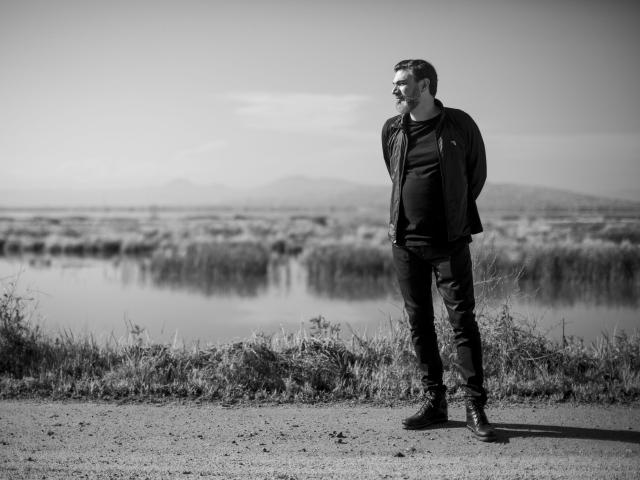
Architect Iñaki Echeverría was appointed to lead the restoration effort, describing his first visit to the site as "stepping onto Mars." The area had been radically altered by construction, with extensive mining of nearby hills for gravel leading to increased desertification and wind erosion throughout the region.
The Restoration Process
Echeverría implemented what he calls "living engineering" or "soft infrastructure" - an approach that prioritizes flexible strategies over rigid plans. Rather than building wetlands from scratch, the project reused portions of the abandoned airport infrastructure and previous hydraulic works, allowing nature to reclaim the landscape.
The restoration reconnected the nine rivers that had been diverted for airport construction, enabling natural lagoon formation and water purification. This approach allowed for the recovery of important water bodies including Ciénega de San Juan, Xalapango and Texcoco Norte Lagunas, and Nabor Carrillo Lake.
Ecological and Community Benefits
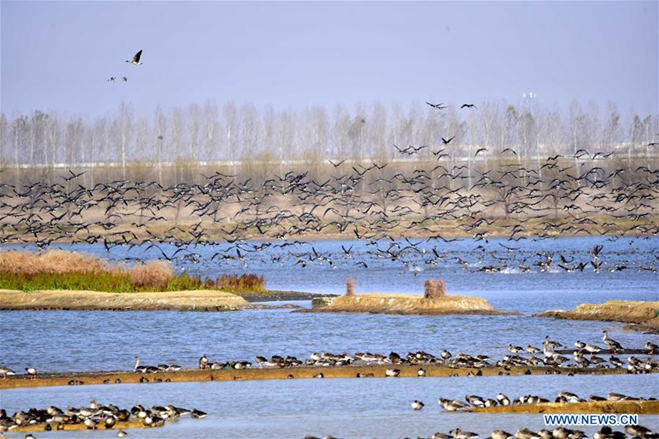
In March 2022, the land was officially declared a Protected Natural Area, covering 55 square miles and making it one of the largest urban parks in the world. The park now hosts more than 60 percent of the bird diversity in the State of Mexico and serves as a crucial refuge for migratory species traveling along North America's central flyway.
The restored wetlands provide multiple environmental benefits beyond bird habitat. The green areas help regulate temperatures, mitigate particulate pollution, capture carbon dioxide, and establish improved flood control for the Mexico City metropolitan area. The site can capture more than 1.4 million tons of carbon annually through its restored vegetation.
The area has also been designated as a Ramsar Site, recognizing its international importance as a wetland. This designation underscores its critical role in water regulation for the Valley of Mexico, benefiting millions of residents in the metropolitan area.
Lessons in Environmental Resilience
The Lake Texcoco transformation offers important lessons for environmental restoration projects worldwide. Echeverría's approach demonstrates how abandoned infrastructure can be repurposed for ecological benefit, and how flexible, nature-based solutions can prove more resilient than rigid engineering approaches.
The project serves as a powerful example of how environmental crises can become opportunities for innovation. As Echeverría notes, "The good news is that because we've done things so badly, there's a lot of room for improvement. This moment of crisis is the perfect moment for creative industries and for people with ideas. Anything goes and everything can be reimagined."
The successful restoration of Lake Texcoco stands as a testament to the possibility of reversing environmental damage and creating sustainable urban ecosystems that benefit both wildlife and human communities.