The Kryptos Mystery: How a CIA Sculpture's Secret Was Finally Revealed
After 35 years of defying the world's best codebreakers, the secret of Kryptos—the encrypted sculpture at CIA headquarters—was accidentally revealed through misplaced documents at the Smithsonian Archives. Novelist Jarett Kobek and playwright Richard Byrne discovered the plaintext while researching for an upcoming auction, uncovering what CIA and NSA experts had failed to solve for decades. The discovery has created legal tensions and threatened artist Jim Sanborn's planned auction of the solution, while revealing that the ultimate mystery extends beyond the decrypted text to an even deeper puzzle known as K5.
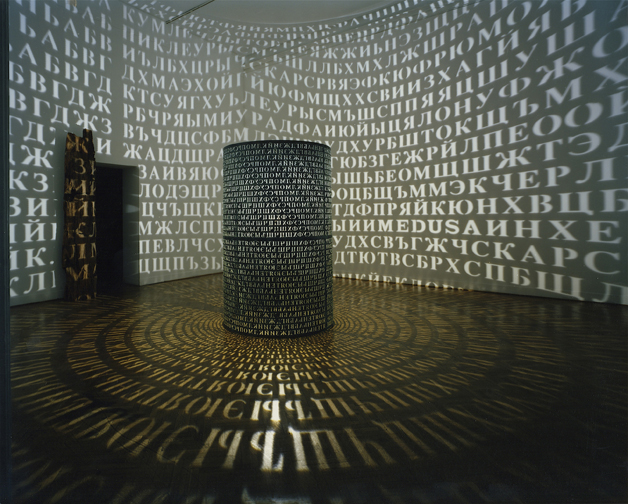
For 35 years, Kryptos stood as one of the most enduring cryptographic mysteries of our time—a sculpture at CIA headquarters containing an encrypted message that defied the world's best codebreakers. Created by artist Jim Sanborn in 1990, the 1,800-character encrypted artwork became a global obsession for cryptographers, intelligence agencies, and amateur puzzle solvers alike. The mystery finally unraveled not through sophisticated codebreaking, but through an accidental discovery in museum archives that has sent shockwaves through the cryptographic community.

The Accidental Discovery
The breakthrough came from an unlikely source: novelist Jarett Kobek and playwright Richard Byrne. While researching for an upcoming auction of the Kryptos solution, Kobek learned that some Kryptos materials were held at the Smithsonian's Archives of American Art in Washington, DC. Byrne photographed the holdings, and to their astonishment, two images contained a 97-character passage with words that Sanborn had previously dropped as clues. They were staring at the full unencrypted text that had eluded CIA and NSA codebreakers for decades.
The revelation was particularly shocking for Sanborn, who was weeks away from auctioning off the solution through RR Auction. The artist had mistakenly submitted the plaintext in readable form to the museum years earlier, never realizing he had given away the secret he had so carefully guarded. "I was in shock," Sanborn recalled. "Real serious shock." The timing couldn't have been worse, as he saw the auction as both a way to ensure his work continued and to secure compensation for his decades of effort.
Legal Complications and Media Fallout
The discovery immediately created legal tensions. RR Auction suggested that Kobek and Byrne sign non-disclosure agreements and take a portion of the auction proceeds, but both refused. Sanborn managed to get the Smithsonian to freeze the archives, but the situation escalated when Kobek and Byrne contacted New York Times journalist John Schwartz. On October 16, Schwartz published the scoop that the plaintext was out, though he didn't reveal the actual solution.
RR Auction has since added a disclaimer to the Kryptos lot description, noting the Smithsonian discovery while stating that the researchers "have stated they do not plan to release the solution." However, the auction house acknowledges there's no assurance the solution won't spill at some point. The situation has created what auction executive Bobby Livingston describes as "an effect on the auction," though the firm is moving forward with the sale.
Beyond K4: The K5 Mystery
With the K4 plaintext potentially compromised, Sanborn and the auction house have shifted focus to another aspect of Kryptos secrecy. In recent months, Sanborn has revealed that the ultimate solution to Kryptos isn't just the decrypted plaintext but another mystery that emerges when the plaintext becomes available. This additional layer has been dubbed "K5" by the cryptographic community.
Sanborn remains vague about K5's nature, but it represents a continuation of the puzzle that has captivated solvers for decades. Whether it involves test passages from 1988, other parts of the CIA installation, or a different Sanborn puzzle altogether, K5 now represents the next frontier in the Kryptos saga. This additional mystery has become part of the auction's appeal, offering bidders not just the known solution but access to the next chapter of the puzzle.
The Future of Kryptos
Despite the accidental discovery, the cryptographic community remains engaged with Kryptos. Elonka Dunin, a leader in the Kryptos-solving community, notes that interest hasn't slackened after the Smithsonian revelation. The community appears more concerned about the solution being auctioned off than about two researchers finding the plaintext. Most agree that Sanborn deserves compensation for his work.
Sanborn has been working with technologist Igor Jablokov to build an AI system that can autonomously sift through solution guesses, creating what Jablokov describes as a "virtual Sanborn." Jablokov, a wealthy Kryptos enthusiast who previously offered to buy the solution, may emerge as the winning bidder who continues the vetting process.
The Kryptos saga continues to embody the very nature of secrecy it was designed to explore. What began as a commentary on the shadow world of intelligence has become a real-world drama of accidental discovery, legal maneuvering, and the enduring human fascination with mystery. As the November 20 auction date approaches, one thing remains certain: Kryptos will continue to captivate and mystify, proving that some secrets are never fully revealed.