Vance and Netanyahu Affirm Strong U.S.-Israel Partnership Amid Gaza Ceasefire Talks
U.S. Vice President JD Vance met with Israeli Prime Minister Benjamin Netanyahu in Jerusalem to reinforce the strategic partnership between the two nations and discuss implementation of the Gaza ceasefire agreement. Both leaders emphasized their alliance as one of equals, with Netanyahu dismissing suggestions that Israel was becoming a 'protectorate' of the United States. The discussions focused on maintaining the fragile ceasefire, addressing humanitarian concerns in Gaza, and planning for post-conflict governance while ensuring Israel's security needs are met.
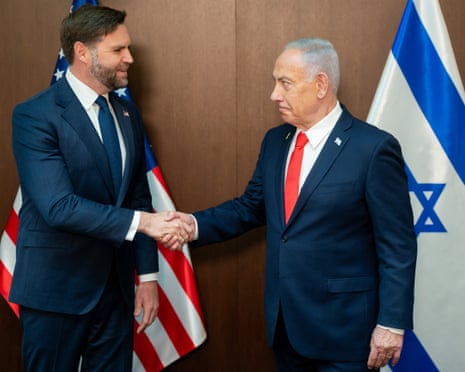
U.S. Vice President JD Vance met with Israeli Prime Minister Benjamin Netanyahu in Jerusalem on Wednesday, marking a significant diplomatic engagement aimed at reinforcing the strategic partnership between the two nations amid ongoing efforts to implement the Gaza ceasefire agreement. The high-level meeting comes at a critical juncture in Middle East diplomacy, with both leaders seeking to navigate the complex challenges of maintaining peace while addressing long-term security concerns.
Strengthening the U.S.-Israel Alliance
The meeting between Vice President Vance and Prime Minister Netanyahu served as a platform to reaffirm the strong bilateral relationship between the United States and Israel. Both leaders explicitly addressed concerns about the nature of their partnership, with Vance stating, "We don't want in Israel a vassal state, and that's not what Israel is. We want a partnership, we want an ally." This statement came in response to questions about whether Israel was becoming overly dependent on American direction in its security policies.
Netanyahu echoed these sentiments, dismissing what he characterized as contradictory criticisms about the relationship dynamics. "One week they say that Israel controls the United States. A week later they say the United States controls Israel. This is hogwash. We have a partnership, an alliance of partners who share common values, common goals," the Israeli leader asserted during their joint appearance.
Navigating Gaza Ceasefire Implementation
The discussions centered heavily on the implementation of the ceasefire agreement brokered by the Trump administration, which remains in its early stages. Vance acknowledged the complexity of the situation, noting that the path forward involves balancing multiple competing priorities. "We have a very, very tough task ahead of us, which is to disarm Hamas but rebuild Gaza to make life better for the people in Gaza, but also to ensure that Hamas is no longer a threat to our friends in Israel. That's not easy," the vice president stated.
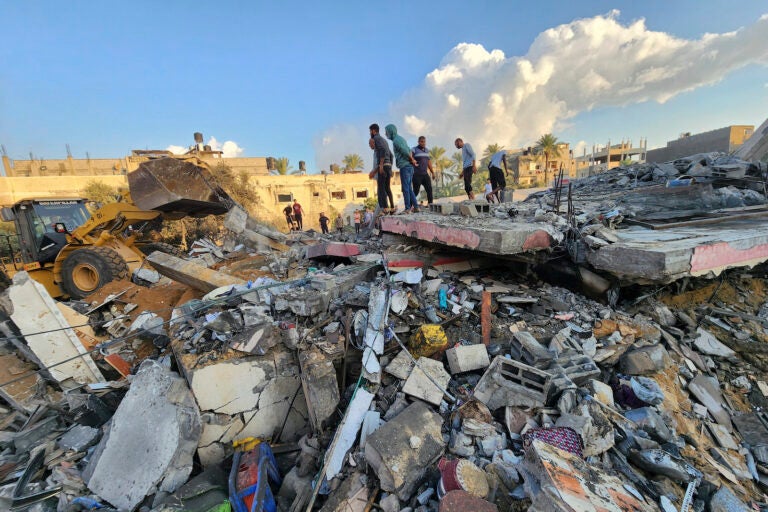
One of the key points of discussion involved the proposed international security force for Gaza, which represents the second phase of the ceasefire agreement. Israeli officials have expressed concerns that such a force could limit their military's ability to respond to security threats from the Palestinian territory. The composition of this force emerged as a particular point of discussion, with Turkey and Indonesia mentioned as potential contributors despite Israel's historically tense relations with Turkey.
Humanitarian and Political Challenges
The meeting occurred against the backdrop of significant humanitarian and political challenges. The International Court of Justice recently ruled that Israel must allow UNRWA, the main United Nations aid agency in Gaza, to provide humanitarian assistance to the territory. This decision adds another layer to the complex diplomatic landscape that Vance and Netanyahu must navigate.
Meanwhile, domestic political pressures in Israel manifested during Vance's visit, with far-right politicians in the Israeli parliament advancing a bill that would authorize annexation of the occupied West Bank—a move opposed by the United States. This symbolic legislation passed its preliminary reading by a narrow margin, highlighting the political constraints facing Netanyahu's government.

Path Forward and Regional Stability
Despite the challenges, Vance maintained an optimistic tone about the prospects for progress. "There's a lot of work to do, but I feel very optimistic about where we are," he remarked, reflecting the administration's commitment to supporting the ceasefire while addressing Israel's security concerns. The vice president's delegation included key Middle East envoy Steve Witkoff and Jared Kushner, President Donald Trump's son-in-law, underscoring the importance the administration places on the Israel-Palestinian conflict.
The meeting represents continued American engagement in Middle East diplomacy at the highest levels, with Secretary of State Marco Rubio scheduled to visit Israel later in the week. This coordinated diplomatic effort demonstrates the Trump administration's commitment to maintaining the ceasefire while working toward a sustainable resolution to the long-standing conflict.