Read on France 24
A Delicate Truce Fractures: Israel Strikes Beirut Amid New Hezbollah Rocket Fire
The fragile ceasefire between Israel and Hezbollah, in place for just two months, has been shattered by a new round of escalation. Israel launched a strike on Beirut after rockets, which the Israeli military attributes to Hezbollah, were fired into its territory. The incident places the Trump administration in an awkward position, with the US President having urged restraint but now facing domestic pressure not to appear weak. This article analyzes the sudden breakdown of the truce, the geopolitical implications, and what this means for the broader conflict in the Middle East.
The fragile two-month ceasefire between Israel and Hezbollah has been dealt a severe blow. In a significant and alarming development, the Israeli military has confirmed it struck targets in Beirut after, it says, rockets were fired into northern Israel by the Lebanese militant group. The incident marks the first major breach of the truce, immediately raising fears of a return to all-out conflict. The escalation comes despite a public call for restraint from US President Donald Trump, who is now facing a complicated geopolitical and domestic balancing act.
The Trigger and the Response
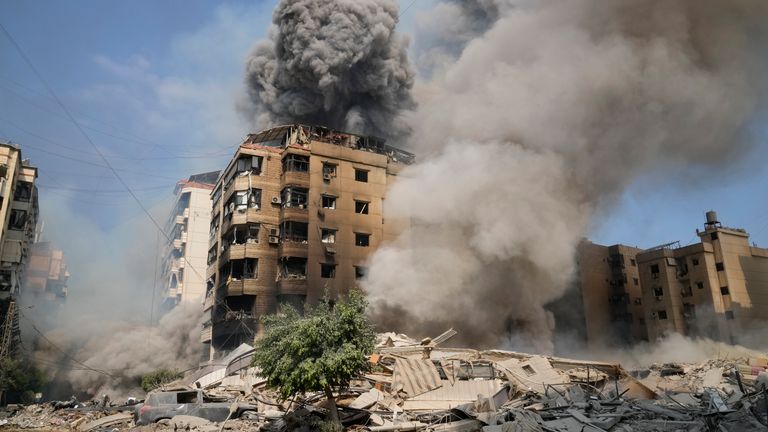
The immediate trigger for the Israeli strike was the launch of rockets from Lebanese territory. The Israeli military has directly blamed Hezbollah for the attack, a serious charge that, if confirmed, represents a direct violation of the ceasefire terms. In response, the Israel Defense Forces (IDF) conducted what it described as a "precise and targeted" strike on what it identified as a Hezbollah military position within the southern suburbs of Beirut.
Beirut Under Fire Again
The sound of explosions in Beirut's southern suburbs, a Hezbollah stronghold, is a stark reminder of the conflict that preceded the truce. The strike represents a significant operational move by Israel, signaling that it will not tolerate any erosion of its security, even under the framework of a ceasefire. This action has placed immense pressure on the Lebanese government, which is already grappling with a severe economic crisis and political paralysis.
The US Dilemma: A Call for Restraint Unheeded
The most complex dimension of this escalation lies in Washington, D.C. US President Donald Trump had publicly urged restraint, aiming to project an image of a stabilizing force in the Middle East. However, the new rocket fire and the subsequent Israeli response have placed him in a difficult position. As noted by FRANCE 24's Angela Diffley, the President is "anxious to show his domestic audience he cannot be pushed around by Israel."
This creates a paradox. Trump's administration has been a strong ally of Israel, and any public condemnation of Israeli actions could be seen as a betrayal by his base. Conversely, allowing the situation to spiral back into a full-scale war could undermine his image as a peacemaker and distract from his domestic agenda. The coming days will test the administration's ability to navigate this delicate balance, as the dynamics of the Israel-US relationship face their most serious test since the ceasefire was signed.
A Blow to the Ceasefire and Regional Stability
The incident is a blow to the ceasefire which was largely seen as a major diplomatic achievement. The truce had held for two months, offering a respite from the most intense fighting in decades. This new flare-up undermines the entire framework, raising serious questions about its viability.
For the broader region, the implications are severe. Any renewed conflict between Israel and Hezbollah risks drawing in other actors. The situation is particularly volatile given the ongoing tensions between Israel and Iran. While this specific incident does not yet involve direct state-to-state conflict with Iran, the war has already proven costly for all sides, and the potential for miscalculation is extremely high.
The coming hours will be crucial. The international community will be watching closely to see if both sides can de-escalate, or if this is the beginning of a new and more dangerous chapter in the long-running conflict.