
 Read on bbc.com
Tornadoes Leave Trail of Destruction Across Michigan and Oklahoma, Claiming Six Lives
Severe storms and tornadoes have devastated communities in Michigan and Oklahoma, resulting in at least six fatalities, including a 12-year-old boy, and numerous injuries. The violent weather uprooted trees, downed power lines, and caused extensive structural damage to homes and buildings. Emergency declarations are in effect as rescue workers assess the widespread destruction and begin recovery efforts, with the National Weather Service warning that severe weather could continue into the weekend across the central United States.
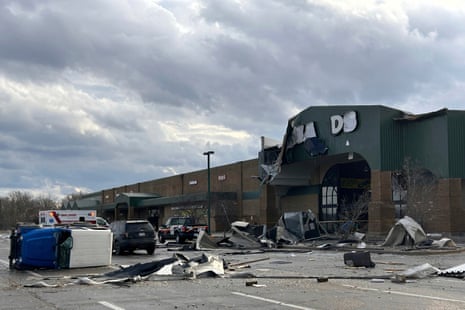
Deadly tornadoes and severe storms swept through parts of the United States on Friday, leaving a path of destruction across Michigan and Oklahoma. The extreme weather events resulted in at least six confirmed fatalities, including a child, and caused significant injuries and widespread property damage. The storms uprooted trees, downed power lines, damaged buildings and ripped the roofs off some houses, prompting emergency declarations and large-scale recovery operations as communities begin to assess the full scope of the devastation.
Impact and Casualties in Michigan
The state of Michigan was hit particularly hard, with four confirmed deaths. In Branch County, near Union City, a tornado struck on Friday, killing three people and injuring twelve others according to the local sheriff's department. The area is experiencing power cuts and road closures that are expected to last through the weekend. Approximately 50 miles away in Cass County, authorities reported one additional death and several injuries. The sheriff's office described extensive damage to multiple large structures, including homes and pole barns, ranging from major structural impacts to complete destruction. Hundreds of residents were left without power in the aftermath.
Tragically, Cass County Sheriff Clint Roach announced on Saturday that 12-year-old Silas Anderson had died from weather-related injuries in Edwardsburg. "Silas was surrounded by family at the time of his passing," the sheriff's office stated in a social media post. In response to the crisis, Michigan Governor Gretchen Whitmer activated a state emergency for Branch, Cass, and St. Joseph counties. "We are working with emergency teams to monitor the situation and co-ordinate resources for those impacted," Governor Whitmer said. "My heart is with the families who lost loved ones and the Michiganders who were injured yesterday."

Destruction in Oklahoma
Oklahoma also suffered significant losses from the severe weather system. In Okmulgee County, south of Tulsa, a tornado carved an approximately four-mile path of damage. Okmulgee County emergency manager Jeff Moore emphasized the ongoing response efforts, stating, "We're just getting everywhere as fast as we can, clearing roads as fast we can." The Okmulgee County Sheriff's Office confirmed two fatalities in the town of Beggs. Oklahoma Governor Kevin Stitt declared a state of emergency for eight counties—Alfalfa, Creek, Grant, Major, Okmulgee, Rogers, Tulsa, and Wagoner—to ensure affected residents have access to necessary support and resources in the wake of the storms.
Community Response and Recovery Efforts
Emergency management officials in both states have mobilized local responders to search damaged areas and initiate recovery operations. Videos shared on social media depicted the terrifying scale of the storms, showing massive whirlwinds sweeping through Union City, Michigan, and large chunks of debris flying across a car park in Three Rivers. One Three Rivers resident recounted the harrowing experience to CBS News, describing the moment they saw the tornado approach: "We look out the window and saw the tornado go right down the strip and that's where my daughter is, where my parents, where I live down the road. I was just very grateful that God protected my daughter and my mom and sister and my family."
Ongoing Weather Threats
The National Weather Service (NWS) has warned that the severe weather pattern could persist into the weekend, with threats of thunderstorms and flash flooding extending from the Great Plains to Texas. This forecast underscores the continuing danger and the need for residents in affected and adjacent regions to remain vigilant and heed local weather advisories. The combination of tornadoes, high winds, and potential flooding complicates recovery efforts and poses additional risks to communities already grappling with significant damage.
Conclusion
The tornado outbreaks in Michigan and Oklahoma serve as a stark reminder of the destructive power of severe weather and its profound human cost. As rescue and assessment operations continue, the focus remains on supporting the families of the victims, caring for the injured, and helping communities rebuild. The coordinated response from state and local authorities, coupled with the resilience of affected residents, will be critical in the challenging days ahead. Individuals in regions prone to severe spring weather are encouraged to have emergency plans in place and to stay informed through official weather channels.


