Circ Expands Fiber Club with Major Fashion Brands to Scale Textile Recycling
US textile recycling innovator Circ has significantly expanded its industry coalition, welcoming Zalando, C&A, Reformation, and the J.Crew Group into its Fiber Club. This second cohort joins existing partners to broaden the application and adoption of Circ's proprietary recycling technology. The expansion represents a strategic move to accelerate the scaling of closed-loop solutions within the fashion industry, addressing the critical challenge of textile waste through collaborative, brand-driven action.
The fashion industry's pursuit of circularity gains significant momentum as Circ, a US-based textile recycling specialist, announces the expansion of its collaborative initiative, the Fiber Club. The program has welcomed a second cohort of prominent brands, including European online fashion giant Zalando, global retailer C&A, sustainable fashion leader Reformation, and the J.Crew Group. This strategic expansion aims to deploy Circ's advanced recycling technology more broadly across the fashion value chain, transforming post-consumer textile waste into new, high-quality fibers.
The Fiber Club's Mission and Expansion
The Fiber Club serves as a consortium of fashion brands united by a common goal: to commercialize and scale Circ's patented recycling process. By onboarding new members, Circ ensures its technology is tested, validated, and integrated across diverse brand portfolios and product categories. This collaborative model is designed to de-risk investment in recycling infrastructure and create a reliable supply of recycled materials for the entire group. The inclusion of both mass-market retailers and niche sustainable labels demonstrates the technology's applicability across different market segments and business models.
Strategic Importance for the Fashion Industry
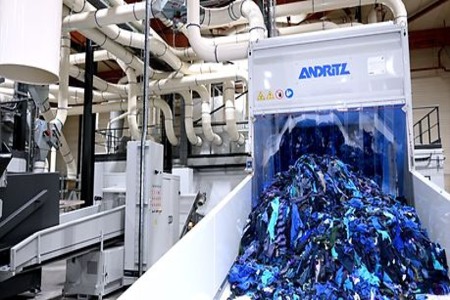
The expansion of the Fiber Club arrives at a critical juncture for the fashion sector, which faces increasing regulatory pressure and consumer demand for sustainable practices. Textile waste represents a monumental environmental challenge, with millions of tons ending up in landfills annually. Circ's approach, which focuses on recycling blended materials like polycotton—a common blend historically difficult to separate and recycle—offers a potential solution to a long-standing problem. By pooling resources and commitment, club members can accelerate the development of a circular economy for textiles, moving beyond pilot projects toward systemic change.

Driving Innovation Through Collaboration
This consortium model is pivotal for scaling deep-tech innovations in capital-intensive industries like fashion. Individual brands often lack the scale or capital to build dedicated recycling infrastructure alone. The Fiber Club mitigates this by aggregating demand, sharing insights, and co-investing in technological advancement. For the new members—Zalando, C&A, Reformation, and J.Crew—participation provides direct access to cutting-edge recycling output, potentially securing a future supply of sustainable materials and enhancing their environmental credentials. For Circ, it validates the market need and creates a clear pathway to commercial scale, attracting further investment and partnerships.
The Path Forward for Circular Fashion
The success of initiatives like the Fiber Club will be measured by their ability to move from partnership announcements to tangible increases in the volume of textiles recycled and reintroduced into new garments. The next steps involve refining the collection, sorting, and processing logistics to feed Circ's systems and integrating the resulting recycled fibers into the brands' design and production cycles. As this second cohort integrates into the program, the industry will watch closely for announcements regarding recycled-content product lines, which will signal the transition from R&D to retail reality. This expansion marks a meaningful step toward closing the loop on fashion waste.