Read on PBS News
How Aggressive Free Agency Spending Propelled the Patriots and Seahawks to the Super Bowl
In a notable departure from conventional NFL wisdom, the 2025 season demonstrated that significant free agency investments can directly lead to championship contention. The New England Patriots and Seattle Seahawks, two of the league's most aggressive spenders during the previous offseason, defied expectations by meeting in the Super Bowl. This article examines their strategic approaches, key acquisitions, and the cultural shifts that transformed their rosters, offering insights into the evolving role of free agency in team building.
The traditional NFL blueprint for success has long emphasized building through the draft and using free agency for targeted, supplementary moves. However, the 2025 season delivered a powerful counter-narrative, as reported by the Associated Press. Two franchises that executed the most aggressive and expensive free agency campaigns of the offseason—the New England Patriots and the Seattle Seahawks—ultimately faced each other on the sport's biggest stage. Their journey to Super Bowl LX highlights a strategic pivot where substantial financial investment in veteran talent, when executed with conviction and aligned with a clear cultural vision, can rapidly accelerate a team's competitive timeline.

The Patriots' High-Stakes Overhaul
Following the departure of legendary coach Bill Belichick, the New England Patriots entered a period of significant transition. Under the leadership of General Manager Eliot Wolf, the organization embarked on what Wolf described as a necessary "total culture shift." This philosophical change manifested in an unprecedented spending spree. According to contract data from Spotrac, the Patriots committed over $364 million to 19 unrestricted free agents, leading the league by nearly $100 million more than the next-highest team. Crucially, nearly $175 million of those contracts were fully guaranteed, signaling immense confidence in their new acquisitions.
The Patriots' strategy was multifaceted. They won a high-profile bidding war for star defensive tackle Milton Williams, securing him with a four-year, $104 million deal to anchor their defensive line. They then systematically fortified their defense with proven veterans like cornerback Carlton Davis, edge rushers Harold Landry and K'Lavon Chaisson, and linebacker Robert Spillane. On offense, the marquee addition was No. 1 receiver Stefon Diggs, acquired on a three-year, $63.5 million contract, alongside starting offensive linemen Morgan Moses and Garrett Bradbury. Coach Mike Vrabel emphasized the intentionality behind these moves, stating that success in free agency requires conviction not only in a player's on-field ability but also in their potential impact within the locker room and community.
The Seahawks' Strategic Balance
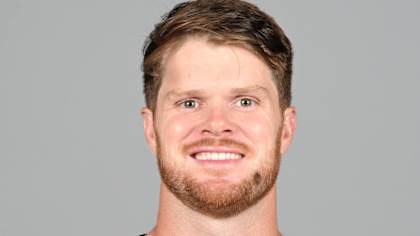
While the Patriots led the spending charge, the Seattle Seahawks executed a more balanced but equally aggressive approach, ranking fourth in total free agency expenditure at over $205 million. Their most significant move was investing in quarterback Sam Darnold with a three-year, $100.5 million contract, betting on his potential as a franchise leader. They complemented this with savvy signings of established stars like edge rusher DeMarcus Lawrence and receiver Cooper Kupp. General Manager John Schneider also demonstrated a keen eye for value, finding key contributors like tight end Eric Saubert and tackle Josh Jones on more budget-friendly deals that proved essential to their Super Bowl run.
Schneider and Coach Mike Macdonald credited their success to a "shared alignment" on the type of team and people they wanted in their building. This synergy between the front office and coaching staff streamlined the acquisition process. Importantly, as Macdonald noted, this free agency success was built upon a foundation of excellent recent drafting, fueled by extra picks from the Russell Wilson trade. The development of young talents like Jaxon Smith-Njigba, Devon Witherspoon, and Kenneth Walker created a core that allowed strategic free agent additions to thrive.
Conclusion: A New Paradigm for Team Building?
The parallel paths of the Patriots and Seahawks to the Super Bowl challenge a long-held NFL axiom. As exemplified by the Philadelphia Eagles' title run the previous season—fueled by signings like Saquon Barkley and C.J. Gardner-Johnson—targeted aggression in free agency is becoming a more accepted tool for immediate contention. For New England, it was a necessary corrective to recent drafting woes and a catalyst for cultural change. For Seattle, it was the final piece of a puzzle built through astute drafting and trades. While Eliot Wolf of the Patriots cautioned that such massive spending sprees may not become an annual "rule," the 2025 season stands as a definitive case study. It proves that with clear vision, intentional player evaluation, and financial commitment, winning the headlines in March can indeed translate to playing for the Lombardi Trophy in February.