Read on PBS News
First In-Person Court Appearance in Charlie Kirk Murder Case as Media Access Debated
Tyler Robinson, the Utah man charged with the aggravated murder of conservative activist Charlie Kirk, made his first in-person court appearance. The hearing focused heavily on the balance between public transparency and a fair trial, with the judge warning media about broadcasting restrictions. Robinson's defense team seeks to limit camera access, citing concerns over pretrial publicity and misinformation, while a media coalition and the victim's widow advocate for open proceedings.
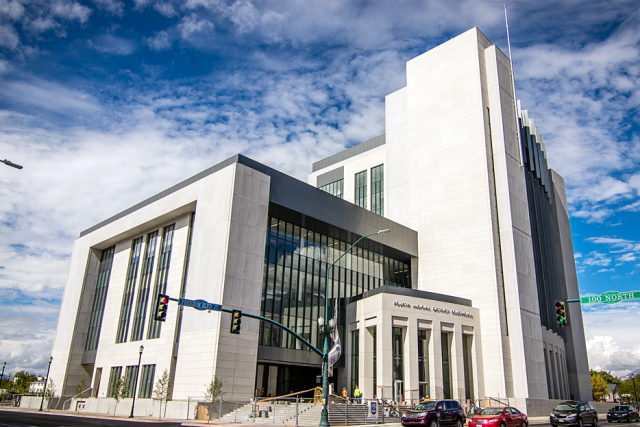
The high-profile criminal case surrounding the killing of conservative activist Charlie Kirk entered a new phase as the accused, Tyler Robinson, appeared in person before a Utah judge for the first time. The proceedings in Provo’s Fourth District Court were dominated not by evidentiary arguments, but by a critical debate over media access and the potential for publicity to prejudice a jury. This case, which has attracted national attention and commentary from the highest levels of American politics, now sits at the intersection of constitutional rights, judicial procedure, and public interest.
Courtroom Proceedings and Security Protocols
Tyler Robinson, 22, arrived at the courthouse under extraordinary security measures, shackled at the waist, wrists, and ankles. In accordance with a prior ruling by Judge Tony Graf, he was permitted to wear street clothes—a dress shirt, tie, and slacks—instead of jail attire for the pretrial hearing. This concession was part of the court's effort to balance security concerns with the defendant's right to a presumption of innocence before potential jurors. Robinson’s family, including his mother, father, and brother, were present in the front row of the courtroom, with his mother becoming emotional upon his entry.
The hearing was briefly interrupted when Judge Graf ordered the livestream camera to be repositioned. This action came after Robinson’s defense attorneys argued that the broadcast was violating a standing court order by showing images of the defendant in physical restraints. Judge Graf issued a stern warning that future violations of the October order—which prohibits media from depicting Robinson in restraints or anywhere other than the defense table—could result in the termination of the broadcast feed entirely.

The Central Conflict: Media Access vs. Fair Trial Rights
The core of Thursday’s hearing revolved around the tension between an open court system and the defendant's Sixth Amendment right to an impartial jury. Robinson’s legal team, alongside the Utah County Sheriff’s Office, has formally requested Judge Graf to ban cameras from the courtroom altogether. They contend that the intense media scrutiny, which defense attorney Kathy Nester noted extends "as far as the White House," threatens to taint the jury pool. They specifically cited the proliferation of digitally altered images of Robinson, which falsely show him crying or having outbursts in court, as a form of damaging misinformation.
Opposing this restriction is a coalition of national and local news organizations, including The Associated Press. Media attorney Michael Judd has filed arguments emphasizing that open courts "safeguard the integrity of the fact-finding process" and foster public confidence. The victim’s widow, Erika Kirk, has also publicly called for full transparency, stating, "We deserve to have cameras in there." Judge Graf acknowledged the delicate balance, stating, "While the court believes in openness and transparency, it needs to be balanced with the constitutional rights of all parties in this case."
Case Background and Community Impact
Robinson is charged with aggravated murder for the September 10 shooting of Charlie Kirk on the Utah Valley University campus in Orem. Prosecutors have announced their intent to seek the death penalty. The case's notoriety is amplified by Kirk's status as a prominent conservative activist and ally of former President Donald Trump, who commented on the arrest soon after it occurred.
The hearing’s audience included several university students who witnessed the shooting, highlighting the deep local impact of the crime. Brigham Young University student William Brown, who was approximately ten feet from Kirk during the incident, attended and described feeling overwhelmed seeing Robinson in court. "I witnessed a huge event, and my brain is still trying to make sense of it," Brown said. "I feel like being here helps it feel more real than surreal." Another attendee, Utah Valley University student Zack Reese, expressed personal skepticism about the arrest, noting he knows of Robinson's family from southwestern Utah.
As the case moves forward, Judge Graf has yet to rule on the defense's motion to ban cameras. The court's handling of media access will set a significant precedent for how high-profile cases in Utah manage the competing demands of public interest and judicial fairness. All future proceedings will continue to be scrutinized as the community and the nation seek answers and justice in a tragedy that has resonated far beyond the borders of Orem, Utah.